
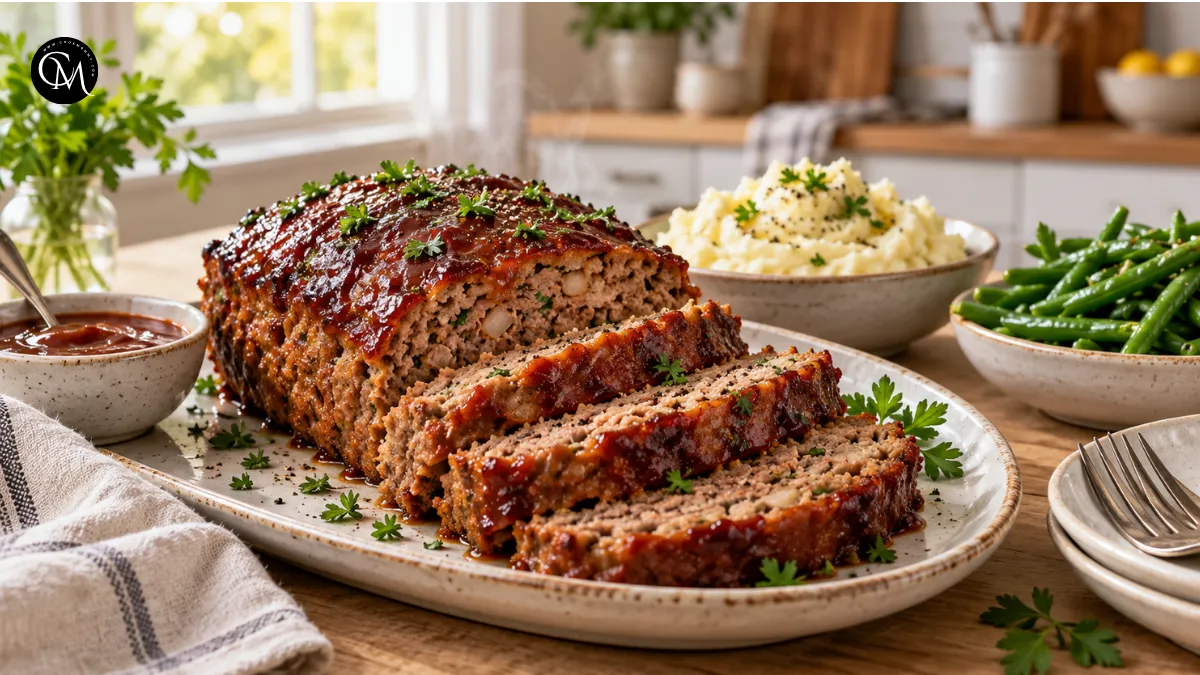
turkey beef meatloaf: How 5 Tips Prevent a Dry Loaf
Did you know that lean ground turkey can contain far less fat than traditional ground beef, which is one reason homemade meatloaf can easily turn dry if the ingredients are not balanced correctly? That does not mean you need to sacrifice tenderness for a lighter dinner.
This turkey beef meatloaf combines the mild, lean character of turkey with the richer flavor and moisture of beef. The result is a tender, savory loaf with a caramelized tomato glaze and enough moisture to stay enjoyable even after reheating.
I have found that the biggest difference comes from five simple details: using the right meat ratio, adding a panade, cooking the aromatics first, mixing gently, and allowing the loaf to rest before slicing. If you have struggled with dry or crumbly meatloaf before, these practical techniques make turkey beef meatloaf much more reliable.
It is also an easy family dinner that works well with mashed potatoes, roasted vegetables, salad, or simple steamed greens.
Table of Contents
Ingredients for turkey beef meatloaf
The ingredients are simple, but each one has a specific role in keeping the loaf flavorful and moist.
For the meatloaf
- 1 pound ground turkey, preferably 90–93% lean
- 1 pound ground beef, preferably 85–90% lean
- 1 cup plain breadcrumbs or panko
- 1/2 cup whole milk
- 1 large egg
- 1 medium onion, finely diced
- 3 garlic cloves, minced
- 1 tablespoon olive oil
- 2 tablespoons Worcestershire sauce
- 1 tablespoon Dijon mustard
- 2 tablespoons ketchup
- 1 tablespoon chopped fresh parsley
- 1 teaspoon Italian seasoning
- 1 teaspoon salt
- 1/2 teaspoon ground black pepper
- 1/2 teaspoon smoked paprika
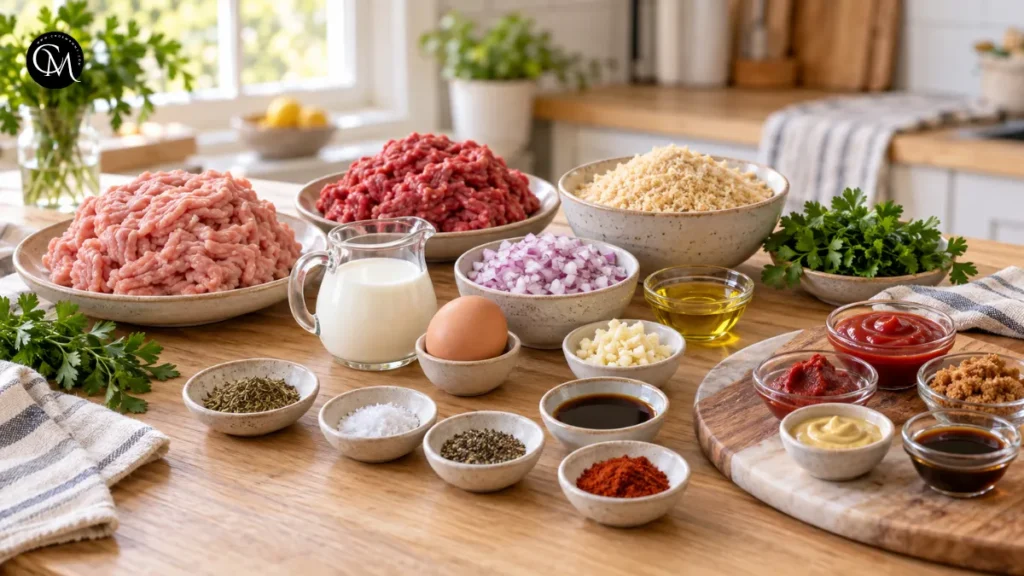
For the glaze
- 1/3 cup ketchup
- 1 tablespoon tomato paste
- 1 tablespoon brown sugar or maple syrup
- 1 teaspoon Dijon mustard
- 1 teaspoon Worcestershire sauce
The beef brings richness, while turkey keeps the finished loaf lighter than an all-beef version. For especially juicy turkey beef meatloaf, avoid using extremely lean turkey breast meat unless you compensate with additional moisture.
Panko can replace regular breadcrumbs for a slightly lighter texture. Unsweetened dairy-free milk works well if needed, and gluten-free breadcrumbs can be substituted without changing the overall method.
Timing
- Preparation time: 20 minutes
- Cooking time: 55–65 minutes
- Resting time: 10 minutes
- Total time: About 1 hour 30 minutes
Most traditional meatloaf recipes need roughly an hour in the oven, so this version fits comfortably into a typical weeknight schedule. You can also prepare the mixture several hours ahead and refrigerate it until baking time.
Step-by-Step Instructions
Step 1 – Prepare the ingredients
- Heat the oven to 375°F or 190°C. Lightly grease a loaf pan, or line a rimmed baking sheet with parchment paper if you prefer a free-form loaf with more browned edges.
- Combine the breadcrumbs and milk in a small bowl. Let the mixture sit for about five minutes.
- This simple mixture is called a panade. It might look insignificant, but it is one of the best protections against dry turkey beef meatloaf. The breadcrumbs absorb liquid and help hold moisture inside the meat during cooking instead of allowing everything to escape into the pan.
- Measure the remaining ingredients before mixing the meat. Once raw meat is in the bowl, you want to work efficiently and avoid excessive handling.
Step 2 – Build the flavor base
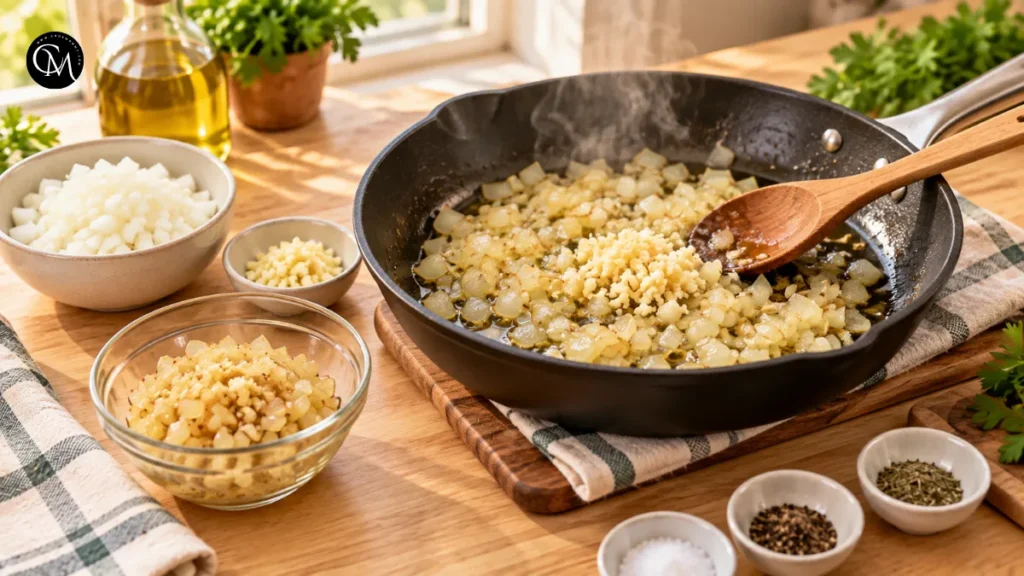
- Heat the olive oil in a small skillet over medium heat. Add the onion and cook for about four to five minutes, until softened and lightly translucent.
- Add the garlic and cook for another 30 seconds.
- Cooking the onion first accomplishes two things. It develops sweetness and prevents crunchy pieces of raw onion from interrupting the soft texture of the finished loaf. Raw onion also releases water as it cooks, which can create uneven pockets inside meatloaf.
- Let the onion mixture cool for several minutes before adding it to the meat.
- This cooked aromatic base gives turkey beef meatloaf a deeper flavor without requiring complicated seasonings.
Step 3 – Cook the main ingredient correctly
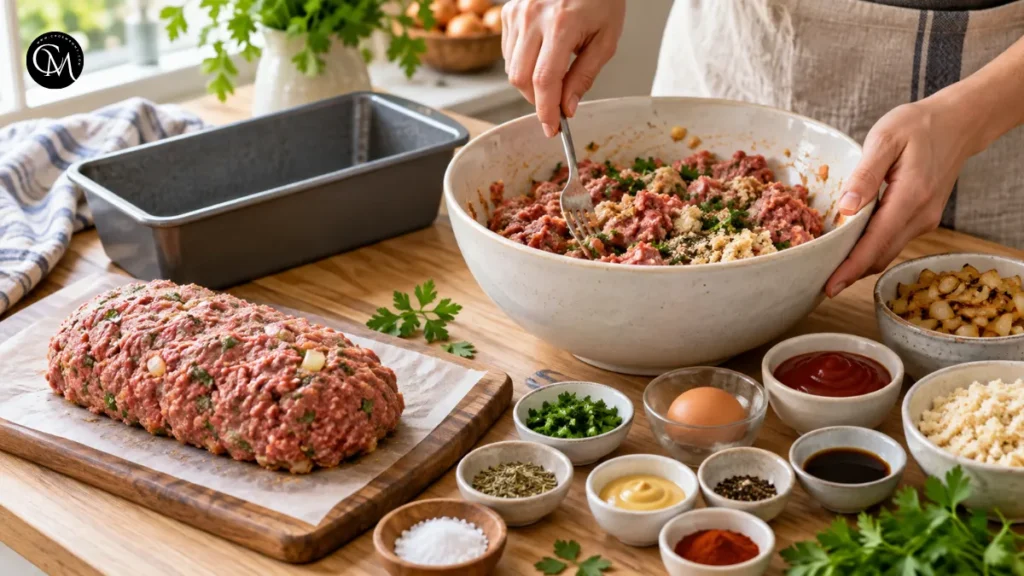
- Place the turkey and beef in a large mixing bowl. Add the soaked breadcrumbs, egg, cooled onion mixture, Worcestershire sauce, Dijon mustard, ketchup, parsley, Italian seasoning, salt, pepper, and smoked paprika.
- Use clean hands or a large fork to mix just until everything is evenly distributed.
- Do not knead the mixture as though you were making bread dough. Overmixing compresses the proteins and can make turkey beef meatloaf dense, springy, and tough.
- Shape the mixture gently into a loaf approximately 8 to 9 inches long. If using a loaf pan, avoid pressing the mixture firmly into every corner.
- Transfer it to the prepared pan.
Step 4 – Combine everything and add the glaze
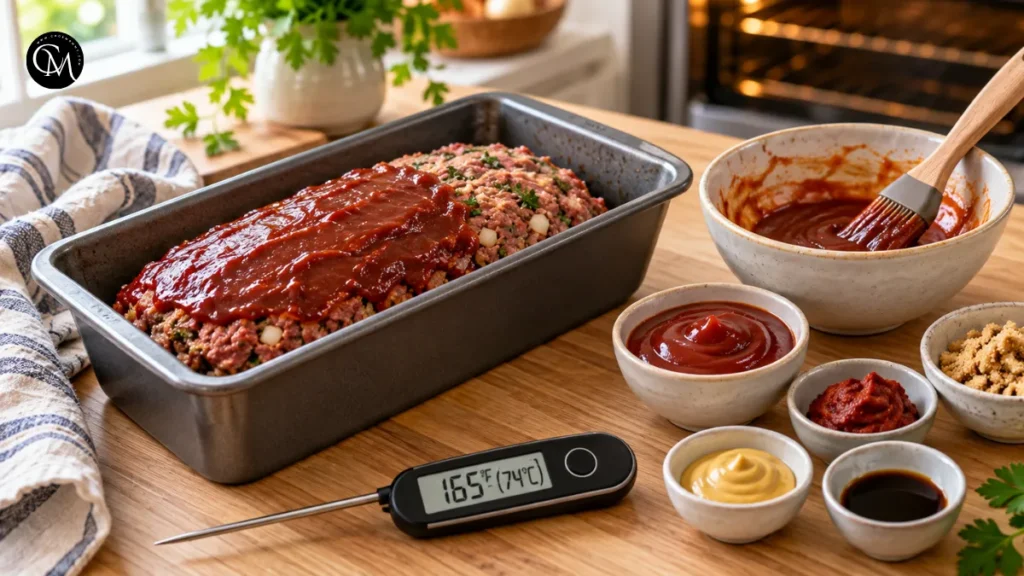
- Mix the ketchup, tomato paste, brown sugar, Dijon mustard, and Worcestershire sauce in a small bowl.
- Spread about two-thirds of the glaze over the top of the loaf before baking.
- The glaze does more than provide sweetness. Tomato paste adds concentrated savory flavor, Dijon gives gentle acidity, and the small amount of sugar encourages caramelization.
- Bake the turkey beef meatloaf for approximately 45 minutes, then spread the remaining glaze over the top.
- Return it to the oven for another 10–20 minutes.
- The center should reach 165°F or 74°C because the mixture contains ground turkey. A digital instant-read thermometer is much more dependable than judging doneness by color.
Step 5 – Finish and adjust the seasoning
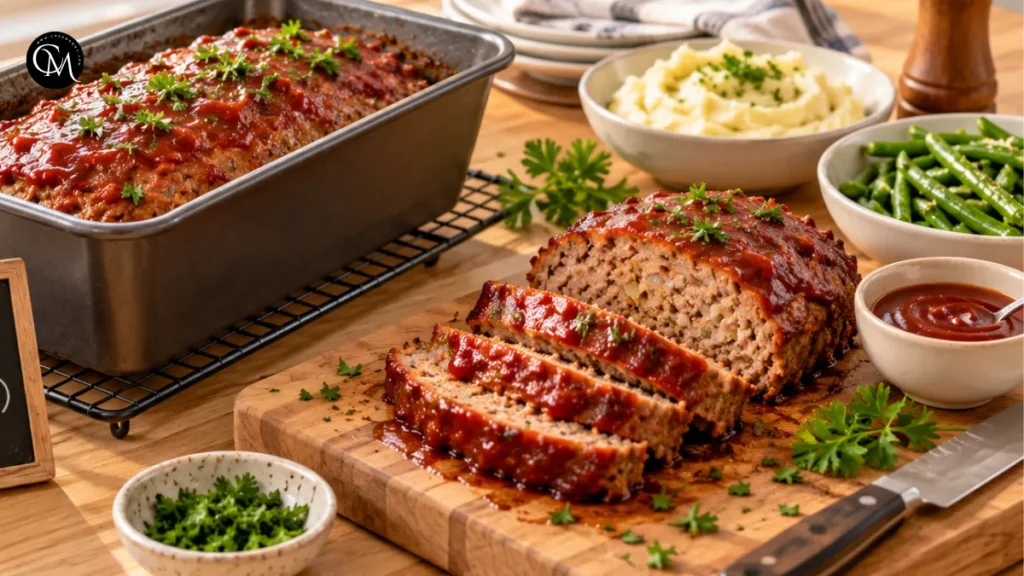
- Remove the meatloaf from the oven and let it rest for at least 10 minutes before slicing.
- This is one of the easiest steps to skip, but it matters. Cutting immediately releases hot juices onto the cutting board instead of keeping them in the loaf.
- A properly rested turkey beef meatloaf slices more cleanly and stays noticeably juicier.
- Before serving, add chopped parsley, freshly cracked pepper, or a thin spoonful of extra warm glaze. For a restaurant-style finish, serve the sauce alongside rather than drowning the meatloaf in it.
- Taste the first slice and adjust your side dishes rather than adding excessive salt to the loaf itself.
Nutritional Information
Approximate nutrition per serving, based on eight servings:
- Calories: 350–390 kcal
- Protein: 30–33 g
- Carbohydrates: 16–20 g
- Fat: 17–20 g
- Saturated fat: 6–7 g
- Fiber: 1–2 g
- Sodium: 600–700 mg
Actual values depend on the fat percentage of the turkey and beef, breadcrumb brand, milk, and glaze ingredients.
The combination of two meats provides substantial protein, while choosing moderately lean beef prevents the recipe from becoming unnecessarily greasy. Portion size and side dishes will have the greatest influence on the complete meal.
Healthier Alternatives
- There are several ways to adapt turkey beef meatloaf without sacrificing the moist texture that makes it appealing.
- For lower added sugar, leave the brown sugar out of the glaze or replace it with a small amount of unsweetened tomato sauce. The tomato paste will still provide concentrated flavor.
- For more whole grains, use whole-wheat breadcrumbs or crushed whole-grain crackers. Avoid adding too much because whole-grain crumbs can absorb more moisture than standard breadcrumbs.
- For a gluten-free turkey beef meatloaf, use certified gluten-free breadcrumbs or finely crushed gluten-free crackers and confirm that your Worcestershire sauce is suitable.
- For a dairy-free version, replace the milk with unsweetened oat milk, soy milk, or another neutral plant-based option.
- For children, keep the smoked paprika mild and finely dice the onions. For seniors who prefer softer foods, make the loaf slightly smaller and thicker so the center stays particularly tender.
- If you are watching portions, pair a moderate slice with roasted broccoli, green beans, cabbage, or a large salad instead of removing all the fat from the meat mixture. Some fat is valuable for texture.
Serving Suggestions
- My favorite way to serve turkey beef meatloaf is with creamy mashed potatoes and roasted green beans because the smooth potatoes balance the savory, caramelized crust.
- For a lighter plate, pair it with roasted cauliflower and a lemony arugula salad. The acidity helps cut through the richness of the beef.
- You can also serve thick slices with sweet potato mash, buttered peas, roasted carrots, or sautéed cabbage.
- Leftovers make excellent sandwiches. Place a cold or gently reheated slice on toasted sourdough with mustard, lettuce, and a little tomato glaze.
- For a casual family meal, turn turkey beef meatloaf into individual plates with mashed potatoes, vegetables, and a small bowl of extra glaze so everyone can adjust the sauce themselves.
Common Mistakes to Avoid
- Using turkey that is too lean Very lean turkey can produce a dry texture. Ground turkey around 90–93% lean usually offers a better balance.
- Skipping the panade Dry breadcrumbs alone can absorb juices from the meat. Soaking them in milk first helps retain moisture.
- Overmixing the meat Mix only until the ingredients are combined. Excessive mixing produces a firmer, denser loaf.
- Packing the loaf too tightly Gentle shaping gives turkey beef meatloaf a softer texture and allows heat to move more evenly through the mixture.
- Baking according to time alone Ovens vary considerably. Check for an internal temperature of 165°F or 74°C rather than relying entirely on the clock.
- Slicing immediately Rest the loaf for about 10 minutes. This gives the juices time to redistribute and improves slice quality.
Storing Tips for the Recipe
- Cool leftover turkey beef meatloaf before transferring it to an airtight container. Refrigerate it for up to three to four days.
- For the best texture, store slices with a small amount of glaze or cooking juices. This helps protect the meat from drying out during reheating.
- Reheat individual portions in the microwave at moderate power or cover them loosely and warm them in a 325°F or 165°C oven.
- The cooked loaf can also be frozen. Wrap individual slices tightly and place them in a freezer-safe container for up to two to three months. Thaw overnight in the refrigerator before reheating.
- You can prepare the uncooked mixture earlier in the day, refrigerate it covered, and bake it closer to dinner.
- This recipe became one of my regular meals because it gives me the comforting flavor of classic meatloaf while staying tender enough for leftovers the next day.
Conclusion
A good turkey beef meatloaf should never feel like a compromise between flavor and a lighter meat mixture. Combining turkey with beef, soaking the breadcrumbs, cooking the aromatics, mixing gently, and resting the loaf makes a noticeable difference in both texture and flavor.
The recipe is practical enough for weeknights yet comforting enough for a relaxed Sunday dinner. It also reheats well, adapts easily to gluten-free or dairy-free needs, and works with everything from mashed potatoes to roasted vegetables.
Try this turkey beef meatloaf the next time you want an easy, satisfying family dinner. If you make it, leave a comment or review with the changes you tried, and subscribe for more practical recipes and kitchen tips.
FAQs
Can I use equal amounts of turkey and beef?
Yes. A 50/50 combination gives turkey beef meatloaf a good balance of lean protein, beefy flavor, and enough fat to maintain tenderness during baking.
What beef is best for this meatloaf?
Ground beef containing around 10–15% fat works well. Extremely lean beef can reduce moisture, while very fatty beef may leave excessive grease around the loaf.
Why does my meatloaf fall apart?
It usually needs better binding or more resting time. The egg and soaked breadcrumbs help hold turkey beef meatloaf together, while resting improves slicing.
Can I prepare it the night before?
Yes. Assemble the loaf, cover it tightly, and refrigerate overnight. Allow it to sit at room temperature briefly while the oven preheats before baking.
Can I freeze cooked meatloaf?
Absolutely. Cool it completely, slice it, wrap individual portions tightly, and freeze for up to two or three months for convenient future meals.
How do I know when meatloaf is fully cooked?
Insert a food thermometer into the thickest center section. Because turkey is included, the internal temperature should reach 165°F or 74°C before serving.
What can I use instead of breadcrumbs?
Crushed crackers, gluten-free breadcrumbs, quick oats, or whole-wheat breadcrumbs can work. Adjust the milk slightly because different dry ingredients absorb liquid at different rates.
Tried it before ?
There are no reviews yet. Be the first one to write one.