
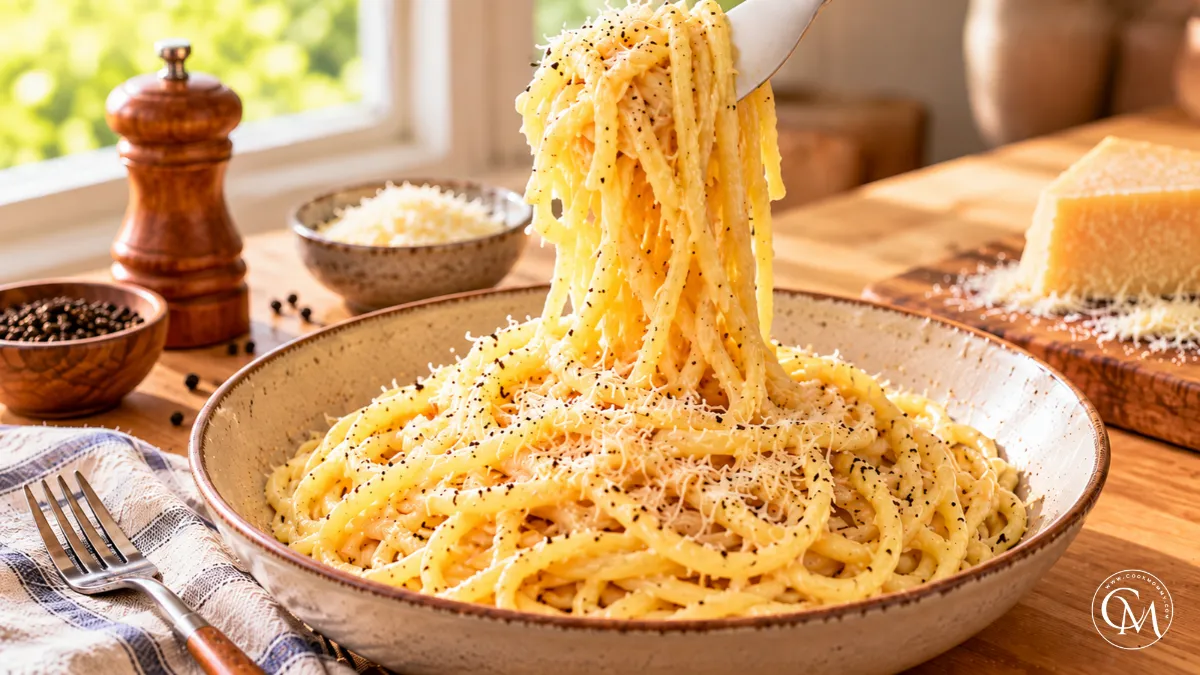
Spaghetti with cheese and pepper: 5 Best Cooking Tips
Did you know that a few tablespoons of starchy pasta water can make the difference between a silky cheese sauce and a clumpy one? That small detail is why a simple bowl of Spaghetti with cheese can be surprisingly easy to get wrong and so satisfying when it turns out glossy and smooth.
This recipe takes inspiration from the classic Italian combination of pasta, aged cheese, black pepper, and cooking water. It is quick enough for a weeknight, affordable enough for regular rotation, and flavorful enough for guests. The magic is in technique: finely grated cheese, properly salted water, fresh pepper, gentle heat, and careful emulsification.
If you have ever ended up with stiff noodles, cheese stuck to the pan, or a flat-tasting sauce, these five cooking tips will help you make Spaghetti with cheese with confidence.
Table of Contents
Ingredients List
For 4 servings:
- 12 ounces (340 g) spaghetti
- 1 1/2 cups finely grated Pecorino Romano, plus extra for serving
- 1 to 1 1/2 teaspoons freshly cracked black pepper
- 1 tablespoon unsalted butter or extra-virgin olive oil, optional
- 1 to 1 1/2 cups reserved pasta cooking water
- Salt for the pasta water
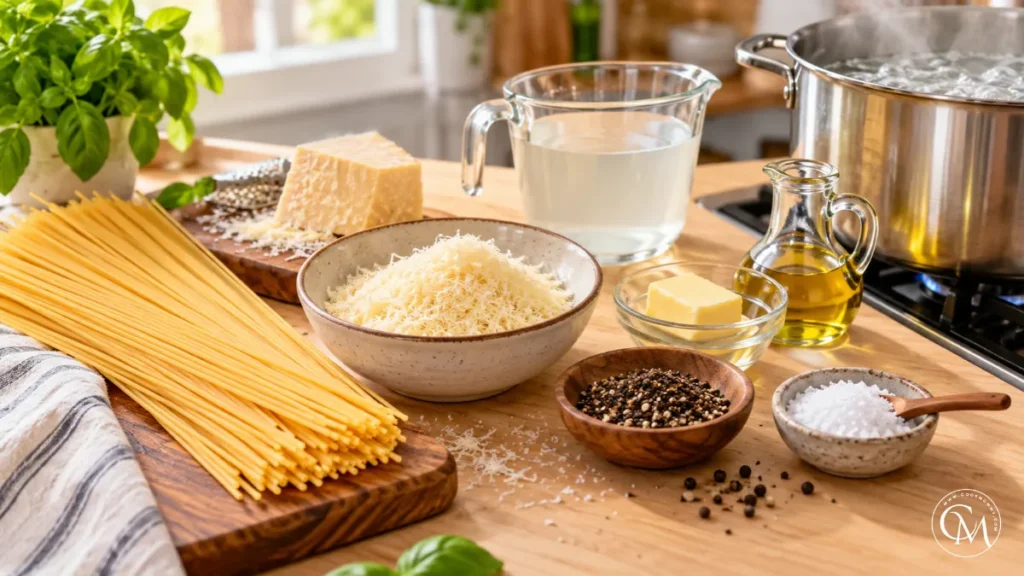
Pecorino Romano gives Spaghetti with cheese its sharp, salty flavor. Parmesan is milder and nuttier, so you can use it alone or combine both cheeses. If Pecorino feels too strong for your family, try half Pecorino and half Parmesan.
Whole-wheat or gluten-free spaghetti also works, although the amount of pasta water may change because different noodles release and absorb starch differently. Freshly cracked pepper is worth using; it tastes brighter and more aromatic than pre-ground pepper.
Timing
- Preparation time: 10 minutes
- Cooking time: 15 minutes
- Total time: about 25 minutes
Unlike pasta recipes that require a separately simmered sauce, this Spaghetti with cheese recipe comes together while the noodles cook. Most of the hands-on work happens during the final five minutes.
Step-by-Step Instructions
Step 1 – Prepare the ingredients
- Bring a large pot of water to a boil. While it heats, grate the cheese very finely and crack the black pepper. Keep a heatproof measuring cup nearby so you remember to reserve pasta water.
- Preparation matters because Spaghetti with cheese moves quickly once the pasta is ready. Fine cheese melts more evenly than coarse shreds and is less likely to form stubborn clumps.
- Salt the boiling water, but use a lighter hand than you would for a mild tomato sauce. Pecorino is naturally salty, and final seasoning should happen after the cheese is added.
Step 2 – Build the flavor base
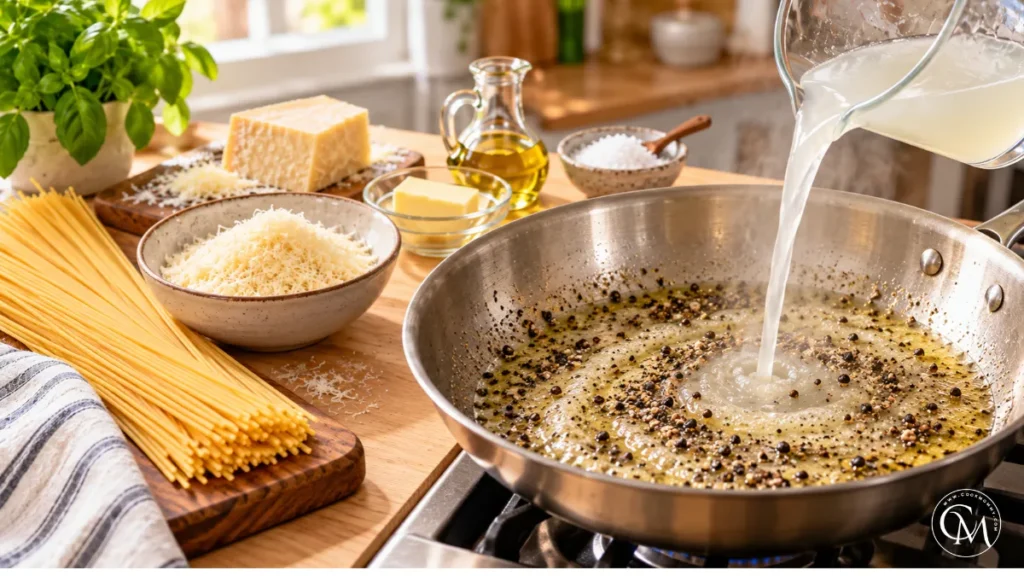
- Toast the black pepper in a wide skillet over medium-low heat for 30 to 60 seconds, just until fragrant. Add the butter or olive oil, if using.
- Toasting briefly releases aromatic oils and gives the sauce more depth. Keep the heat moderate because scorched pepper can become bitter.
- Add about 1/2 cup pasta water and swirl the pan. The starch in that water helps bind the cheese and liquid into a smooth sauce rather than a separated one.
Step 3 – Cook the main ingredient
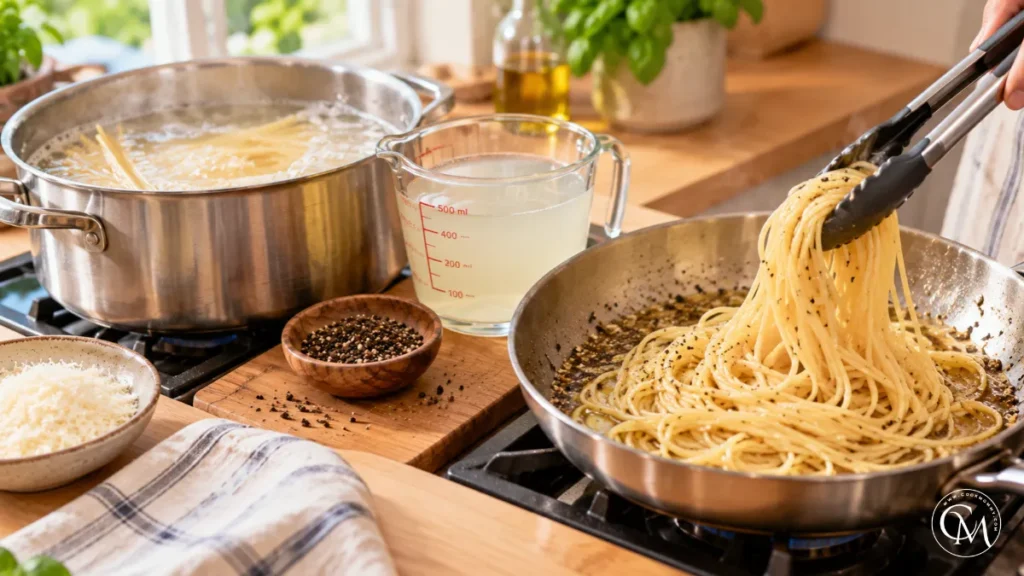
- Cook the spaghetti until about 2 minutes shy of the package’s al dente time. Stir during the first few minutes to keep the strands separate.
- Before draining, reserve at least 1 1/2 cups of cooking water. This is one of the most useful habits for better Spaghetti with cheese. The pasta should still have a slight bite because it will finish cooking in the skillet.
- Transfer the noodles to the pepper mixture and toss over low heat for about a minute, adding a splash of pasta water if the pan looks dry.
Step 4 – Combine everything
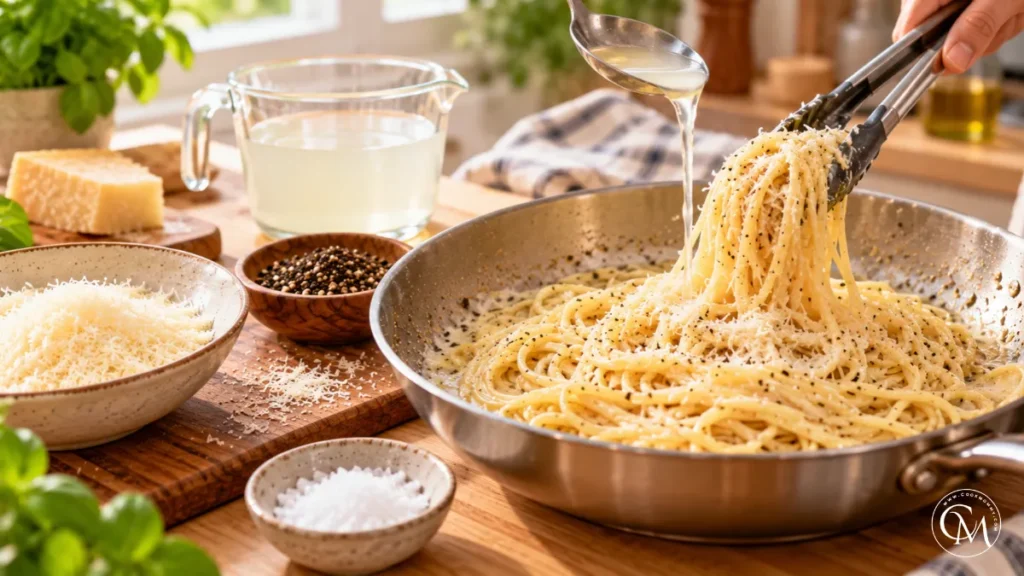
- Remove the skillet from the heat and let it rest for about 20 seconds. Add the grated cheese gradually while tossing constantly. Add warm pasta water a tablespoon or two at a time until the sauce becomes glossy and coats every strand.
- Temperature control is crucial for smooth Spaghetti with cheese. If the pan is too hot, the proteins in the cheese can tighten and clump. Gentle residual heat is usually enough to melt finely grated cheese.
- Think of the sauce as an emulsion of water, starch, fat, and cheese. Vigorous tossing helps those elements come together while distributing the pepper evenly.
Step 5 – Finish and adjust seasoning
- Taste before adding salt. Add more black pepper for extra warmth, pasta water for a looser sauce, or a small amount of cheese if it seems too thin.
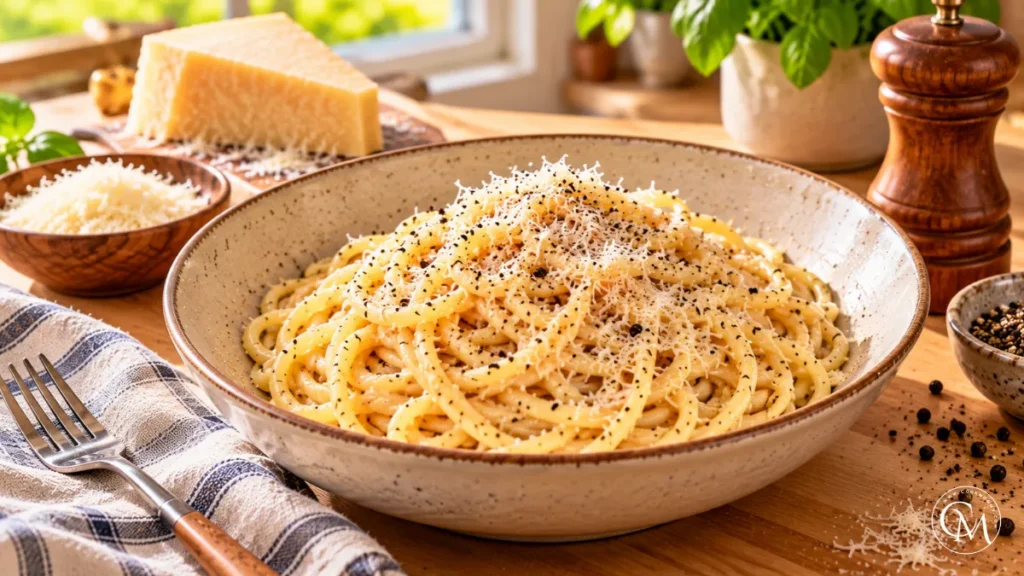
- A good plate of Spaghetti with cheese should be silky rather than dry. The sauce thickens as it sits, so finish it slightly looser than you think it needs to be.
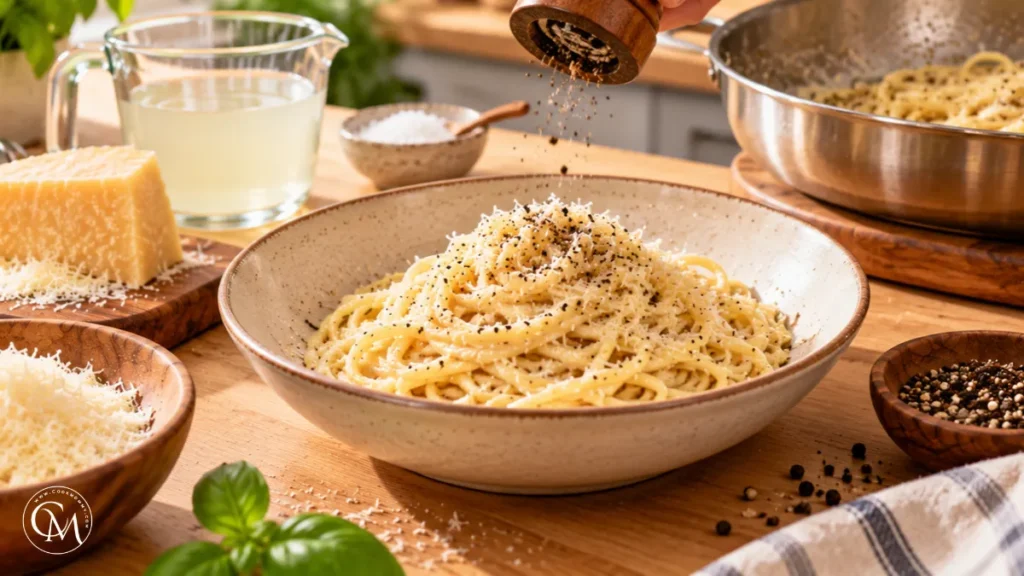
- Serve immediately in warm bowls with extra Pecorino and freshly cracked pepper.
Nutritional Information
Approximate nutrition per serving, based on four servings:
- Calories: 520
- Protein: 22 g
- Carbohydrates: 65 g
- Fat: 18 g
- Saturated fat: 10 g
- Fiber: 3 g
- Sodium: about 780 mg
These are estimates and will vary with the pasta, cheese, serving size, and optional fat used. Spaghetti with cheese is a carbohydrate-rich meal with protein from pasta and cheese. Pair it with vegetables or a salad for more fiber and variety.
Healthier Alternatives
- This recipe contains little added sugar, so there is not much to reduce. For a whole-grain version, use whole-wheat spaghetti and keep extra pasta water nearby because whole-grain noodles may absorb sauce quickly.
- For dairy-free Spaghetti with cheese, try a plant-based Parmesan-style alternative plus a little nutritional yeast for savory depth. Add it gradually because melting quality varies.
- For gluten-free diners, choose sturdy corn-and-rice or brown-rice spaghetti. For children, reduce the pepper and favor Parmesan. For a lighter plate, use slightly less cheese and add peas, zucchini, spinach, or broccoli. For seniors who prefer softer textures, cook the pasta a little longer.
Serving Suggestions
- Serve Spaghetti with cheese with lemony arugula, roasted broccoli, green beans, or a tomato-cucumber salad. Fresh vegetables and acidity balance the richness of the cheese.
- For a heartier dinner, add grilled chicken, sautéed mushrooms, roasted shrimp, or crispy chickpeas. Mushrooms work especially well with Pecorino and pepper.
- For guests, twirl the spaghetti into warm shallow bowls and offer extra cheese and pepper at the table.
Common Mistakes to Avoid
- Using cheese that is grated too coarsely. Fine shreds melt faster and more evenly.
- Adding cheese over high heat. Excess heat often creates a stringy or grainy sauce.
- Forgetting pasta water. Starchy water gives Spaghetti with cheese its glossy, cohesive texture.
- Over-salting the cooking water. Pecorino already contributes significant saltiness.
- Overcooking the pasta. Pull it early so it can finish in the skillet without turning soft.
- Waiting too long to serve. Cheese-based sauces thicken quickly as they cool.
Storing Tips for the Recipe
- Store leftover Spaghetti with cheese in an airtight container in the refrigerator for up to 3 days. Refrigerate leftovers promptly after the meal.
- To reheat, place the pasta in a skillet with a splash of water and warm gently over low heat, tossing often. If using a microwave, heat in short intervals with a spoonful of water to reduce drying.
- You can grate the cheese and crack the pepper a day ahead, but cook the pasta fresh when possible. Freezing is not ideal because the cheese sauce can become grainy after thawing.
- This recipe became one of my regular meals because it turns a few pantry staples into dinner without requiring a separate sauce, a long simmer, or a last-minute grocery run.
Conclusion
Spaghetti with cheese proves that simple cooking still rewards good technique. With finely grated cheese, fragrant black pepper, properly cooked pasta, reserved cooking water, and gentle heat, you can make a glossy, satisfying sauce in about 25 minutes without relying on cream.
The five tips here are useful beyond Spaghetti with cheese: prepare before cooking, toast spices carefully, save starchy water, control the heat, and season after tasting. Once those habits become automatic, this is an easy option for busy nights.
Try the recipe and make it your own with vegetables, different cheeses, or a milder pepper level. If you cook it, leave a comment or review with your favorite variation, and subscribe for more practical recipes and kitchen tips.
FAQs
Can I make Spaghetti with cheese without Pecorino Romano?
Yes. Parmesan gives a milder, nuttier flavor. You can also use a half-Parmesan, half-Pecorino blend while following the same gentle, low-heat mixing technique.
Why does my cheese sauce become clumpy?
The pan is usually too hot, or the cheese is added too quickly. Remove it from direct heat, use finely grated cheese, and add warm pasta water gradually.
Can I add cream to the recipe?
Yes, but it is not necessary. Spaghetti with cheese gets its creamy texture from cheese, starch, and pasta water. Cream makes the sauce richer and heavier.
What type of black pepper is best?
Freshly cracked black pepper gives the brightest aroma and warmth. Tellicherry peppercorns are excellent, but ordinary whole black peppercorns work well too.
Can I make this recipe ahead of time?
It is best served immediately because the sauce thickens as it cools. Grate the cheese and prepare the pepper ahead, then cook and combine just before serving.
How do I make the sauce creamier without more cheese?
Add warm reserved pasta water gradually and toss vigorously. The starch helps create a smoother emulsion, giving the sauce a creamy texture without adding extra dairy.
What vegetables pair well with this pasta?
Roasted broccoli, peas, spinach, asparagus, mushrooms, and zucchini all work well. Add cooked vegetables near the end so they warm through without disrupting the sauce.
Tried it before ?
There are no reviews yet. Be the first one to write one.