
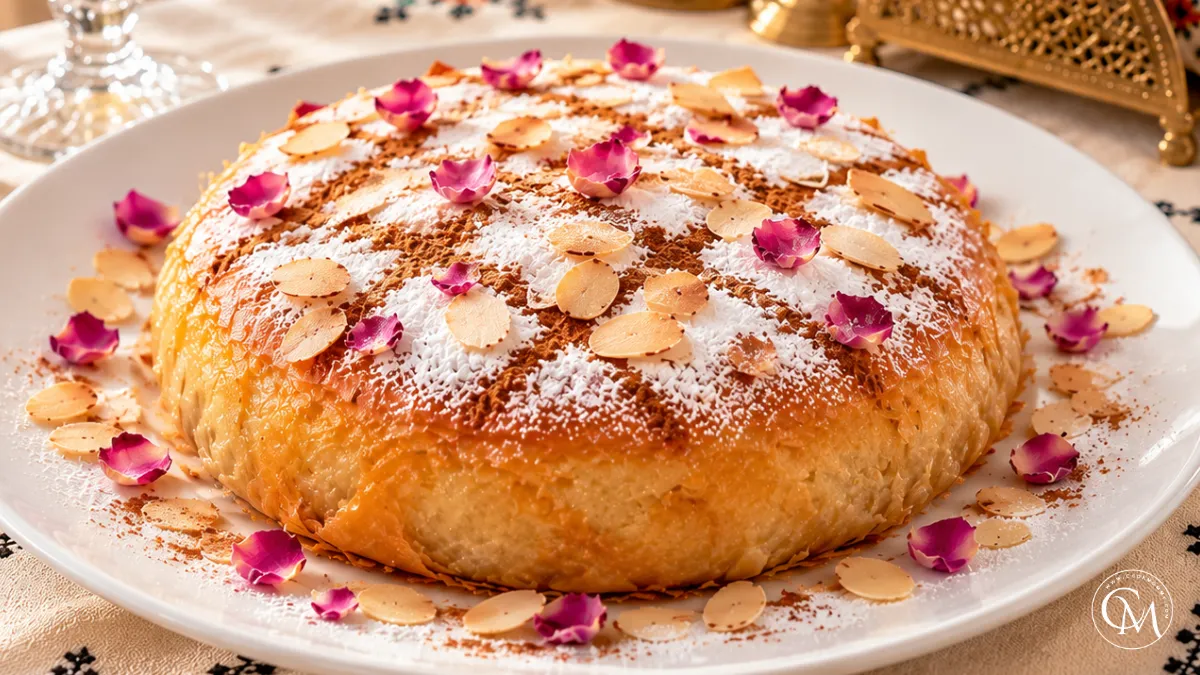
Traditional Chicken Pastilla: 5 Steps to Crispy Perfection
Did you know that chicken needs to reach an internal temperature of 165°F (74°C) for food safety, yet the secret to an irresistibly crispy Moroccan pastry is keeping its cooked filling cool and nearly moisture-free? That contrast explains why making perfect Chicken Pastilla requires more than simply wrapping chicken in pastry.
This beloved Moroccan dish, also known as bastilla or b’stilla, combines tender spiced chicken, toasted almonds, delicate eggs, and paper-thin pastry. Its signature sweet-and-savory flavor makes every bite memorable. Although Chicken Pastilla often appears at weddings, holidays, and family celebrations, you can prepare an impressive homemade version without professional cooking skills. The secret is controlling moisture, building aromatic layers, and baking until the pastry turns beautifully golden.
This traditional Chicken Pastilla recipe breaks everything into five manageable steps, with practical techniques to prevent soggy pastry and dry filling.
Whether you’re exploring Moroccan cuisine or preparing something special for guests, this guide will help you achieve delicious results.
Table of Contents
Ingredients List
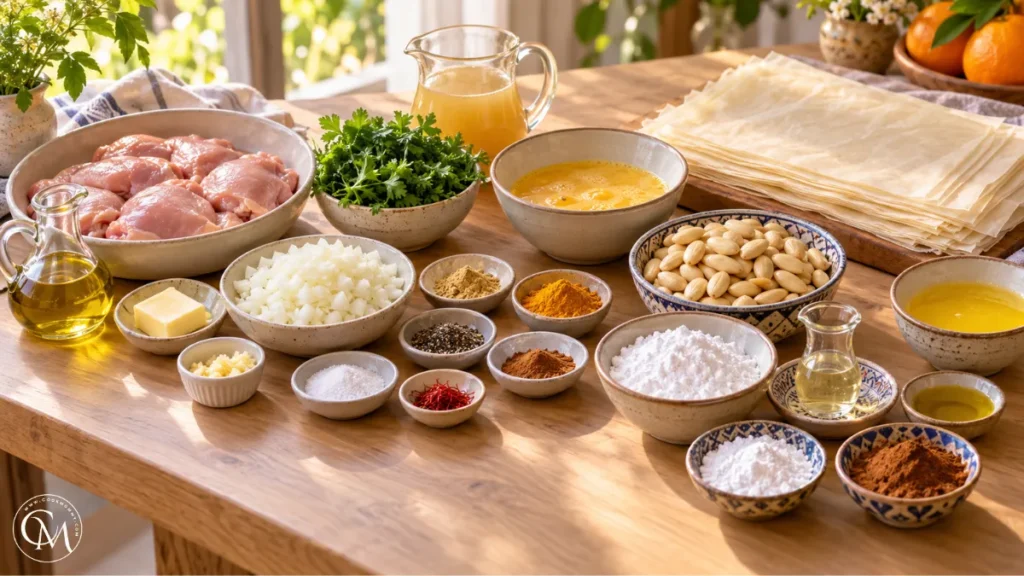
Making authentic Chicken Pastilla starts with fresh ingredients and a balanced combination of warm spices, savory chicken, and crunchy almonds.
For the Chicken Filling
- 1.5 lbs (700 g) boneless, skinless chicken thighs
- 2 medium onions, finely chopped
- 3 tablespoons olive oil
- 2 tablespoons unsalted butter
- 3 garlic cloves, minced
- 1 teaspoon ground ginger
- 1 teaspoon turmeric
- 1 teaspoon ground cinnamon
- ½ teaspoon black pepper
- ½ teaspoon salt, adjusted to taste
- ¼ teaspoon saffron threads, optional
- ½ cup chopped fresh parsley and cilantro
- ¾ cup chicken broth or water
- 3 large eggs, lightly beaten
For the Almond Filling
- 1 cup (140 g) blanched almonds
- 2 tablespoons powdered sugar
- 1 teaspoon ground cinnamon
- 1 teaspoon orange blossom water, optional
For the Pastry
- 10–12 sheets warqa pastry or phyllo dough
- 4 tablespoons melted butter
- 1 tablespoon olive oil
- Powdered sugar and cinnamon for decorating
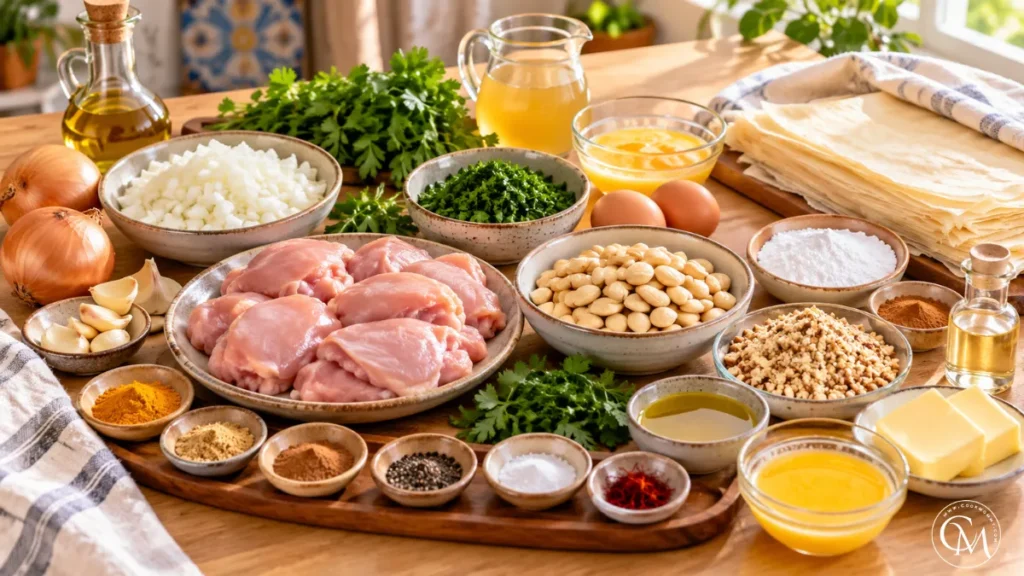
Ingredient substitutions: Chicken breast works if you prefer leaner meat, although thighs remain juicier. Phyllo makes an accessible alternative to traditional Moroccan warqa. Walnuts can replace almonds, but the flavor will change.
For the best Chicken Pastilla, use fresh herbs and avoid adding too much liquid to the filling.
Timing
| Preparation Stage | Estimated Time |
|---|---|
| Ingredient preparation | 25 minutes |
| Chicken and filling preparation | 45 minutes |
| Cooling and assembly | 20 minutes |
| Baking | 30 minutes |
| Total time | 2 hours |
| Servings | 6 |
Allow additional time if your filling needs longer to cool.
Helpful tip: Prepare the chicken mixture the previous day. Refrigerating it makes assembly easier and helps prevent the pastry from becoming soggy.
Step-by-Step Instructions
Follow these five steps to make Chicken Pastilla with a flavorful filling and delicate, golden pastry.
Step 1: Prepare Your Ingredients
- Begin by chopping the onions, mincing the garlic, and measuring your spices.
- Cut the chicken thighs into large pieces so they cook evenly without drying out.
- Wash and thoroughly dry the fresh herbs before chopping them.
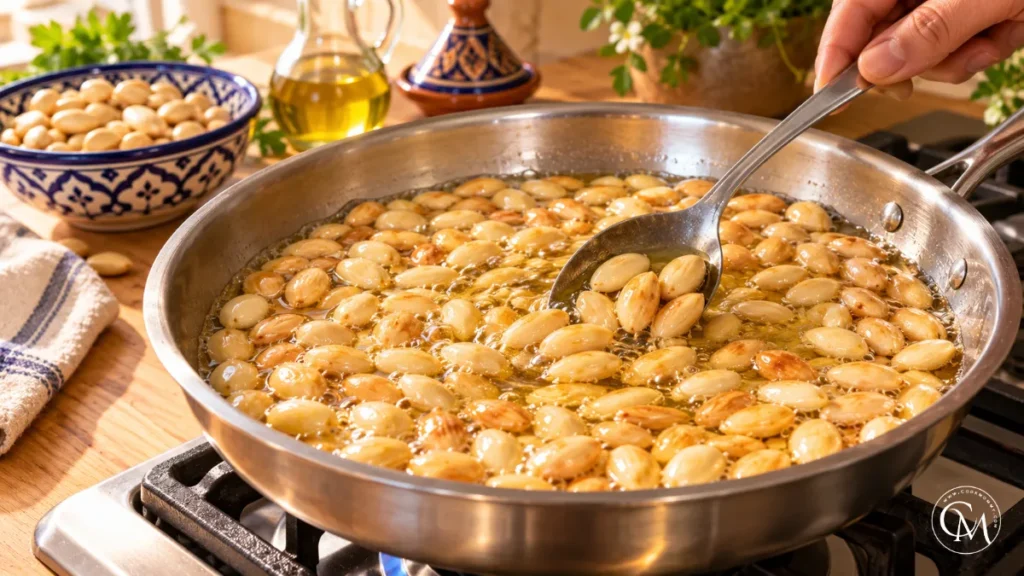
- Toast the almonds in a dry skillet over medium heat for approximately 5–7 minutes, stirring frequently until fragrant.
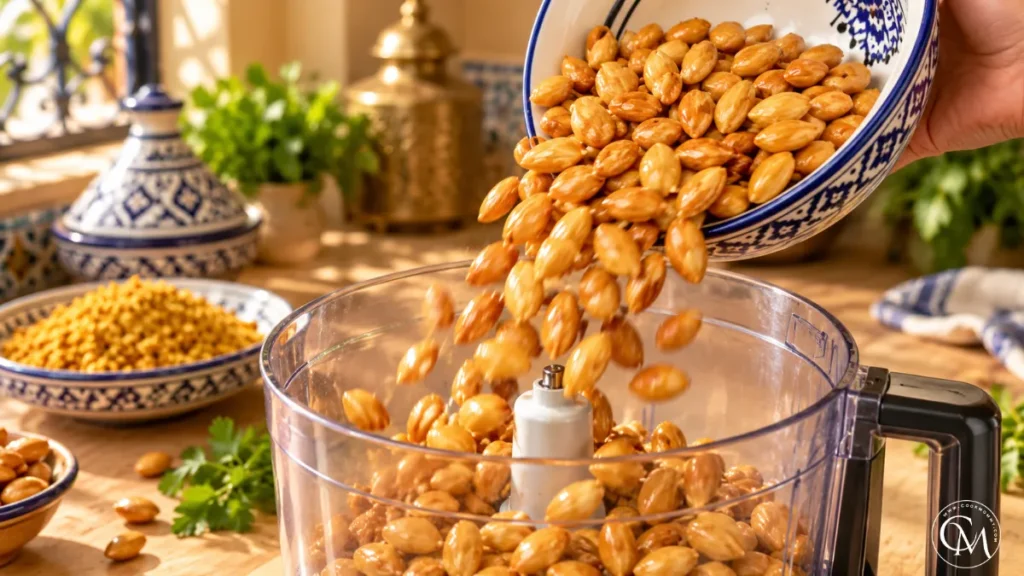
- Let them cool, then pulse briefly in a food processor. You want coarse crumbs rather than almond flour.
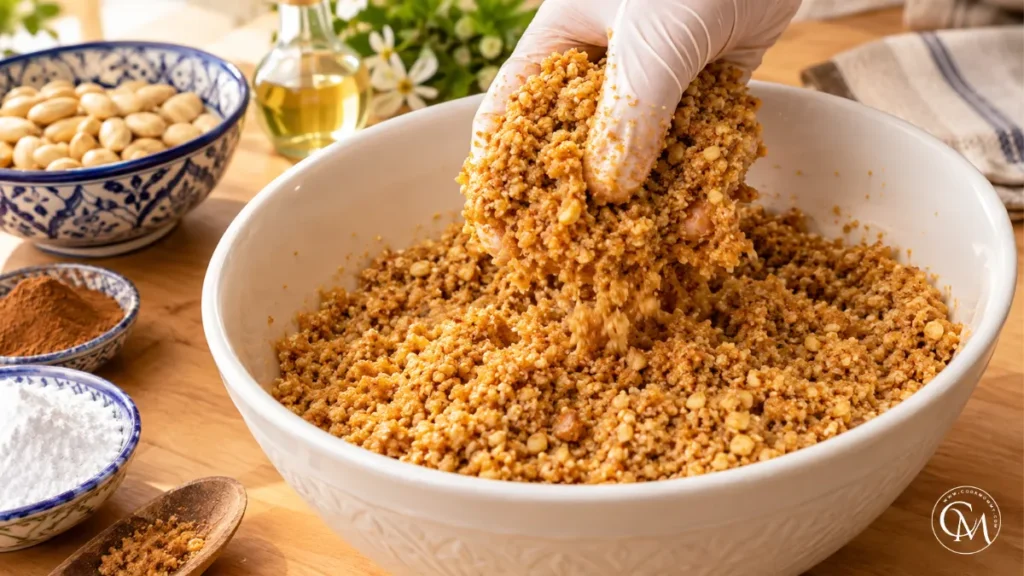
- Mix the almonds with powdered sugar, cinnamon, and optional orange blossom water.
- Kitchen tip: Keep phyllo covered with a slightly damp kitchen towel while working. Exposed sheets dry quickly and become brittle.
- Preparing everything beforehand gives you better control over the cooking process.
Step 2: Build a Fragrant Moroccan Flavor Base
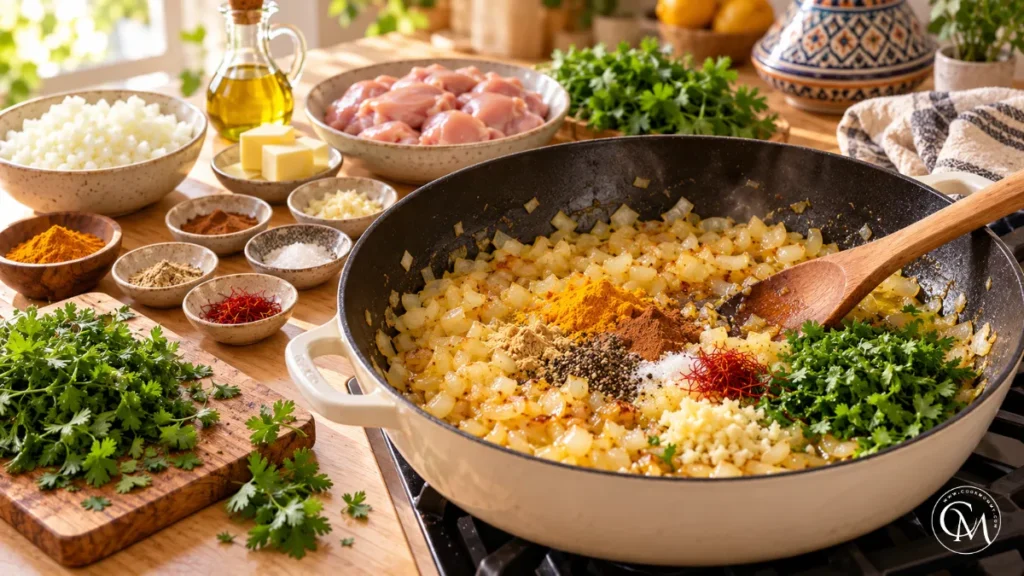
- Heat the olive oil and 2 tablespoons of butter in a large skillet or heavy-bottomed pot over medium heat.
- Add the chopped onions and cook for approximately 8–10 minutes, stirring occasionally.
- The onions should become soft and lightly golden.
- Add the garlic, ginger, turmeric, cinnamon, black pepper, salt, and saffron.
- Stir for another 30 seconds until fragrant.
- This technique, often called blooming spices, releases aromatic compounds into the warm fat and helps distribute flavor throughout the dish.
- Add the chopped parsley and cilantro.
- A well-developed spice base gives Chicken Pastilla its distinctive Moroccan aroma without overwhelming the natural flavor of the chicken.
- Kitchen tip: Avoid high heat after adding spices. Ground spices can burn quickly and create bitterness.
Step 3: Cook the Chicken Until Tender
- Add the chicken pieces to the fragrant onion mixture.
- Turn them gently to coat every side with the spices.
- Pour in the chicken broth, cover the pot, and simmer over medium-low heat for approximately 20–25 minutes, or until cooked through.
- Chicken must reach 165°F (74°C) internally, measured with a food thermometer.
- Remove the chicken, allow it to cool slightly, and shred it into bite-sized pieces.
- Meanwhile, uncover the pot and simmer the remaining onion sauce until thickened.
- Gradually stir in the beaten eggs over low heat, cooking until they form soft, fully set curds that absorb the flavorful sauce.
- Return the shredded chicken to the mixture and combine gently.
- Texture tip: The filling should be moist but never watery. Excess liquid creates steam during baking, making crispy Chicken Pastilla difficult to achieve.
- Spread the filling on a shallow tray to cool before assembly.
Step 4: Combine the Filling and Assemble the Pastilla
- Preheat your oven to 375°F (190°C).
- Mix the melted butter with 1 tablespoon of olive oil.
- Brush a 9-inch round baking pan lightly with the mixture.
- Arrange 6–7 pastry sheets in overlapping layers, brushing each sheet lightly with butter. Leave enough pastry hanging over the edges to fold over the filling.
- Spread the cooled chicken mixture evenly across the bottom.
- Sprinkle the prepared almond mixture over the chicken.
- This creates a beautiful contrast between savory chicken, warm cinnamon, and lightly sweetened nuts.
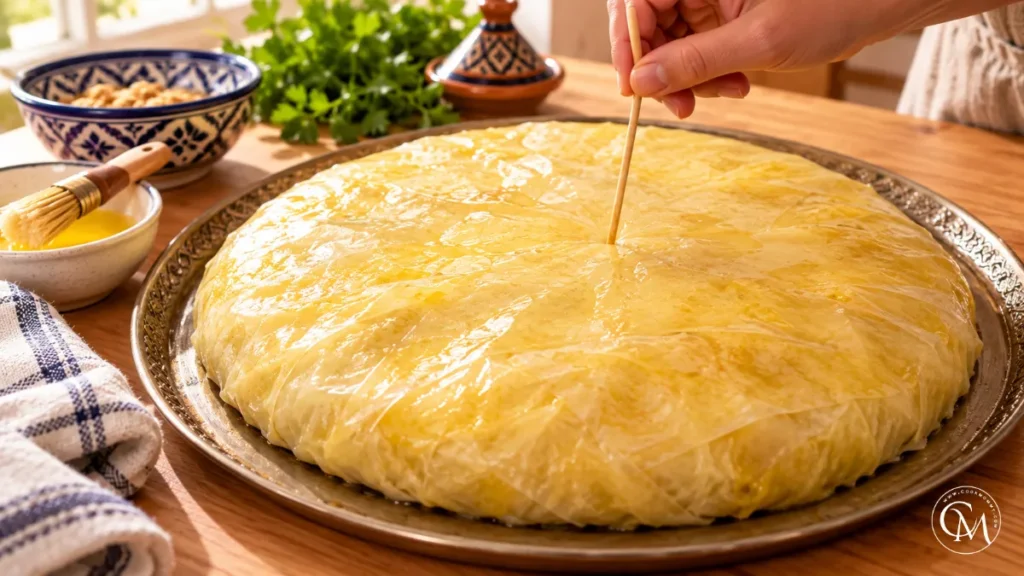
- Fold the overhanging pastry inward. Cover with the remaining sheets, brushing between layers and tucking the edges neatly underneath.
- Traditional Chicken Pastilla gets its signature texture from carefully layered pastry rather than a thick dough crust.
- Important: Handle thin pastry gently, and keep unused sheets covered until needed.
Step 5: Bake Until Golden and Adjust the Final Flavor
- Brush the top with any remaining melted butter mixture.
- Bake for approximately 25–35 minutes, until the pastry becomes deeply golden, crisp, and flaky.
- If the top browns too quickly, cover loosely with aluminum foil during the final minutes.
- Remove the pie from the oven and rest it for 8–10 minutes before slicing.
- Taste a small portion before adding the traditional finishing decoration.
- If the filling already tastes sweet, use less powdered sugar.
- For an authentic presentation, dust the top lightly with powdered sugar and create decorative lines using cinnamon.
- The finished Chicken Pastilla should have a crisp exterior, warmly spiced filling, and delicate almond crunch.
- Serve warm for the best texture.
Nutritional Information
The following values are approximate estimates per serving, assuming six portions.
| Nutrient | Approximate Amount |
|---|---|
| Calories | 650 kcal |
| Protein | 36 g |
| Carbohydrates | 44 g |
| Total fat | 37 g |
| Saturated fat | 12 g |
| Fiber | 3 g |
| Sugar | 9 g |
| Sodium | 550 mg |
Chicken Pastilla provides protein from chicken and eggs, while almonds contribute fiber and unsaturated fats.
Actual nutrition depends on pastry thickness, butter quantities, ingredient brands, and portion sizes. These values are estimates, not laboratory-tested measurements.
Healthier Alternatives
You can adapt Chicken Pastilla to different preferences while preserving its recognizable Moroccan flavor.
- Lower sugar: Reduce the powdered sugar in the almond filling by half. Cinnamon and toasted almonds provide plenty of natural flavor.
- Whole-grain options: Use whole-wheat phyllo if available, although it may produce a slightly denser crust.
- Dairy-free version: Replace melted butter with olive oil or a suitable plant-based alternative.
- Gluten-free version: Choose certified gluten-free pastry sheets suitable for baking. Handle them according to their package instructions.
- Lighter filling: Substitute some chicken thighs with chicken breast and use less oil.
- For children, reduce black pepper and serve smaller portions. For older adults who prefer softer textures, finely shred the chicken and chop the almonds into smaller pieces.
- These adjustments make Chicken Pastilla easier to customize without losing its characteristic sweet-and-savory appeal.
Serving Suggestions
Chicken Pastilla makes an elegant centerpiece for family gatherings, special dinners, or weekend meals.
Try serving it with:
- Moroccan carrot salad: Lemon, cumin, and fresh herbs balance the richness.
- Cucumber and tomato salad: Crisp vegetables add freshness.
- Harira soup: A comforting Moroccan starter for festive meals.
- Mint tea: A traditional accompaniment that complements the aromatic spices.
- Roasted vegetables: A colorful option for a complete dinner.
For entertaining, prepare individual mini pastillas using smaller pastry portions.
I especially recommend serving the pie on a large platter with cinnamon decoration just before bringing it to the table.
For a Moroccan-inspired menu, pair it with homemade zaalouk or taktouka.
Common Mistakes to Avoid
Even experienced home cooks can struggle with Chicken Pastilla when small details are overlooked.
- Using watery filling Excess moisture softens the pastry. Reduce the onion sauce thoroughly and cool the mixture before assembling.
- Overcooking the chicken Chicken breast can become dry when cooked too long. Use a food thermometer and stop cooking when safely done.
- Skipping butter between layers A light coating of fat helps separate the pastry sheets, encouraging a flaky texture.
- Adding too much sugar Sweetness should complement the spices, not overpower the savory filling.
- Overfilling the pastry An overloaded pie may burst or bake unevenly. Spread ingredients evenly and seal the edges carefully.
- Slicing immediately Resting the pastilla for several minutes helps it hold its shape and makes cleaner slices possible.
Storing Tips for the Recipe
- Proper storage helps preserve the flavor of leftover Chicken Pastilla.
- Refrigeration: Place leftovers in airtight containers and refrigerate within two hours. Use within 3–4 days.
- Freezing: Wrap individual portions securely and freeze for up to two months for best texture.
- Reheating: Reheat in a 350°F (175°C) oven until the center reaches 165°F (74°C). An oven helps restore crispness better than a microwave.
- Meal preparation: Cook the filling one day ahead and refrigerate it separately. Assemble the pastry shortly before baking.
- This recipe became one of my regular meals because the filling can be prepared ahead, making a special family dinner much easier to organize.
Conclusion
Traditional Chicken Pastilla brings together everything that makes Moroccan cooking memorable: aromatic spices, tender chicken, toasted almonds, and beautifully crisp pastry. Although its elegant appearance may seem intimidating, the five-step method makes this impressive dish achievable in an ordinary home kitchen.
The most important techniques are simple: prepare your ingredients carefully, develop the spice base, cook the chicken gently, remove excess moisture, and bake until golden. Once you understand these details, homemade Chicken Pastilla becomes much easier to prepare confidently.
Try this recipe for your next family dinner or special occasion, and experiment with the sweetness and seasoning to suit your taste. If you make it, leave a comment or review sharing your results and favorite adjustments. Subscribe for more Moroccan recipes, practical cooking tips, and delicious homemade inspiration.
FAQs
1. What is Chicken Pastilla made of?
Chicken Pastilla is a traditional Moroccan savory-sweet pie containing spiced chicken, onions, eggs, almonds, cinnamon, and thin pastry sheets. It is typically baked until golden and finished with powdered sugar.
2. Can I make Chicken Pastilla ahead of time?
Yes. Prepare the chicken and almond fillings one day ahead, refrigerate them separately, and assemble shortly before baking. This approach saves time while keeping the pastry pleasantly crisp.
3. What pastry works best for Chicken Pastilla?
Traditional Moroccan warqa gives the most authentic texture. Phyllo pastry is a convenient alternative available in many supermarkets. Brush each layer lightly with fat to encourage flakiness.
4. Why is my Chicken Pastilla soggy?
Soggy pastry usually results from excess moisture or assembling the pie with hot filling. Reduce the sauce thoroughly, cool the filling, and bake until the pastry is crisp.
5. Can I freeze Chicken Pastilla before baking?
Yes. Assemble the pie, wrap it securely, and freeze it unbaked. Bake directly from frozen, allowing additional cooking time and checking that the center is thoroughly heated before serving.
6. Is Chicken Pastilla sweet or savory?
It combines both flavors. Chicken, onions, and spices create a savory foundation, while cinnamon, almonds, and powdered sugar add delicate sweetness without turning the dish into a dessert.
7. Can I make Chicken Pastilla without almonds?
Absolutely. Omit the almonds or substitute toasted sunflower seeds if suitable for your dietary needs. The flavor will differ, but the spiced chicken and flaky pastry remain delicious.
Tried it before ?
There are no reviews yet. Be the first one to write one.