
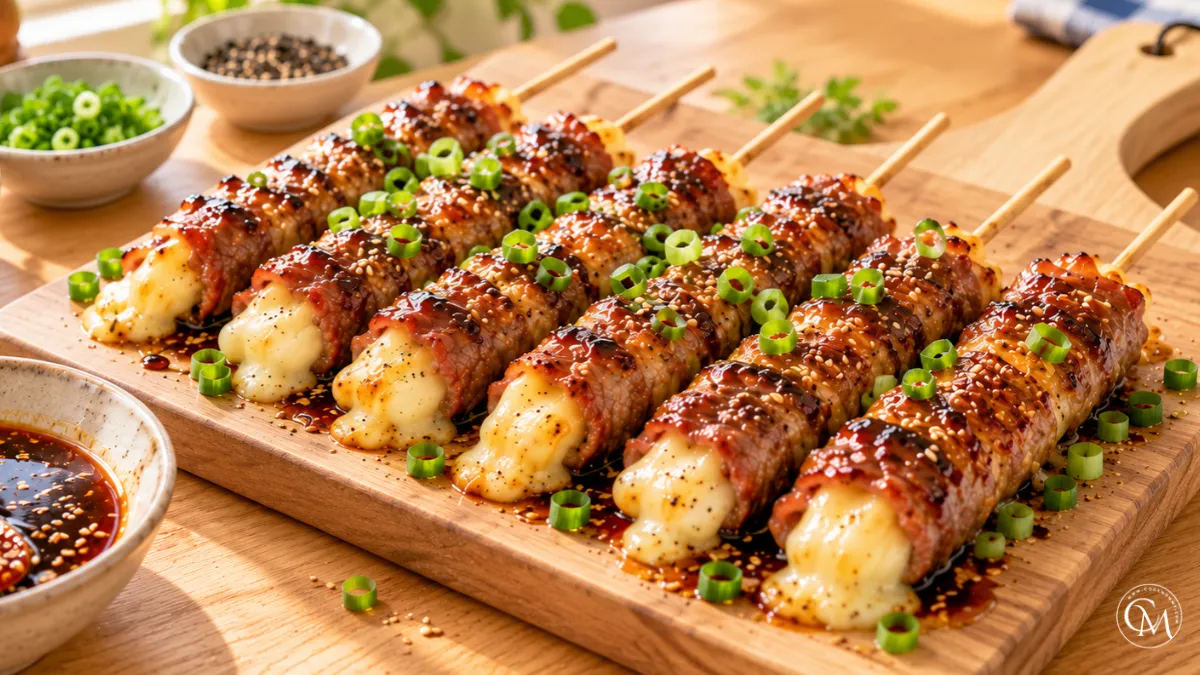
Easy Beef Cheese Yakitori: 5 Tricks for Juicy, Cheesy Skewers
Did you know that the USDA recommends cooking whole-cut beef to 145°F (63°C), followed by a three-minute rest, rather than relying on color alone? That small detail can make a big difference when preparing juicy beef skewers.
Beef Cheese Yakitori combines tender, thinly sliced beef, creamy melted cheese, and a glossy, savory-sweet glaze. Inspired by Japanese-style grilled skewers, this homemade version delivers restaurant-style flavor using everyday ingredients. The secret isn’t an expensive cut of meat or complicated equipment. It’s knowing how to slice the beef, choose the right cheese, control the heat, and apply the sauce.
Whether you’re preparing a quick family dinner, party appetizer, or satisfying weekend snack, this recipe offers five practical tricks for achieving beautifully caramelized beef with a deliciously cheesy center. Best of all, you don’t need a traditional charcoal grill. A regular frying pan or grill pan works wonderfully.
Table of Contents
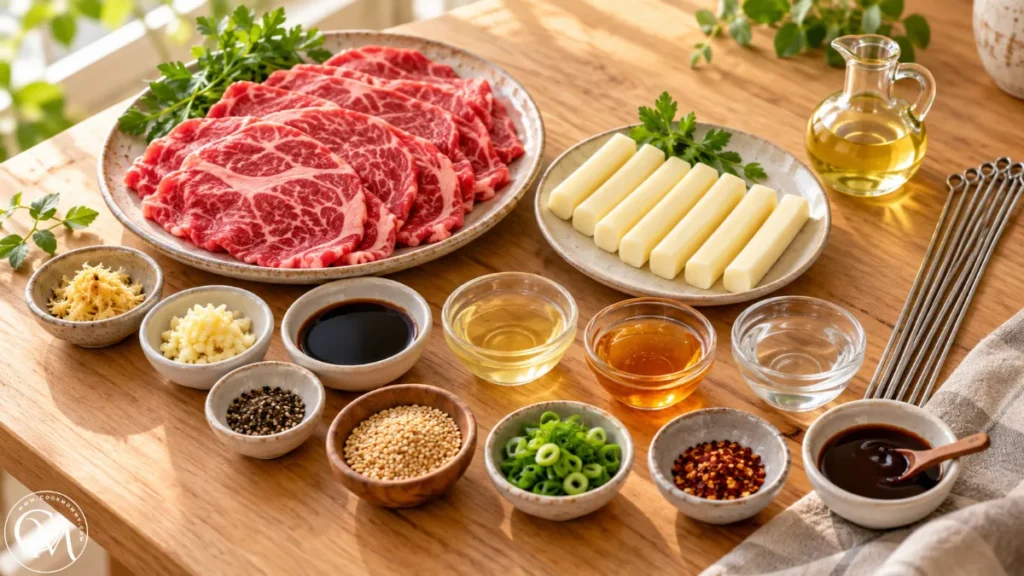
Ingredients List
Making delicious Beef Cheese Yakitori starts with fresh ingredients that complement one another without overpowering the beef.
Servings: 4 (approximately 8 skewers)
For the Beef and Cheese Skewers
- 1 lb (450 g) thinly sliced beef sirloin or ribeye
- 7 oz (200 g) low-moisture mozzarella cheese, cut into 8 sticks
- 1 tablespoon neutral cooking oil
- 1 teaspoon freshly grated ginger
- 2 garlic cloves, minced
- 8 bamboo or metal skewers
- Freshly ground black pepper, to taste
For the Yakitori-Style Sauce
- 3 tablespoons low-sodium soy sauce
- 2 tablespoons mirin
- 1 tablespoon honey or brown sugar
- 1 tablespoon water
- 1 teaspoon rice vinegar
- 1 teaspoon cornstarch mixed with 2 teaspoons cold water (optional)
Optional Garnishes
- Toasted sesame seeds
- Thinly sliced green onions
- Red pepper flakes
- Extra yakitori-style glaze
- Ingredient substitutions: Ribeye provides rich marbling, while sirloin offers a leaner option. Provolone or a firm, low-moisture melting cheese can replace mozzarella.
- For the sauce, substitute mirin with a mixture of water, a little rice vinegar, and additional honey.
- Cooking tip: Avoid fresh mozzarella packed in water. Its moisture makes the cheese more likely to leak during cooking.
Timing
One reason Beef Cheese Yakitori works so well for busy evenings is its relatively short cooking time.
| Task | Time |
|---|---|
| Preparation | 15 minutes |
| Sauce preparation | 5 minutes |
| Cooking | 10 minutes |
| Resting | 3 minutes |
| Total | 33 minutes |
- These estimates assume you’re using pre-sliced beef and cooking in two batches.
- If slicing the beef yourself, allow another 10 minutes. Metal skewers also eliminate the preparation required for bamboo skewers.
- Make-ahead tip: Prepare the sauce and slice the cheese the previous evening to simplify dinner preparation.
Step-by-Step Instructions
Follow these five steps to make Beef Cheese Yakitori with tender beef, melted cheese, and a beautifully balanced glaze.
Step 1: Prepare the Beef and Cheese
- Start by slicing the beef into thin, even strips, approximately ⅛ inch thick.
- If your beef is difficult to slice, refrigerate it until very cold or briefly place it in the freezer until firm but not frozen solid.
- Pat each strip dry with paper towels.
- Cut the mozzarella into eight evenly sized sticks, approximately 3 inches long.
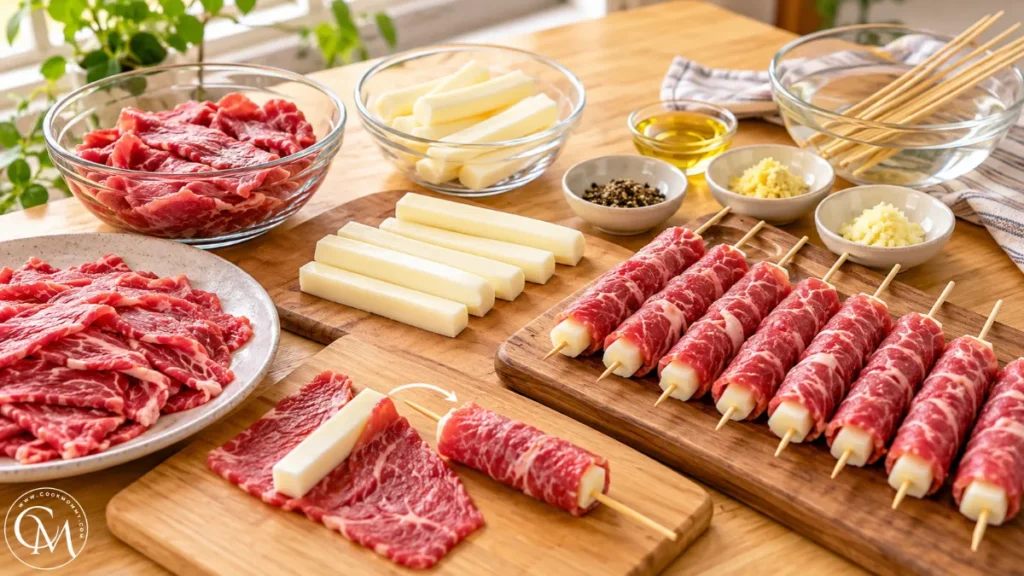
- Wrap the beef around each cheese stick, slightly overlapping the slices to create a secure covering.
- Thread each wrapped piece onto a skewer, positioning the seam underneath.
- Trick : Thin beef cooks quickly and wraps tightly around the cheese, helping prevent excessive leakage.
- If using bamboo skewers over an open flame, soak them in water for approximately 30 minutes beforehand. Keep raw beef refrigerated until cooking.
Step 2: Build the Flavor Base
- The signature flavor of Beef Cheese Yakitori comes from a balance of salty, sweet, and savory ingredients.
- In a small saucepan, combine soy sauce, mirin, honey, water, rice vinegar, ginger, and garlic.
- Simmer gently for 3–5 minutes, stirring occasionally.
- For a thicker glaze, stir in the optional cornstarch mixture and simmer briefly until glossy.
- Set aside a portion of the sauce for serving before brushing any onto raw meat.
- Trick : Simmering dissolves the sweetener and helps the sauce cling evenly to the beef.
- Avoid reducing the sauce too much. Excessively thick glaze can burn before the meat finishes cooking.
Step 3: Cook the Beef Skewers
- Heat a large nonstick frying pan or grill pan over medium-high heat.
- Add the cooking oil and carefully arrange the skewers in a single layer, seam-side down.
- Cook for approximately 2–3 minutes per side, turning gently to brown the beef evenly.
- Cooking time depends on thickness, pan temperature, and skewer size.
- Trick : Leave space between skewers. Overcrowding traps steam, preventing the browned exterior that makes grilled beef so appealing.
- Use a meat thermometer to confirm the beef reaches 145°F (63°C), followed by a three-minute rest.
- Because the strips are thin, insert the probe sideways into the thickest accessible portion of beef without touching the cheese. If reliable measurement is difficult, use an equivalent unwrapped piece of beef to check doneness.
Step 4: Combine Beef, Cheese, and Glaze
- Once the beef has browned and reached its safe cooking temperature, reduce the heat to low.
- Brush the skewers with the prepared sauce and turn gently to coat each side.
- Continue heating briefly until the glaze becomes shiny and lightly sticky.
- The residual heat should soften the cheese without causing excessive melting.
- Trick : Add the sugary sauce near the end of cooking. Applying it too early can create burnt spots and bitter flavors.
- The combination of beef juices, melted mozzarella, and sweet-salty glaze gives Beef Cheese Yakitori its distinctive taste.
Step 5: Finish and Adjust Seasoning
- Transfer the cooked skewers to a clean serving plate and complete the three-minute resting period.
- Sprinkle with toasted sesame seeds, green onions, and freshly ground black pepper.
- Taste the reserved sauce before adding more.
- If it seems too salty, dilute it with a small amount of warm water. If you prefer additional sweetness, stir in a little honey.
- Trick : Finish with just enough glaze to enhance the beef without drowning the cheese.
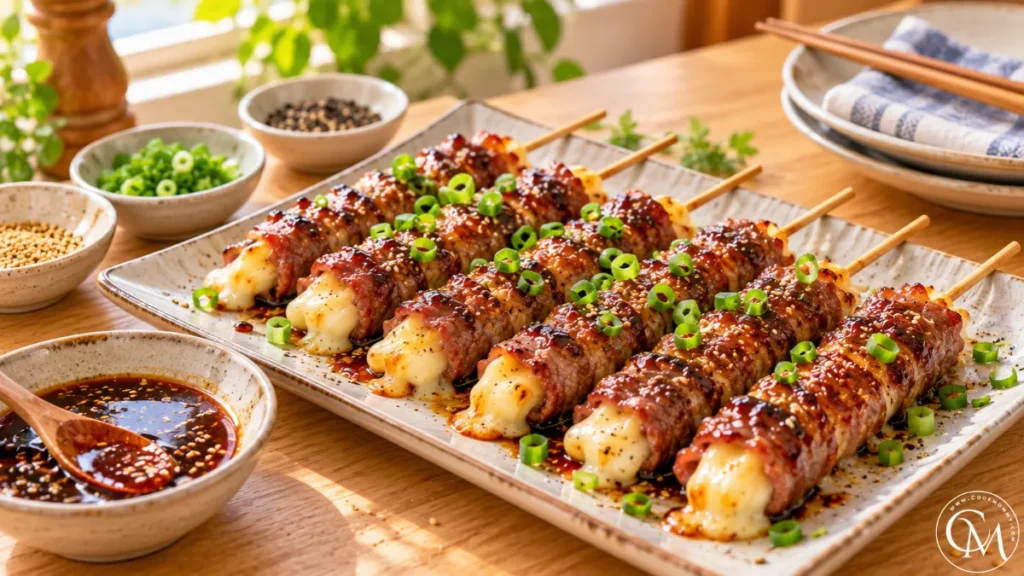
- Serve Beef Cheese Yakitori warm, when the filling is soft and the outside remains beautifully glazed.


Nutritional Information
The following values are approximate estimates for one serving of Beef Cheese Yakitori, based on four servings per recipe.
| Nutrient | Approximate Amount |
|---|---|
| Calories | 420 kcal |
| Protein | 35 g |
| Carbohydrates | 13 g |
| Total fat | 25 g |
| Saturated fat | 11 g |
| Sugar | 9 g |
| Sodium | 750 mg |
| Fiber | Less than 1 g |
- Actual nutrition depends on beef marbling, cheese selection, sauce absorption, and portion sizes.
- This dish provides protein from beef and cheese, but its saturated fat and sodium content can vary considerably.
- Pairing the skewers with steamed vegetables and a moderate portion of rice creates a more varied meal.
Healthier Alternatives
You can customize Beef Cheese Yakitori without sacrificing its satisfying texture or rich flavor.
- Lower-sugar option: Reduce the honey by half and use an unsweetened mirin alternative. Ginger, garlic, and rice vinegar help maintain flavor.
- Leaner option: Replace ribeye with trimmed sirloin and use part-skim, low-moisture mozzarella.
- Whole-grain option: Serve the skewers over brown rice or quinoa instead of refined white rice. These sides contribute additional fiber.
- Gluten-free option: Choose certified gluten-free tamari and confirm that the mirin and other packaged ingredients meet your dietary requirements.
- Dairy-free option: Substitute a firm plant-based cheese designed for melting. Results vary, so select one that holds its shape when heated.
- For children, use mild seasoning and remove the meat from the skewers before serving.
Older adults or anyone who prefers easier-to-chew foods may appreciate thinner, tender beef slices with a softer rice accompaniment.
Serving Suggestions
The versatility of Beef Cheese Yakitori makes it suitable for casual lunches, family dinners, or entertaining guests.
- Japanese-inspired rice bowl: Serve over steamed rice with sliced cucumber, carrots, and sesame seeds.
- Fresh vegetable plate: Pair with lightly steamed broccoli, snap peas, or green beans.
- Party appetizers: Arrange the skewers on a platter with extra glaze for dipping.
- Lighter dinner: Add crunchy cabbage slaw dressed with rice vinegar and sesame oil.
- Comfort-food combination: Serve alongside garlic fried rice or stir-fried mushrooms.
For an attractive presentation, arrange the skewers diagonally across a plate and finish with green onions.
A sprinkle of toasted sesame seeds adds visual contrast and a pleasant nutty flavor.
Common Mistakes to Avoid
Even an easy Beef Cheese Yakitori recipe benefits from a few important precautions.
- Using beef that’s too thick Thick slices are harder to wrap and may cook unevenly. Aim for thin, flexible strips that overlap securely.
- Choosing overly moist cheese Fresh mozzarella releases liquid during cooking. Use low-moisture cheese for better structure and less leakage.
- Overcrowding the pan Too many skewers lower the pan temperature, encouraging steaming instead of browning. Cook in batches.
- Adding glaze too early Honey and sugar can scorch over high heat. Brush the sauce onto the beef near the end.
- Cooking without checking temperature Appearance alone cannot confirm food safety. The USDA recommends 145°F for whole-cut beef with a three-minute rest.
- Turning the skewers aggressively Rough handling can loosen the beef wrapping. Use tongs and rotate carefully to keep the cheese enclosed.
Storing Tips for the Recipe
Proper storage helps preserve the flavor and texture of leftover Beef Cheese Yakitori.
- Refrigeration: Transfer cooked skewers into shallow airtight containers and refrigerate within two hours. Consume within 3–4 days.
- Freezing: Freeze cooled cooked skewers in airtight, freezer-safe packaging for up to two months for best quality. The cheese texture may change after thawing.
- Reheating: Warm gently in a covered skillet, then verify the leftovers reach 165°F (74°C). Avoid prolonged heating, which can make the beef tough.
- Meal preparation: Prepare uncooked wrapped skewers up to one day ahead and refrigerate them separately from the sauce.
This recipe earns a place in a regular meal rotation because most components can be prepared ahead, cooking requires just one pan, and the flavor is easy to customize.
Conclusion
Beef Cheese Yakitori brings together juicy beef, creamy melted cheese, and a savory-sweet Japanese-inspired glaze in one irresistible dish. With five simple techniques using thin beef, preparing a balanced sauce, avoiding overcrowding, glazing at the right moment, and finishing carefully you can produce flavorful skewers without complicated equipment.
The recipe is flexible enough for quick weeknight dinners, casual gatherings, or special family meals. You can adjust the sweetness, experiment with different melting cheeses, or pair the skewers with your favorite vegetables and grains. Ready to give it a try? Make these homemade cheesy beef skewers and discover your favorite combination of flavors.
After cooking, leave a comment or review sharing your results and any creative variations you enjoyed. Subscribe to the blog for more approachable recipes, practical kitchen tips, and delicious dinner inspiration.
FAQs
1. What is Beef Cheese Yakitori?
Beef Cheese Yakitori is a Japanese-inspired skewer dish featuring thinly sliced beef wrapped around cheese, then grilled or pan-seared and coated with a savory-sweet sauce. It’s a popular variation on traditional yakitori-style cooking.
2. What cheese works best for Beef Cheese Yakitori?
Low-moisture mozzarella is an excellent choice because it melts smoothly while maintaining some structure. Provolone also works well, while fresh mozzarella may release too much moisture during cooking.
3. Can I make Beef Cheese Yakitori without a grill?
Absolutely! A nonstick frying pan or grill pan works beautifully. Use medium-high heat for browning, avoid overcrowding, and apply the glaze near the end to prevent burning.
4. How do I prevent cheese from leaking out?
Use firm cheese sticks, wrap them tightly with overlapping beef slices, and position the seams underneath. Gentle turning and controlled heat also help keep the filling inside.
5. Can I prepare Beef Cheese Yakitori ahead of time?
Yes. Assemble the uncooked skewers up to one day ahead and keep them refrigerated. Prepare the sauce separately, then cook and glaze the skewers shortly before serving.
6. Is Beef Cheese Yakitori gluten-free?
Not automatically. Regular soy sauce usually contains wheat. Use certified gluten-free tamari and check the mirin, cheese, and other packaged ingredients to prepare a gluten-free variation.
7. What should I serve with Beef Cheese Yakitori?
Steamed rice, cucumber salad, stir-fried vegetables, and sesame cabbage slaw are excellent accompaniments. Their fresh flavors and contrasting textures complement the rich beef, melted cheese, and sweet-savory glaze.
Tried it before ?
There are no reviews yet. Be the first one to write one.