

Easy Pomegranat Cheong : 5 Secrets to Homemade Cheong
Did you know that a traditional Korean fruit syrup can be made with just two main ingredients and no cooking? Using a 1:1 fruit-to-sugar ratio by weight, you can transform fresh pomegranate seeds into a beautifully ruby-red syrup with surprisingly little effort. If you enjoy homemade drinks, fruity desserts, or exploring Korean recipes, Pomegranat Cheong deserves a place in your kitchen.
Cheong is a traditional Korean fruit preserve made by combining fruit with sugar and allowing time for the fruit to release its natural juices. Unlike boiled syrups, this method preserves much of the fruit’s fresh flavor. The result is a concentrated, sweet-tart syrup that’s wonderful in sparkling water, iced tea, yogurt, and desserts.
What makes Pomegranat Cheong particularly appealing is its balance of bright acidity and natural sweetness. In this guide, you’ll discover five practical secrets to making a flavorful homemade Korean syrup, including choosing the right fruit, balancing ingredients, and avoiding common storage mistakes.
Table of Contents
Ingredients List
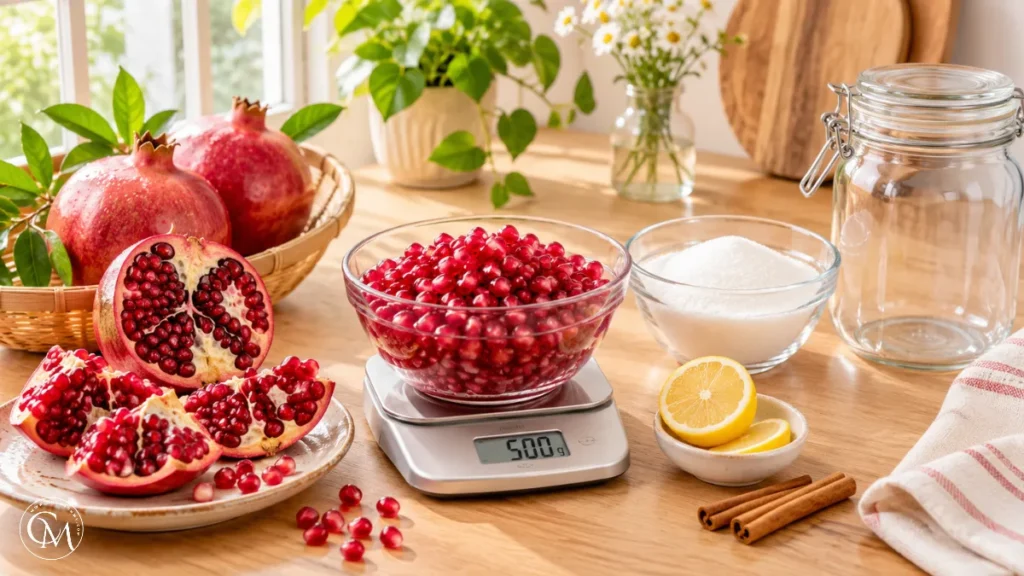
Making Pomegranat Cheong requires only a few ingredients. The secret is choosing fresh, juicy pomegranates and measuring everything accurately.
Main Ingredients
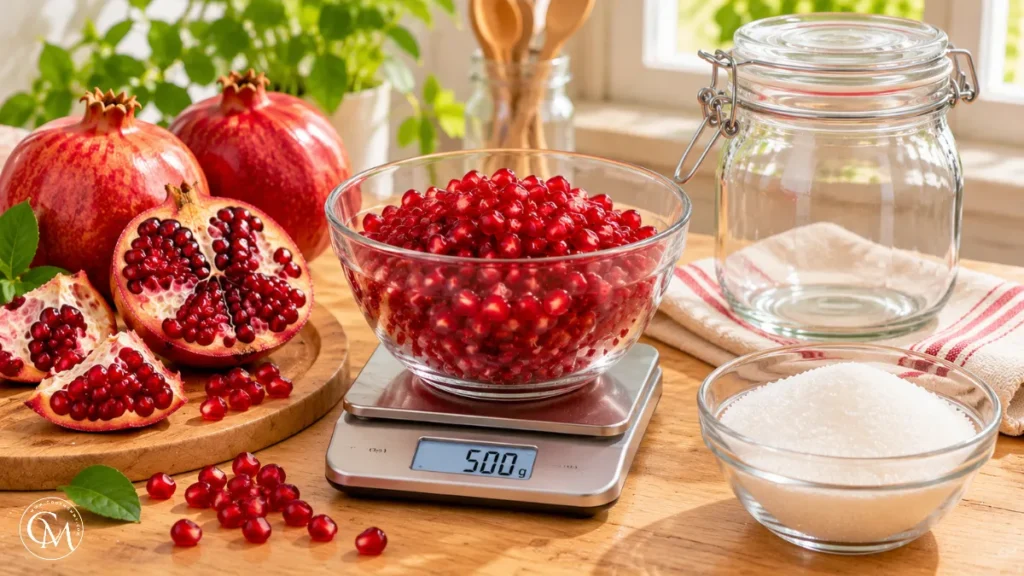
- 500 g fresh pomegranate arils: Approximately 2–3 medium pomegranates, depending on size. Choose deeply colored, juicy seeds.
- 500 g granulated white sugar: Helps extract the fruit’s juice and creates the syrup’s signature sweetness.
- 1 teaspoon fresh lemon juice (optional): Adds a refreshing citrus note.
- 1 small cinnamon stick (optional): Introduces gentle warmth without overpowering the pomegranate.
Ingredient Substitutions
- White sugar produces a clean flavor and vibrant color. You can substitute some with light cane sugar, although the syrup may develop subtle caramel notes.
- Frozen pomegranate arils are another convenient option. Thaw them in the refrigerator and use their released juice along with the fruit.
- For the classic Pomegranat Cheong recipe, keep the fruit and sugar equal by weight rather than measuring by volume.
- Kitchen tip: Avoid using pomegranate peel or white membranes because they can introduce unwanted bitterness.
Timing
Pomegranat Cheong is a no-cook recipe, making it particularly convenient for busy home cooks.
| Task | Time |
|---|---|
| Preparation | 15–20 minutes |
| Cooking | 0 minutes |
| Initial assembly | 5 minutes |
| Refrigerated extraction | 5–7 days |
| Total elapsed time | Approximately 1 week |
| Servings | About 20–25 tablespoons, depending on extraction |
Although the syrup requires several days of resting, the actual hands-on work takes approximately 20–25 minutes.
Unlike traditional stovetop fruit syrups, this method relies on sugar and time rather than heat.
Step-by-Step Instructions
Follow these five secrets to make delicious Pomegranat Cheong with consistent flavor and a beautiful ruby-red appearance.
Step 1: Prepare the Ingredients Carefully
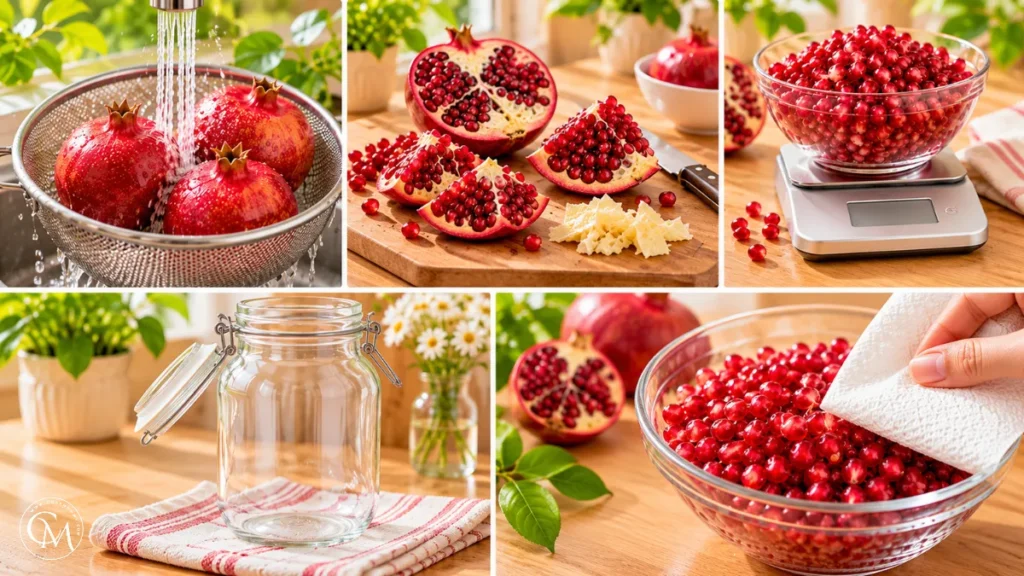
- Start by washing the pomegranates thoroughly under running water.
- Slice around the skin and gently separate the fruit into sections. Remove the juicy arils, discarding the bitter white membranes.
- Measure 500 g of arils using a kitchen scale.
- Next, prepare a clean, sanitized, completely dry glass jar with enough space for the fruit and sugar.
- Secret 1: Remove excess moisture.
- Additional water unnecessarily dilutes the syrup and can increase spoilage risks.
- For the best Pomegranat Cheong, use fresh, undamaged fruit and clean utensils throughout preparation.
Step 2: Build the Flavor Base
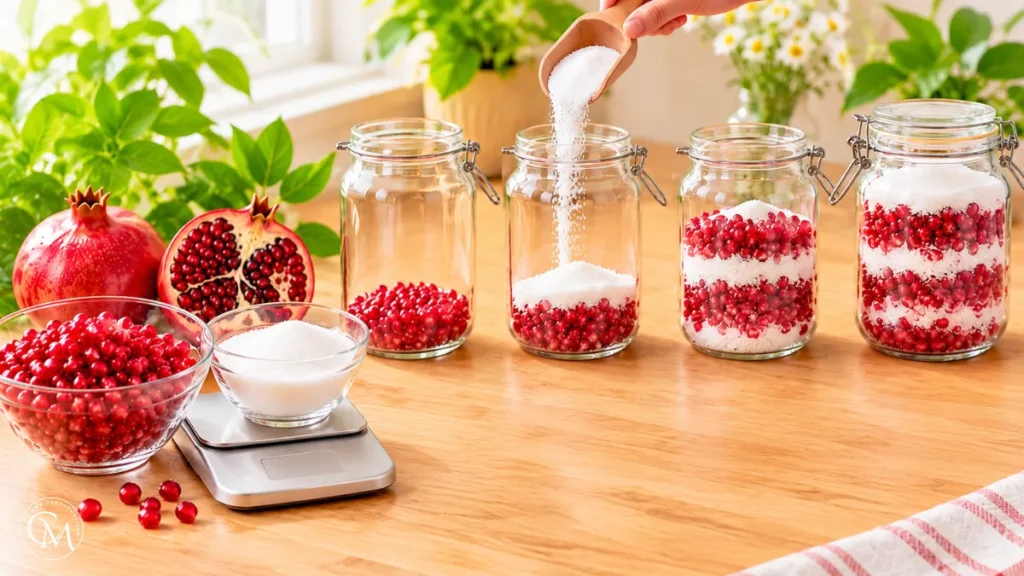
- Place approximately one-third of the pomegranate arils into the jar.
- Sprinkle an equal proportion of sugar over them. Continue alternating fruit and sugar until everything is added.
- Finish with a generous sugar layer.
- Secret 2: Measure sugar by weight.
- Sugar draws moisture from the fruit through osmosis, gradually creating a concentrated liquid without heating.
- This process helps develop the rich sweetness and fruity aroma associated with traditional Korean cheong.
- The 1:1 ratio is a common preparation method, but it does not make an uncooked syrup shelf-stable.
Step 3: Let the Fruit Release Its Juices
- The next stage of making Pomegranat Cheong requires patience rather than cooking.
- Close the jar and place it directly in the refrigerator at 40°F (4°C) or colder.
- Over the following days, the sugar begins dissolving as the fruit releases its juice.
- Gently turn the closed jar occasionally to redistribute the syrup. Avoid vigorous shaking.
- Secret 3: Skip the heat.
- Boiling isn’t necessary for this style of cheong. Keeping the mixture cold helps retain its fresh pomegranate character while reducing the risk associated with room-temperature storage.
Step 4: Combine and Balance the Flavors
- After approximately five days, examine the syrup.
- Most of the sugar should have dissolved, and the liquid should appear deep red.
- If some sugar remains at the bottom, gently stir it using a clean, dry utensil.
- Taste a small sample with a clean spoon.
- For a slightly brighter flavor, add the optional lemon juice.
- Secret 4: Taste the syrup diluted.
- Pomegranat Cheong is concentrated, so tasting it straight can make it seem sweeter than it will be in a finished drink.
- Mix one tablespoon with four tablespoons of cold water before deciding whether the flavor needs adjusting.
Step 5: Finish and Adjust
- After five to seven days, strain the syrup through a fine-mesh sieve into a clean container.
- Press the fruit gently if you prefer a slightly fuller texture, but avoid crushing the seeds aggressively.
- Transfer the finished Pomegranat Cheong into a sanitized glass bottle and refrigerate immediately.
- Secret 5: Strain before extended storage.
- Removing the fruit solids makes the syrup easier to pour and helps maintain a smoother consistency.
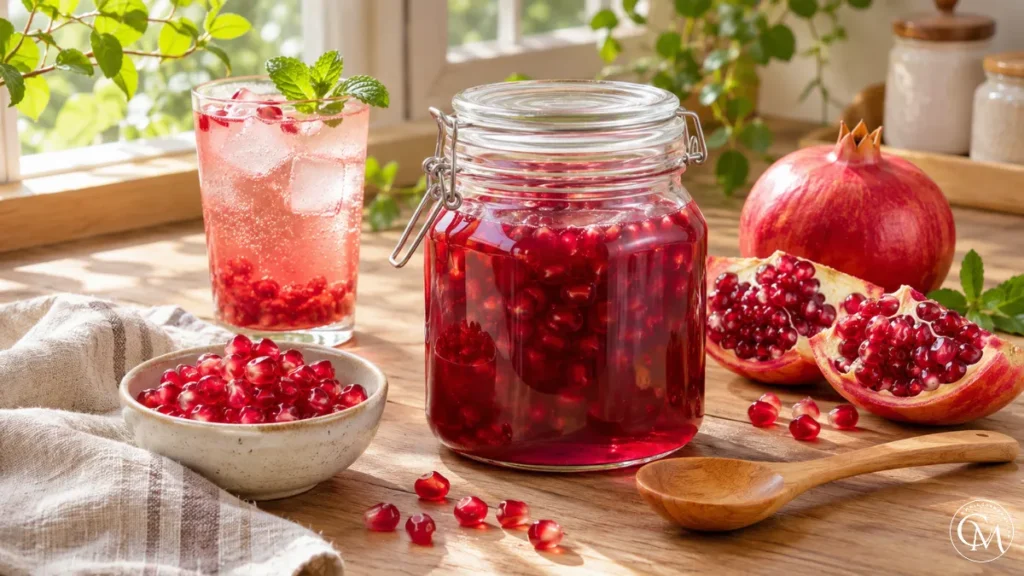
- For a refreshing drink, combine one tablespoon of syrup with 150–200 ml of sparkling water, adjusting to taste.
Nutritional Information
Pomegranat Cheong is a concentrated sweetener, so portion size matters.
The following values are approximate estimates for one tablespoon (15 ml) of finished syrup, assuming a conventional sugar-rich preparation.
| Nutrient | Approximate amount |
|---|---|
| Calories | 45–60 kcal |
| Carbohydrates | 12–15 g |
| Total sugars | 11–15 g |
| Fat | 0 g |
| Protein | 0 g |
| Fiber | Less than 1 g |
| Sodium | 0–2 mg |
- Actual nutritional values depend on the amount of fruit juice extracted and the final syrup yield.
- Although pomegranates naturally contain beneficial plant compounds, Pomegranat Cheong also contains substantial added sugar. Enjoy it as a flavorful ingredient rather than a health supplement.
Healthier Alternatives
- You can adapt Pomegranat Cheong to suit different preferences without sacrificing its characteristic fruity taste.
- Lower-sugar drinks: Instead of changing the sugar ratio during preparation, dilute a smaller serving of finished syrup with extra sparkling water or unsweetened tea.
- Reducing the sugar in the original mixture changes its preservation characteristics, so don’t assume the same storage period applies.
- Naturally dairy-free: Serve the syrup with coconut yogurt, plant-based milk, or sparkling water.
- Gluten-free: The basic syrup contains no gluten ingredients. Choose certified gluten-free accompaniments when necessary.
- Whole-grain pairing: Drizzle a small amount over oatmeal, whole-grain pancakes, or homemade granola instead of refined-flour desserts.
- For children, use smaller portions diluted with water. Older adults who prefer less sweetness may appreciate a teaspoon stirred into warm, caffeine-free tea.
- These adaptations make the syrup flexible while keeping its bold fruit flavor.
Serving Suggestions
One of the best features of Pomegranat Cheong is its versatility.
Here are several delicious ways to enjoy it.
- Sparkling pomegranate soda: Combine syrup, sparkling water, ice, and fresh mint for a refreshing homemade drink.
- Korean-style fruit tea: Stir one tablespoon into warm water for a comforting sweet-tart beverage.
- Breakfast yogurt: Add a small drizzle to plain Greek yogurt with toasted nuts.
- Pancake topping: Use Pomegranat Cheong instead of maple syrup for a tangy twist.
- Salad dressing: Whisk a teaspoon with olive oil, lemon juice, and a pinch of salt.
- Frozen treats: Mix diluted syrup with water and freeze into colorful ice pops.
For entertaining, serve the syrup in a small pitcher alongside chilled sparkling water so guests can customize their drinks.
Common Mistakes to Avoid
Even a simple fruit syrup can go wrong if a few important details are overlooked.
1. Using Overripe or Damaged Fruit
- Bruised, moldy, or deteriorating pomegranates can negatively affect flavor and safety.
- Choose fresh, firm fruit and discard damaged arils.
2. Guessing the Sugar Quantity
- Measuring sugar by cups rather than weight makes the ratio less consistent.
- For reliable Pomegranat Cheong, use a digital kitchen scale.
3. Leaving the Jar at Room Temperature
- Some cheong traditions involve longer room-temperature maturation, but uncontrolled fermentation introduces uncertainty.
- For this home recipe, refrigerate immediately rather than leaving the mixture on the counter.
4. Using Wet or Dirty Utensils
- Moisture and contamination can encourage unwanted microbial growth.
- Always use clean, dry spoons and containers.
5. Ignoring Spoilage Signs
- Visible mold, unexpected bubbling, pressure buildup, or an alcoholic smell may indicate spoilage.
- Discard the entire batch rather than tasting it to check. Do not scrape mold away and reuse the remaining syrup.
Storing Tips for the Recipe
- Proper storage is essential for maintaining the quality of homemade Pomegranat Cheong.
- Keep the finished syrup refrigerated in a clean, tightly closed glass bottle at 40°F (4°C) or colder.
- Because this is an uncooked homemade preparation without a validated preservation process, make small batches and aim to use the strained syrup within two weeks as a cautious household guideline, not a guaranteed safe shelf life.
- Discard it sooner if spoilage is suspected.
- For longer storage, freeze portions in suitable freezer-safe containers, leaving room for expansion. High sugar levels may prevent the syrup from freezing completely solid.
- Never treat homemade cheong as shelf-stable simply because it contains plenty of sugar.
- This recipe became a regular part of my kitchen routine because one batch makes it easy to prepare several different drinks without making a fresh fruit syrup every time.
Conclusion
Homemade Pomegranat Cheong proves that a flavorful Korean-inspired syrup doesn’t require complicated techniques or expensive ingredients. With fresh pomegranates, sugar, and a little patience, you can create a vibrant, sweet-tart concentrate for refreshing beverages, breakfasts, and desserts.
The five essential secrets are straightforward: choose quality fruit, measure accurately, allow gentle refrigerated extraction, taste the syrup diluted, and store it carefully. What makes this recipe especially useful is its flexibility. A small amount can transform ordinary sparkling water, yogurt, or homemade tea into something memorable.
Try making Pomegranat Cheong this week and experiment with your favorite combinations. Have you tried homemade Korean fruit syrup before? Leave a comment or recipe review sharing your experience, and subscribe for more easy recipes, kitchen tips, and creative homemade treats.
FAQs
1. What is Pomegranat Cheong?
Pomegranat Cheong is a Korean-style fruit syrup made by combining fresh pomegranate arils with sugar. Over time, the sugar extracts the fruit’s natural juices, creating a sweet, concentrated liquid.
2. How long does Pomegranat Cheong take to make?
Preparation takes approximately 20–25 minutes, followed by five to seven days of refrigerated extraction. The exact timing depends on the fruit’s juiciness and how quickly the sugar dissolves.
3. Can I make Pomegranat Cheong without sugar?
You can make a fresh pomegranate concentrate with other sweeteners, but it won’t behave like traditional cheong. Sugar plays an important role in drawing moisture from the fruit.
4. Should pomegranate cheong be refrigerated?
Yes. Keep this uncooked homemade version refrigerated throughout preparation and storage. Its sugar content does not guarantee protection from mold, yeast, or unwanted fermentation.
5. Can I use frozen pomegranate seeds?
Absolutely. Thaw the seeds in the refrigerator before mixing them with sugar. Include the released juice and use the thawed fruit promptly for the best flavor.
6. Why is my homemade cheong cloudy?
Cloudiness can result from fruit pulp or tiny suspended particles. However, new cloudiness accompanied by bubbling, unpleasant odors, or mold may indicate spoilage and means the batch should be discarded.
7. What is the best way to use leftover syrup?
Mix it into sparkling water, drizzle it over yogurt, or add a little to salad dressings. Start with a teaspoon or tablespoon because the syrup is naturally concentrated.
Tried it before ?
There are no reviews yet. Be the first one to write one.