
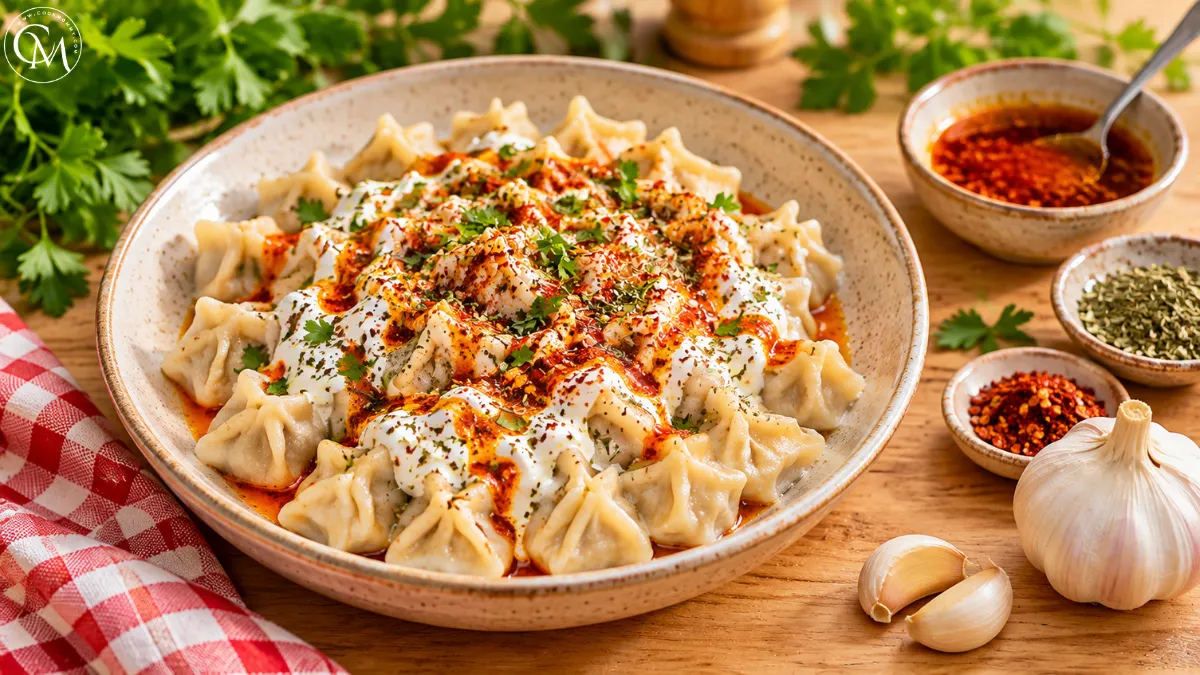
Authentic Turkish Manti Recipe: 5 Steps to Perfect Dumplings
Did you know that just 250 grams of flour can become enough delicate Turkish dumplings to serve four people? The secret isn’t expensive ingredients or complicated equipment. It’s understanding how to make thin dough, prepare a flavorful filling, and balance the traditional sauces.
This Turkish Manti Recipe brings one of Turkey’s most comforting dishes into your home kitchen. Mantı consists of tiny handmade dumplings filled with seasoned ground meat, gently boiled, and topped with garlicky yogurt and warm paprika butter.
Although making mantı requires patience, the process becomes surprisingly manageable once you learn a few simple techniques. Whether you’re exploring Turkish cuisine for the first time or recreating a favorite restaurant dish, this Turkish Manti Recipe walks you through five practical steps, with helpful tips for achieving tender dumplings and authentic flavor.
Table of Contents
Ingredients List
The beauty of this Turkish Manti Recipe lies in its simple ingredients. Each component contributes to the dish’s distinctive taste and texture.
For the Dumpling Dough
- 250 g (2 cups) all-purpose flour
- 1 large egg
- 100–120 ml water, added gradually
- ½ teaspoon salt
For the Meat Filling
- 250 g (9 oz) ground beef or lamb
- 1 small onion, finely grated
- ½ teaspoon salt
- ½ teaspoon freshly ground black pepper
- ½ teaspoon sweet paprika
- 1 tablespoon finely chopped parsley (optional)
For the Garlic Yogurt Sauce
- 300 g (1¼ cups) plain Greek or Turkish yogurt
- 2 garlic cloves, crushed
- ¼ teaspoon salt
- 1–2 tablespoons water, if needed
For the Paprika Butter
- 40 g (3 tablespoons) unsalted butter
- 1 teaspoon sweet paprika
- ½ teaspoon dried mint
- ¼ teaspoon red pepper flakes (optional)
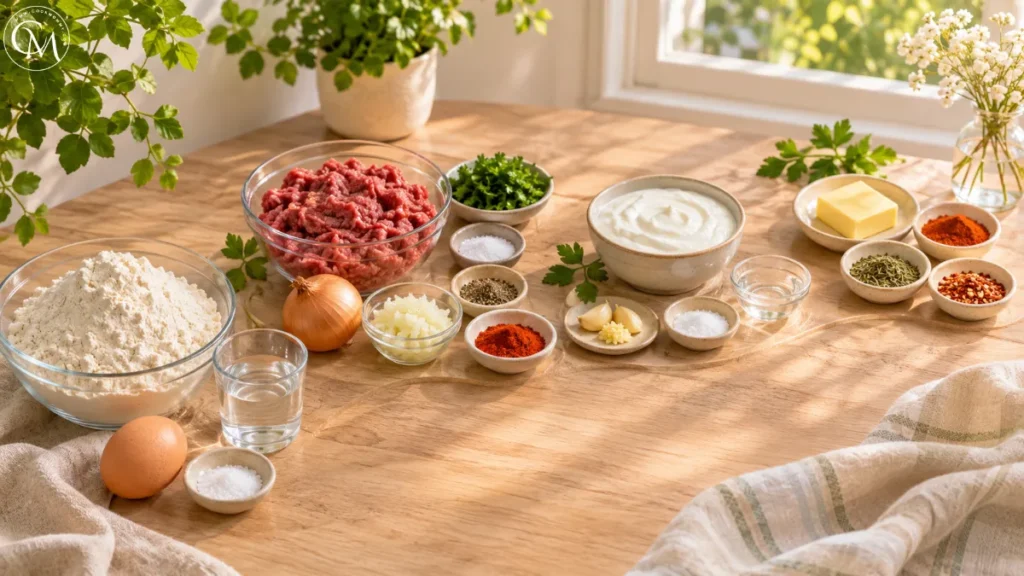
Ingredient Substitutions
- For a deeper, more authentic taste, choose minced lamb, or go with ground beef if you prefer a gentler flavor. You can also combine both meats.
- Plain whole-milk yogurt works beautifully instead of Greek yogurt. If it seems runny, strain it briefly before serving.
- For the dough, substitute up to one-third of the white flour with whole-wheat flour, adding a little extra water if necessary.
- The most important ingredients in this Turkish Manti Recipe are the seasoned meat, fresh dough, tangy yogurt, and fragrant butter sauce.
Timing
This homemade Turkish Manti Recipe makes approximately four servings.
| Task | Time |
|---|---|
| Preparation, including dough resting | 75 minutes |
| Cooking | 12 minutes |
| Total time | 87 minutes |
| Servings | 4 |
| Difficulty | Moderate |
- The preparation time includes kneading, resting, rolling, filling, and folding the dumplings.
- Beginners may need additional time for shaping, but the process becomes quicker with practice.
- Time-saving tip: Prepare and freeze uncooked mantı in advance. You can boil them directly from frozen, making future meals considerably easier.
Step-by-Step Instructions
Following this Turkish Manti Recipe carefully will help you achieve dumplings that are tender, flavorful, and sturdy enough to hold their filling.
Step 1: Prepare the Dough and Ingredients
- Start by adding the flour to a spacious bowl, then sprinkle in the salt and stir to distribute it evenly. Make a well in the center, add the egg, and gradually pour in the water.
- Mix until a firm dough forms. Knead on a lightly floured surface for approximately 8–10 minutes until smooth and elastic.
- Cover with plastic wrap or a damp kitchen towel and rest for 25–30 minutes.
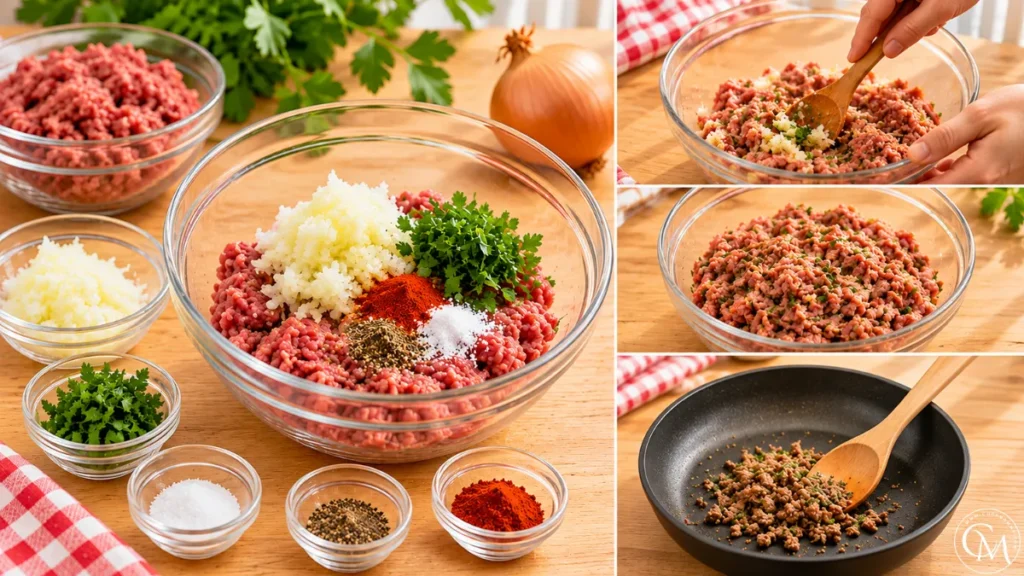
- Meanwhile, grate the onion and squeeze away excess moisture.Add the prepared onion to the minced meat, then gently mix in the salt, black pepper, paprika, and freshly chopped parsley.
- Kitchen tip: Mantı dough should feel firmer than ordinary pasta dough. Adding too much water produces sticky dumplings that are difficult to shape.
- Giving the dough time to rest softens its resistance, so you can stretch it into thin sheets without it pulling back into shape.
Step 2: Build the Flavorful Filling
- A delicious Turkish Manti Recipe depends on seasoning the meat properly before wrapping it.
- Mix the filling gently until the ingredients are evenly distributed. Avoid excessive mixing, which can make the cooked meat dense.
- The grated onion adds sweetness and moisture, while black pepper and paprika provide warmth without overpowering the beef or lamb.
- Unlike many other dumpling recipes, traditional mantı filling generally uses raw meat. It cooks inside the dough during boiling.
- Keep the filling refrigerated until you’re ready to assemble.
- Flavor tip: If you’re uncertain about seasoning, cook a tiny portion of filling in a skillet, taste it, and adjust the remaining mixture.
- This small step makes a noticeable difference in the finished dish.
Step 3: Shape and Cook the Dumplings
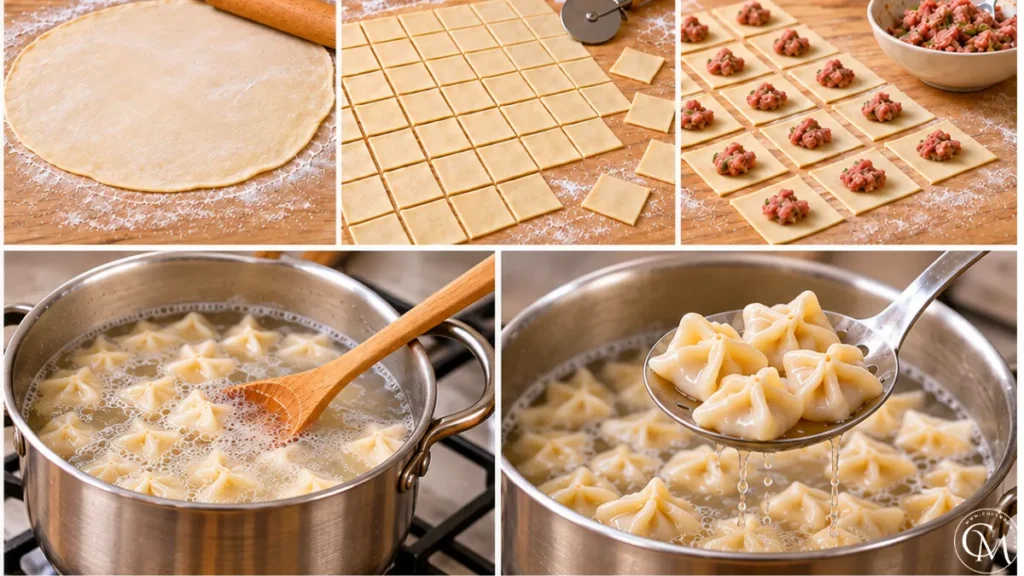
- Divide the rested dough into two portions. Keep one covered while working with the other.
- Roll the dough approximately 1–1.5 mm thick on a lightly floured surface.
- Cut into squares measuring about 3–4 cm (1¼–1½ inches).
- Place approximately ½ teaspoon of meat filling in the center of each square. Bring the four corners together, then pinch the seams firmly to seal.
- Repeat with the remaining dough and filling.
- Bring a large pot of salted water to a gentle boil. Add the dumplings in batches if necessary, stirring carefully to prevent sticking.
- Cook for approximately 10–12 minutes, depending on their size and dough thickness.
- The dumplings should become tender while retaining a slight bite. The ground meat filling should reach 71°C (160°F).
- Texture tip: Avoid aggressively boiling the dumplings. A steady, gentle boil helps prevent delicate seams from opening.
Step 4: Combine the Dumplings and Sauces
- While the dumplings cook, prepare the two classic toppings that define this Turkish Manti Recipe.
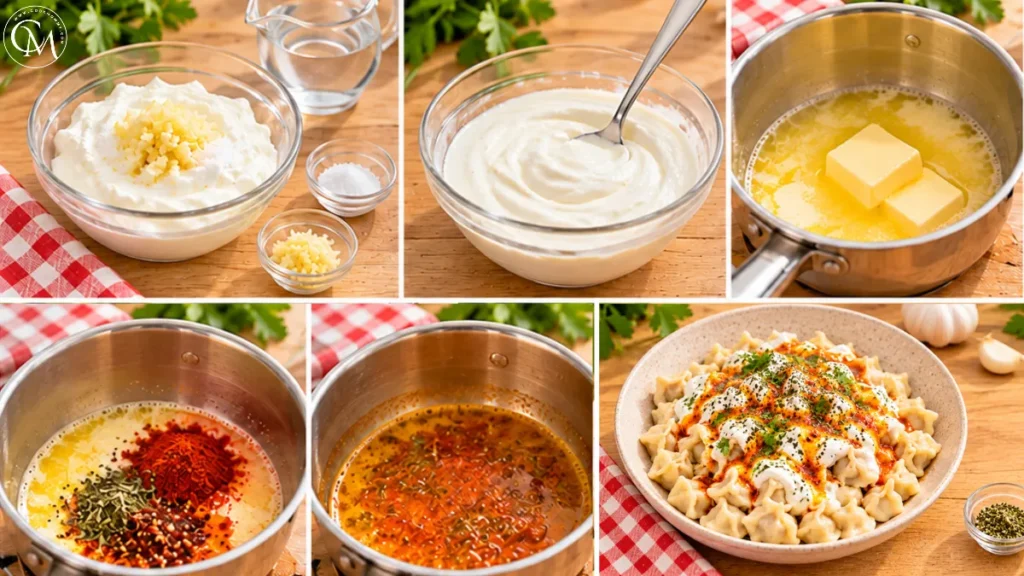
- First, combine the yogurt, crushed garlic, and salt in a bowl. Stir until smooth, adding a little water if you prefer a pourable consistency.
- Set a small saucepan over gentle heat and let the butter slowly turn into a smooth, golden liquid.
- Add the paprika, dried mint, and optional pepper flakes. Stir for approximately 20–30 seconds, then remove from the heat.
- The spices should become fragrant without burning.
- Drain the cooked dumplings carefully, reserving a little cooking water.
- Divide the mantı among warm serving bowls and spoon the garlic yogurt generously over the top.
- Finish with the aromatic paprika butter.
- Balance tip: Allow the yogurt to approach room temperature before serving. Extremely cold yogurt can cool the dumplings too quickly.
Step 5: Finish and Adjust the Seasoning
- The final step in this Turkish Manti Recipe is about creating balance.
- Taste a dumpling with both sauces before adding more salt or spices.
- For brighter flavor, increase the garlic slightly or add a small pinch of dried sumac.
- For additional richness, drizzle a little more warm paprika butter over each bowl.
- If the dumplings seem dry, add one or two teaspoons of reserved cooking water before topping them.
- Sprinkle with additional dried mint or parsley for freshness.
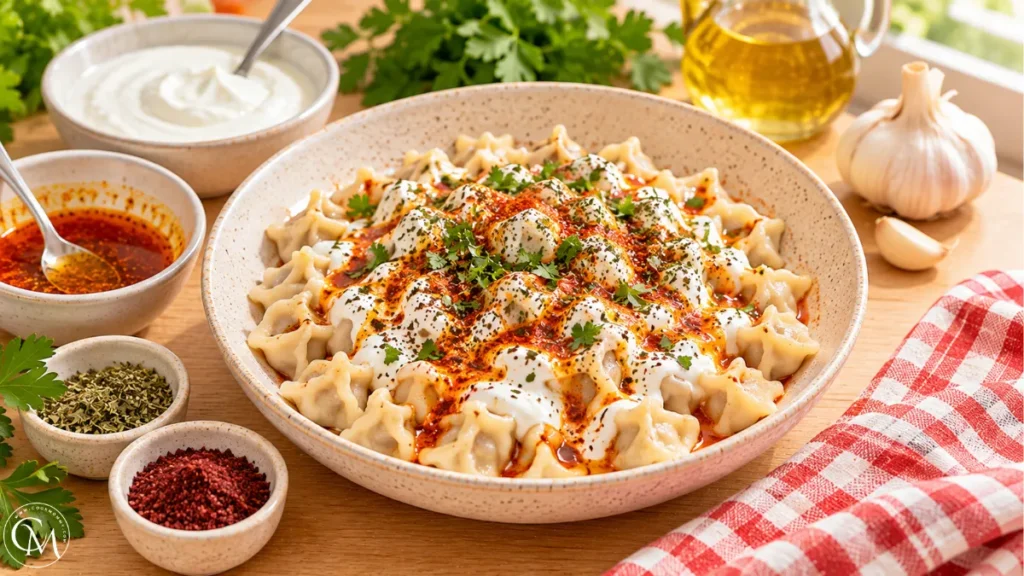
- Serve immediately while the dumplings are warm and the yogurt is creamy.
Nutritional Information
This Turkish Manti Recipe provides approximately four main-course servings.
Estimated nutrition per serving:
| Nutrient | Approximate Amount |
|---|---|
| Calories | 560 kcal |
| Protein | 28 g |
| Carbohydrates | 53 g |
| Total fat | 26 g |
| Saturated fat | 12 g |
| Fiber | 2–3 g |
| Sodium | 650 mg |
- These estimates assume moderately lean beef and whole-milk yogurt. Actual values depend on the ingredients, portion sizes, and amount of sauce used.
- Mantı provides protein from meat and yogurt alongside carbohydrates from its handmade dough. Pairing it with vegetables can create a more varied meal.
Healthier Alternatives
You can adapt this Turkish Manti Recipe to different dietary preferences without losing its comforting character.
Whole-Grain Version
- For a heartier dough, swap about a third of the regular white flour for whole-wheat flour.
- This adds fiber and a pleasantly nutty taste while maintaining the dough’s flexibility.
Lower-Fat Version
- Choose lean ground beef or turkey and replace some of the butter with olive oil.
- Low-fat plain yogurt can also reduce the overall fat content.
Lower-Sugar Option
- This savory dish contains no added sugar. Choose unsweetened yogurt to avoid unnecessary sweeteners.
Dairy-Free Version
- To make a dairy-free version, choose creamy, unflavored plant-based yogurt and substitute olive oil for the traditional butter.
- Soy yogurt generally provides a creamier result than thinner alternatives.
Gluten-Free Version
- Try a gluten-free flour blend formulated for pasta, ideally containing a binder.
- Because gluten-free dough can crack, roll it between sheets of parchment and handle it gently.
- For children, reduce the chili flakes. For older adults or anyone preferring softer textures, roll the dough thinly and cook until comfortably tender.
Serving Suggestions
The traditional presentation is one reason this Turkish Manti Recipe feels so special.
Serve the dumplings in shallow bowls, generously topped with garlic yogurt and paprika butter.
For a complete Turkish-inspired meal, consider pairing mantı with:
- Çoban salatası: A refreshing cucumber, tomato, and onion salad.
- Roasted vegetables: Zucchini, peppers, or eggplant provide color and contrast.
- Turkish tea: A pleasant way to finish a leisurely meal.
- Fresh herbs: Parsley or mint adds a bright finishing touch.
For a casual family dinner, place the sauces on the table so everyone can adjust their portion.
Common Mistakes to Avoid
Even a reliable Turkish Manti Recipe can produce disappointing results when small details are overlooked.
1. Rolling the dough too thick
Thick dough can overwhelm the filling. Aim for approximately 1–1.5 mm thickness.
2. Overfilling the dumplings
Too much meat prevents proper sealing. Use small portions and pinch the corners securely.
3. Skipping the resting period
Unrested dough resists rolling and may shrink. Give it at least 25 minutes to relax.
4. Using excessively wet filling
Grated onion releases moisture. Squeeze out excess liquid to prevent soggy dumplings.
5. Burning the paprika butter
Paprika can become bitter when overheated. Keep the heat gentle and remove the saucepan promptly.
6. Overcrowding the pot
Too many dumplings reduce water movement and increase sticking. Cook in batches when necessary.
Storing Tips for the Recipe
One practical advantage of this Turkish Manti Recipe is how well the uncooked dumplings freeze.
Arrange freshly shaped mantı on a flour-dusted tray without touching. Freeze until firm, then transfer to airtight freezer bags or containers.
For the best quality, use within two to three months.
Cook frozen dumplings directly in boiling water, allowing a few extra minutes and checking that the meat is thoroughly cooked.
Refrigerate cooked leftovers in airtight containers within two hours and consume within three to four days.
Store the yogurt sauce separately whenever possible. Reheat dumplings gently with a splash of water, then add fresh yogurt and warm paprika butter.
This dish earns a place in a regular meal rotation because one shaping session can provide several convenient homemade dinners.
Conclusion
Making traditional Turkish dumplings from scratch is an enjoyable way to explore the comforting flavors of Turkish home cooking.
This Turkish Manti Recipe combines a firm homemade dough, well-seasoned meat filling, creamy garlic yogurt, and fragrant paprika butter in one satisfying dish.
Although folding the dumplings requires a little patience, the techniques are straightforward and become easier each time you prepare them.
The biggest rewards come from rolling the dough thinly, sealing each dumpling carefully, and balancing the sauces just before serving.
Try this Turkish Manti Recipe for your next family dinner or weekend cooking project.
If you make it, leave a comment or review sharing your results and favorite toppings. Subscribe for more approachable homemade recipes, practical cooking tips, and traditional dishes worth discovering.
FAQs
1. What is Turkish mantı made of?
Traditional mantı consists of small flour-and-egg dough parcels filled with seasoned ground beef or lamb. They’re boiled and typically served with garlic yogurt, melted butter, paprika, and dried mint.
2. Can I make this Turkish Manti Recipe ahead of time?
Yes. Shape the uncooked dumplings and freeze them individually on a tray before transferring them to a container. Cook directly from frozen whenever you want a convenient homemade meal.
3. How do I prevent mantı from falling apart?
Roll the dough evenly, avoid overfilling, and pinch every seam securely. Cook the dumplings in gently boiling water rather than a vigorous rolling boil to protect their delicate shape.
4. Can I use chicken instead of beef?
Absolutely. Ground chicken works as a lighter alternative, although the flavor will be milder. Season it generously and ensure the filling reaches 74°C (165°F) before serving.
5. What makes an authentic Turkish Manti Recipe different?
The combination of small handmade meat dumplings, garlicky yogurt, and spiced butter distinguishes Turkish mantı from many other dumpling traditions. Regional versions vary in size, folding technique, and seasonings.
6. Can I prepare mantı without special equipment?
Yes. A rolling pin, sharp knife, mixing bowl, and large cooking pot are sufficient. A pasta roller can help create consistent dough thickness, but it isn’t necessary.
7. Why is my homemade mantı dough tough?
The dough may be too dry, rolled too thickly, or insufficiently rested. Add water gradually during mixing, rest before rolling, and cook until the dumplings are properly tender.