

cheddar soup: 5 Easy Steps for a Creamy Bowl
Can two cups of sharp cheddar turn simple pantry ingredients into six creamy bowls without making the soup greasy or heavy? Yes but technique matters more than adding extra cheese. A good cheddar soup should taste savory, feel silky on the spoon, and stay smooth from the first serving to the last.
I make this recipe when I want comfort without an hour-long dinner project. It uses a butter-and-flour base, aromatic vegetables, broth, milk, and freshly grated cheese. The result feels special but works on a weeknight. The method also explains why each step matters, so you can adjust thickness and seasoning confidently.
Table of Contents
Ingredients List for Cheddar Soup
For 6 servings:
- 4 tablespoons unsalted butter
- 1 small yellow onion, finely diced
- 1 small carrot, finely grated
- 1 celery stalk, finely chopped
- 2 garlic cloves, minced
- 1/4 cup all-purpose flour
- 3 cups low-sodium chicken or vegetable broth
- 2 cups whole milk
- 1 cup half-and-half
- 2 cups sharp cheddar cheese, freshly grated
- 1 teaspoon Dijon mustard
- 1/2 teaspoon smoked paprika
- 1/4 teaspoon garlic powder
- 1/4 teaspoon black pepper
- Salt, to taste
- Pinch of cayenne, optional
- Chives or extra grated cheese, for serving
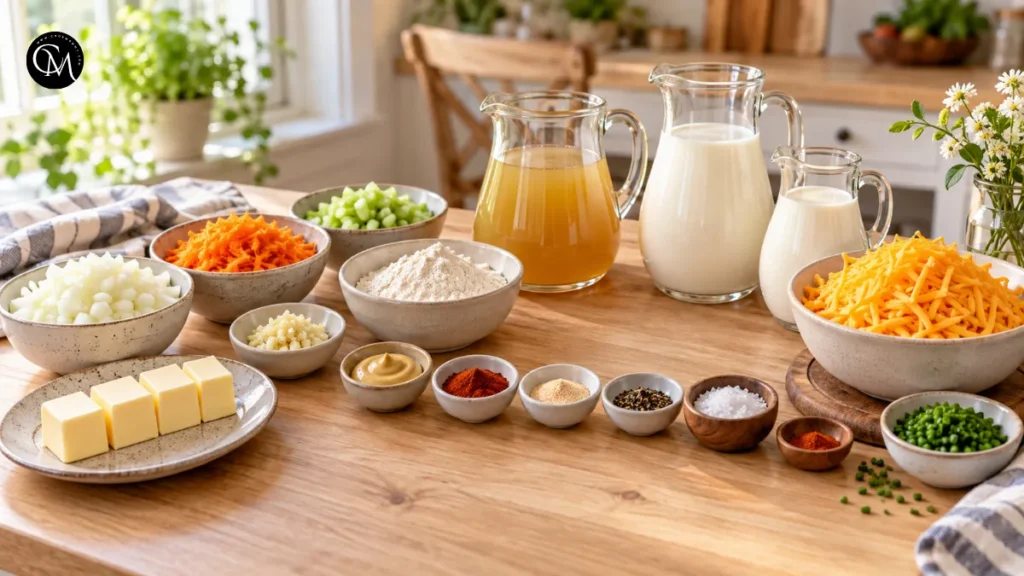
Freshly grated sharp cheddar gives cheddar soup the cleanest flavor and smoothest finish. Pre-shredded cheese can make creamy sauces slightly grainy.
Use vegetable broth for a meat-free version, evaporated milk for a lighter texture, or mild cheddar for a gentler flavor. White cheddar works beautifully too.
Timing
- Preparation time: 12 minutes
- Cooking time: 25 minutes
- Total time: about 37 minutes
- Yield: 6 servings
Unlike soups that need a long simmer, this cheddar soup gets most of its body from a roux. Once the vegetables are tender and the cheese is melted, it is ready.
Step-by-Step Instructions
Step 1 – Prepare ingredients
Grate the cheese, chop the onion and celery, grate the carrot, mince the garlic, and measure the broth and dairy before heating the pot.
This preparation matters because roux-based soups move quickly. Stopping to grate cheese while the flour cooks can lead to scorching. Keep the cheese cool and grate it finely so it melts evenly.
Step 2 – Build flavor base
Melt the butter in a heavy pot over medium heat. Add onion, carrot, and celery and cook for 5 to 6 minutes until softened. Add garlic and cook for 30 seconds.
Sprinkle in the flour and stir constantly for about 90 seconds. This removes the raw flour taste while creating the roux that gives cheddar soup its velvety body.
Slowly whisk in the broth, adding a little at first. Once smooth, whisk in the milk and half-and-half. Gradual mixing helps prevent lumps and creates an even base.
Step 3 – Cook the main ingredient
Bring the mixture to a gentle simmer, not a hard boil. Reduce the heat to medium-low and cook for 7 to 10 minutes, stirring often, until the vegetables are tender and the base lightly coats a spoon.
For a completely smooth cheddar soup, briefly use an immersion blender before adding cheese. For a rustic bowl, leave the vegetables intact. I usually blend only two or three pulses because a little texture keeps the soup from feeling like cheese sauce.
Step 4 – Combine everything
Turn the heat to low. Stir in Dijon mustard, smoked paprika, garlic powder, black pepper, and optional cayenne. Add the shredded cheddar one small handful at a time, allowing each addition to melt before adding more.
This is the most important step for smooth cheddar soup. Cheese can separate under excessive heat, leaving an oily or grainy texture, so never boil the soup after adding it.
The mustard adds gentle sharpness, while smoked paprika gives the creamy base a warmer finish.
Step 5 – Finish & adjust seasoning
Taste before adding salt because both broth and cheddar contribute seasoning.
If your cheddar soup is too thick, stir in warm milk or broth one tablespoon at a time. If it seems thin, cook it over low heat for several more minutes, stirring often. Remember that it thickens slightly as it cools.
For a chef-style finish, add a few drops of lemon juice or cider vinegar. You should not taste obvious acidity; it simply brightens the rich cheese flavor.




Nutritional Information
Approximate nutrition per serving, based on 6 servings:
| Nutrient | Approximate amount |
|---|---|
| Calories | 410 |
| Protein | 17 g |
| Carbohydrates | 20 g |
| Fat | 30 g |
| Saturated fat | 18 g |
| Fiber | 1.5 g |
| Sodium | 620 mg |
Values are estimates because cheese, broth, dairy, and serving sizes vary. Most of the richness in cheddar soup comes from cheese and dairy, while the vegetables add flavor and texture. The swaps below can make the bowl lighter without turning it watery.
Healthier Alternatives
- For lower sugar, choose plain unsweetened milk or a dairy-free alternative. The recipe itself contains no added sugar.
- For a lighter cheddar soup, replace half-and-half with evaporated milk or extra whole milk. You can also reduce the cheese to 1 1/2 cups and use extra-sharp cheddar for stronger flavor.
- For gluten-free soup, substitute a cup-for-cup gluten-free flour blend or thicken the base with a cornstarch slurry. For dairy-free cooking, use unsweetened oat or cashew milk, plant-based butter, and a cheese alternative made for melting.
- Serve whole grains on the side, such as whole-grain toast, seeded crackers, or a whole-wheat roll.
- For children, use mild cheddar and skip cayenne. For lighter meals, pair a smaller bowl with salad. For seniors who prefer softer textures, blend the vegetables and thin the soup with warm broth.
Serving Suggestions
- My favorite way to serve cheddar soup is with crisp sourdough toast rubbed lightly with garlic. The crunch is a welcome contrast to the creamy base.
- For lunch, pair it with half a turkey sandwich, roasted vegetable panini, or apple-and-walnut salad. Fresh, tangy sides balance the richness.
- You can also spoon cheddar soup over a baked potato and finish with chives and black pepper. For family dinners, offer croutons, scallions, and extra cheese for easy customization.
Common Mistakes to Avoid
- Boiling after adding cheese: High heat can make the sauce separate. Keep the pot on low once the cheddar is added.
- Using thick cheese chunks: Fine, freshly grated shreds melt faster and more evenly.
- Adding liquid too quickly: Gradually whisking liquid into the roux makes cheddar soup smoother and helps prevent lumps.
- Salting too early: Broth and cheese vary in sodium, so adjust salt after the cheese melts.
- Undercooking the roux: Give the flour about 1 to 2 minutes in the butter to remove its raw taste.
- Ignoring the pot: Dairy-based soup can scorch as it thickens, so stir regularly.
Storing Tips for the Recipe
- Let leftover cheddar soup cool before transferring it to an airtight container. Refrigerate for up to 3 to 4 days. It will thicken when chilled, so add a splash of milk or broth when reheating.
- Warm leftovers slowly over low heat, stirring often. If using a microwave, heat in short intervals and stir between them. Avoid a rolling boil.
- Freezing creamy cheese soup can produce a slightly grainy texture after thawing. For better make-ahead results, prepare the soup through the thickened milk-and-broth stage and freeze it without the cheese. After thawing and reheating, add fresh cheddar over low heat.
- Chop the vegetables and grate the cheese a day ahead, storing them separately.
- This recipe became one of my regular meals because it gives me café-style comfort with ordinary ingredients I usually have and helps use up vegetables, bread, and cheese.
Conclusion
A dependable cheddar soup is less about complicated ingredients and more about smart technique: cook the roux properly, add liquid gradually, grate your own cheese, and keep the heat low once the cheddar goes in. Those details create the silky texture that makes this recipe worth repeating.
In about 37 minutes, you can make a cozy lunch, dinner, or starter and adjust the thickness, spice level, or dairy to suit your household. Serve it with bread, salad, or a baked potato for an easy complete meal.
Try the recipe, then leave a comment or review with your favorite variation. Subscribe for more practical homemade recipes, flexible cooking ideas, and dependable kitchen tips.
FAQs
Can I make cheddar soup ahead of time?
Yes. Prepare cheddar soup up to three days ahead, refrigerate it in a sealed container, and reheat gently. Add milk or broth if it becomes too thick.
What type of cheddar melts best?
A block of sharp or medium cheddar works well. Grate it into fine shreds, then add it gradually over low heat for a smooth texture and balanced flavor.
Why did my cheese soup turn grainy?
The heat was probably too high, or the cheese was added too quickly. Lower the temperature and stir in small handfuls. Pre-shredded cheese may also melt less smoothly.
Can I freeze this soup?
You can, but dairy soups may separate after thawing. For better results, freeze the cheddar soup base before adding cheese, then reheat gently and finish with fresh cheddar.
How can I make the soup thicker?
Simmer the base longer before adding cheese. If needed, whisk in a small cornstarch slurry, cook until thickened, then lower the heat before adding the cheddar.
Can I add vegetables?
Absolutely. Finely chopped broccoli, cauliflower, roasted peppers, or cooked potatoes work well. Add firm vegetables early enough to become tender before stirring in the cheese.
What can I serve with cheddar soup?
Try sourdough, whole-grain rolls, grilled sandwiches, baked potatoes, or a crisp green salad. Fresh, crunchy, or slightly acidic sides contrast especially well with the rich soup.
Tried it before ?
There are no reviews yet. Be the first one to write one.