
Cheesecake Caramel Cookies: How 5 Secrets Add Richness
Why do some filled cookies taste rich and balanced, while others are simply too sweet? The answer usually comes down to moisture, fat, temperature, and flavor contrast. Adding more sugar does not automatically create a better dessert. True richness comes from combining creamy, buttery, salty, and tangy elements in the right amounts.
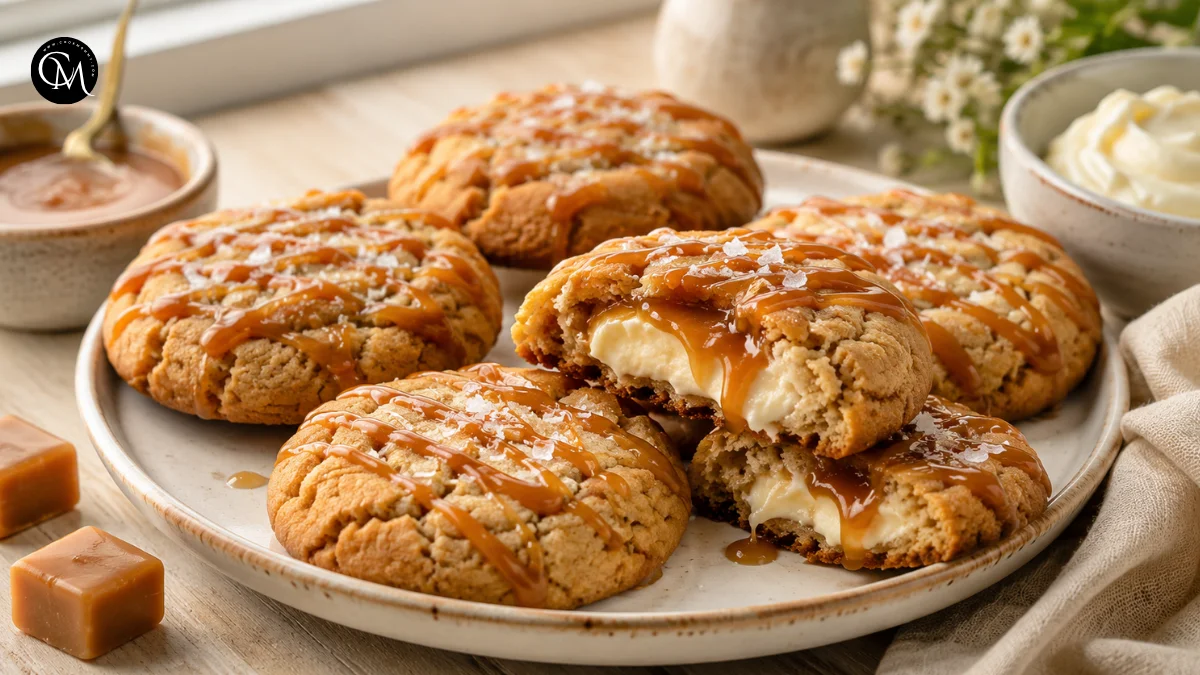
That is what makes Cheesecake Caramel Cookies so satisfying. Each cookie features soft brown sugar dough, a smooth cheesecake center, buttery caramel, and a light touch of sea salt. The crushed biscuit crumbs in the dough also add the familiar flavor of a cheesecake crust.
I have tested filled cookies that spread too far, leaked onto the tray, or became dry around the edges. This recipe avoids those problems by freezing the filling, cooling the caramel, chilling the assembled dough, and removing the cookies from the oven while their centers are still soft.
The result is a thick, bakery-style dessert that looks impressive but uses simple ingredients and reliable techniques.
Table of Contents
Ingredients List
For the cheesecake filling
- 170 grams full-fat block cream cheese, softened
- 35 grams powdered sugar
- ½ teaspoon vanilla extract
- A small pinch of salt
Full-fat block cream cheese creates the firmest and smoothest filling. Avoid spreadable cream cheese from a tub because it usually contains more moisture and may leak while baking.
Reduced-fat block cream cheese can be substituted, although the center may be slightly softer.
For the caramel center
- 120 grams soft caramel candies, unwrapped
- 2 tablespoons heavy cream
- ¼ teaspoon sea salt
You may use a thick homemade or store-bought caramel sauce. Choose one that remains soft when cool. Thin ice cream topping is not recommended because it can soak into the dough.
For the cookie dough
- 170 grams unsalted butter, softened
- 150 grams light brown sugar
- 70 grams granulated sugar
- 1 large egg
- 1 egg yolk
- 2 teaspoons vanilla extract
- 280 grams all-purpose flour
- 1 tablespoon cornstarch
- ½ teaspoon baking soda
- ½ teaspoon baking powder
- ¾ teaspoon salt
- 80 grams crushed graham crackers or digestive biscuits
- Flaky sea salt for finishing, optional
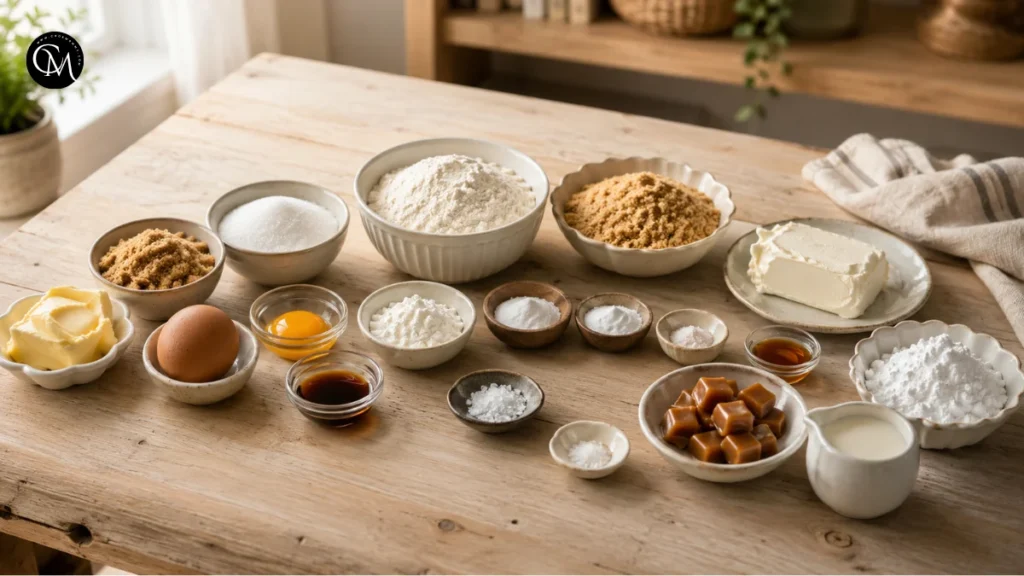
Brown sugar helps Cheesecake Caramel Cookies remain soft and moist. The extra egg yolk adds richness, while cornstarch creates a more tender crumb. Crushed biscuits provide a lightly toasted cheesecake-crust flavor.
For substitutions, you can use gluten-free flour, gluten-free biscuit crumbs, dairy-free block cream cheese, or plant-based butter sticks.
Timing
- Preparation time: 35 minutes
- Chilling time: 45 minutes
- Baking time: 11–13 minutes per tray
- Cooling time: 20 minutes
- Total time: About 1 hour 50 minutes
- Yield: 12 large cookies
Cheesecake Caramel Cookies take slightly longer than standard drop cookies because the filling and shaped dough must be chilled. This extra resting time helps prevent spreading and leaking.
Step-by-Step Instructions
Step 1 – Prepare the ingredients
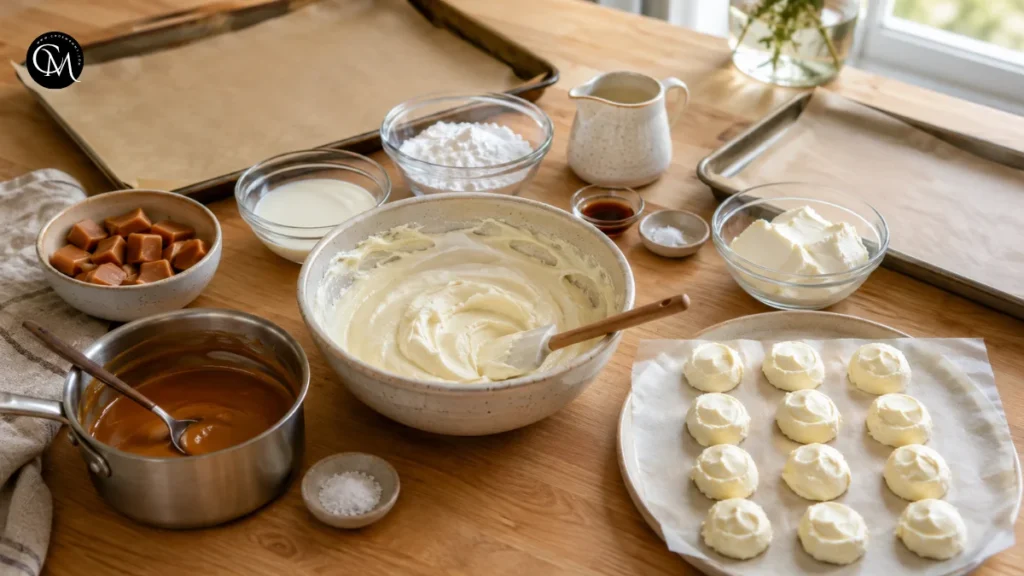
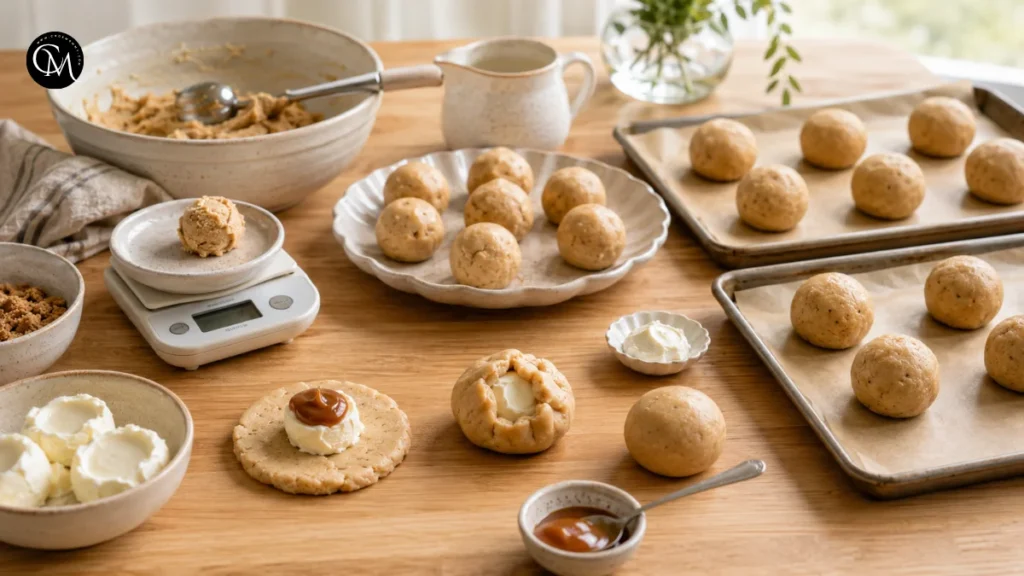
Line two baking trays with parchment paper. Place the softened cream cheese, powdered sugar, vanilla, and salt in a medium bowl. Mix until completely smooth. Spoon the mixture into 12 small portions on a lined plate.
Freeze the portions for 25–30 minutes. They should feel firm enough to lift without losing their shape.
Meanwhile, place the caramel candies and heavy cream in a small saucepan. Heat over low heat, stirring frequently, until smooth. Add the sea salt, remove the pan from the heat, and allow the caramel to cool.
Preparation matters because warm filling is difficult to wrap inside cookie dough. Firm cheesecake portions give you more control, while cooled caramel will not melt the butter in the dough.
Step 2 – Build the flavor base
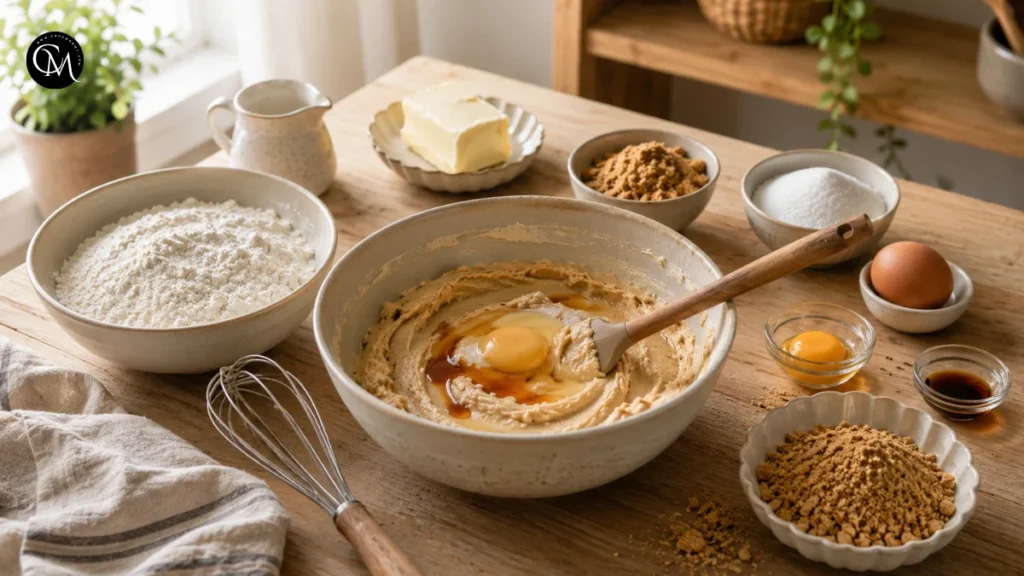
Beat the softened butter, brown sugar, and granulated sugar for about two minutes. The mixture should look creamy and slightly lighter, but it does not need to become extremely fluffy.
Add the egg, egg yolk, and vanilla. Mix until smooth. The egg yolk is one of the secrets behind rich Cheesecake Caramel Cookies. It adds fat and tenderness without introducing as much liquid as a second whole egg. Brown sugar contributes moisture and a mild caramel-like flavor, while granulated sugar helps the edges become lightly crisp.
In another bowl, whisk together the flour, cornstarch, baking soda, baking powder, and salt.
Gradually add the dry ingredients to the butter mixture. Stop mixing when only a few flour streaks remain. Fold in the crushed biscuits until evenly distributed.
Avoid overmixing. Too much mixing develops additional gluten, which can make the cookies firm instead of soft and tender.
Step 3 – Fill and shape the cookies
Divide the dough into 12 equal portions. A kitchen scale is helpful for creating evenly sized cookies that bake at the same rate.
Flatten one portion into a thick disk. Place one frozen cheesecake portion in the center, followed by approximately ½ teaspoon of cooled caramel.
Bring the edges of the dough around the filling. Pinch the seam firmly, then roll the dough gently between your hands to create a smooth ball.
Inspect the surface carefully. No cream cheese or caramel should be visible. Even a small opening can allow the filling to escape.
Repeat with the remaining dough. Place the filled balls on the prepared trays and chill them for 15 minutes. Chilling helps Cheesecake Caramel Cookies maintain their thickness as the butter begins to melt in the oven.
Step 4 – Bake and combine the flavors
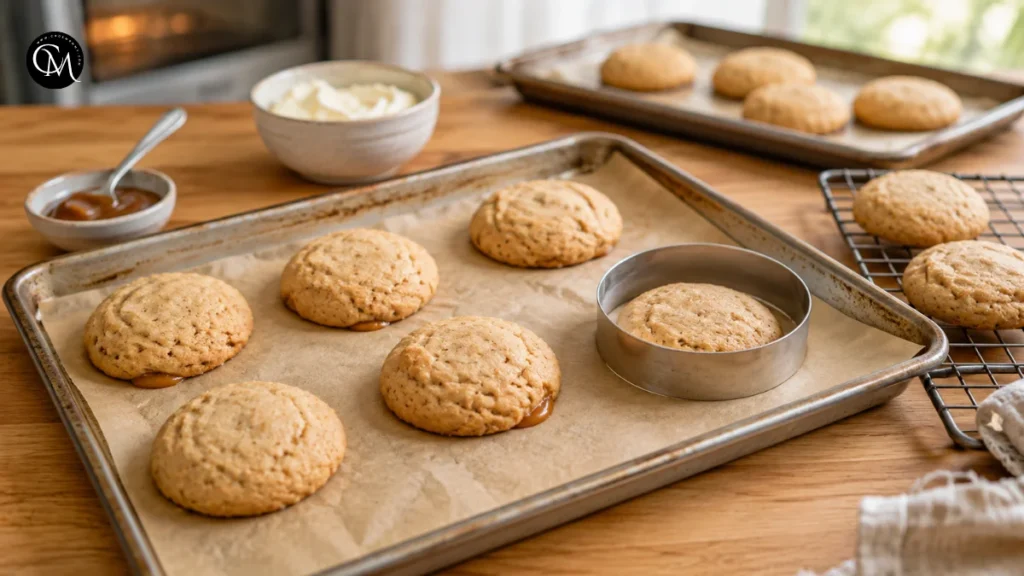
Preheat the oven to 180°C or 350°F. Arrange the chilled cookie dough balls several centimeters apart. Bake one tray at a time on the center rack for 11–13 minutes.
The edges should appear set and lightly golden, but the centers should still look soft. Do not wait until the entire cookie looks firm. Residual heat from the tray will continue cooking the center after the cookies leave the oven.
During baking, the tangy cheesecake filling balances the sweet caramel. The biscuit crumbs add a toasted flavor, while the brown sugar dough brings all the elements together.
For rounder Cheesecake Caramel Cookies, place a large round cookie cutter around each warm cookie and move it gently in a circular motion. This smooths the edges without flattening the cookies. Leave them on the tray for 10 minutes before moving them to a cooling rack.
Step 5 – Finish and adjust
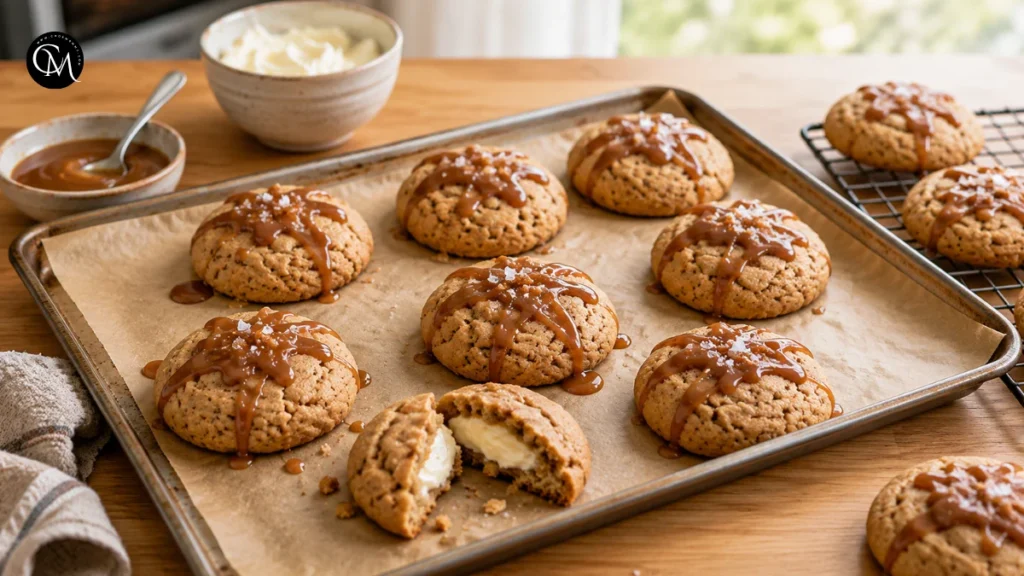
Warm any remaining caramel until it becomes easy to drizzle. Spoon a small amount over each cooled cookie. Finish with a few flakes of sea salt. Salt strengthens the buttery caramel flavor and balances the sweetness, but use it carefully. A small amount should brighten the flavors rather than make the dessert taste salty.
Allow Cheesecake Caramel Cookies to cool for at least 20 minutes before serving. The filling will remain creamy while becoming stable enough to stay inside the cookie.
Taste one before adding extra caramel. The center may already provide enough sweetness and richness.
Nutritional Information
Approximate values per large cookie:
- Calories: 390
- Protein: 5 grams
- Carbohydrates: 49 grams
- Fat: 20 grams
- Saturated fat: 12 grams
- Sugar: 29 grams
- Fiber: 1 gram
- Sodium: 290 milligrams
These estimates can change according to the caramel, biscuits, cream cheese, and exact portion size used. Because Cheesecake Caramel Cookies are large and filled, one cookie is generally a satisfying dessert portion.
Healthier Alternatives
- Lower-sugar option Reduce the granulated sugar by approximately 20 grams and use a light caramel drizzle. Avoid cutting too much sugar because sugar contributes to moisture, tenderness, and browning.
- Whole-grain option Replace up to one-third of the all-purpose flour with whole-wheat pastry flour. This adds a mild nutty flavor without making the cookies overly dense.
- Dairy-free option Use plant-based butter sticks, dairy-free block-style cream cheese, and coconut cream in the caramel. Chill the dairy-free filling thoroughly because some alternatives soften faster than traditional cream cheese.
- Gluten-free option Use a reliable cup-for-cup gluten-free flour blend and gluten-free biscuit crumbs. Let the mixed dough rest for 10 minutes before shaping so the flour can absorb the moisture
- For children, make moderately sized cookies and reduce the salted caramel topping. Seniors who prefer softer desserts may enjoy Cheesecake Caramel Cookies baked at the lower end of the suggested time.
- For portion control, cut one chilled cookie in half and serve it with fresh berries or sliced fruit.
Serving Suggestions
- Serve Cheesecake Caramel Cookies slightly chilled for a firmer, cheesecake-like center. For a softer and creamier filling, leave them at room temperature for 10–15 minutes before serving.
- They pair well with coffee, black tea, hot chocolate, or cold milk. The slight bitterness of coffee or tea helps balance the rich caramel.
- For an attractive dessert plate, serve one cookie with tart apple slices, fresh raspberries, strawberries, or sliced pears. The acidity and freshness of the fruit keep the dessert from feeling too heavy.
- For celebrations, arrange the cookies on a cake stand and add the caramel drizzle shortly before serving. You can also crumble half a cookie over plain yogurt or vanilla ice cream for an easy layered dessert.
Common Mistakes to Avoid
- Using spreadable cream cheese Tub-style cream cheese contains extra moisture and can create a loose filling. Use firm block cream cheese whenever possible.
- Filling warm or sticky dough Warm dough can stretch, tear, and spread excessively. Chill it for 10–15 minutes if it becomes difficult to handle.
- Adding too much caramel Overfilling Cheesecake Caramel Cookies may cause caramel to escape through the seams and burn on the baking tray.
- Leaving the dough poorly sealed Pinch every seam firmly and inspect each dough ball. The filling should be completely covered before chilling.
- Overbaking the cookies Filled cookies continue cooking on the hot tray. Remove them when the edges are set but the centers still look slightly underbaked.
- Moving them too quickly Freshly baked Cheesecake Caramel Cookies are delicate. Let them rest on the tray before transferring them to a cooling rack.
Storing Tips for the Recipe
- Store cooled cookies in an airtight container in the refrigerator for up to four days. Place parchment paper between the layers to protect the caramel topping.
- For the best texture, remove a cookie from the refrigerator about 10–15 minutes before serving. This allows the filling and dough to soften slightly.
- You may warm one cookie briefly, but avoid overheating it. Too much heat can liquefy the cheesecake filling and caramel.
- The assembled, unbaked dough balls can be frozen for up to one month. Freeze them on a tray until firm, then transfer them to a freezer-safe bag. Bake directly from frozen and add approximately two minutes to the normal baking time.
- This recipe became one of my regular desserts because Cheesecake Caramel Cookies can be prepared ahead, frozen, and baked in small batches whenever I need a special homemade treat.
Conclusion
Cheesecake Caramel Cookies combine three favorite desserts in one impressive bite: soft cookies, creamy cheesecake, and rich salted caramel. Their success depends on five simple secrets firm filling, cooled caramel, balanced dough, careful sealing, and gentle baking.
Following these steps produces thick cookies with tender edges, a smooth center, and enough salt to balance the sweetness. They are ideal for family desserts, holiday trays, parties, or make-ahead treats stored in the freezer.
Try the recipe and personalize it with chocolate chips, cinnamon, or crushed chocolate biscuits. Leave a comment or review to share how your batch turned out, and subscribe for more dependable recipes, practical baking advice, and creative dessert ideas.
FAQs
Can I prepare Cheesecake Caramel Cookies ahead of time?
Yes. Shape and freeze the filled dough balls for up to one month. Bake them directly from frozen, adding approximately two minutes to the baking time.
Why did my cheesecake filling leak?
The filling may have been too warm, the dough may have been rolled too thin, or the seam was not completely closed before baking.
Can I use homemade caramel?
Yes. Use a thick homemade caramel that has cooled completely. A thin or warm caramel may soak into the dough or leak during baking.
Do Cheesecake Caramel Cookies need refrigeration?
Yes. Because they contain a cream cheese center, store the cooled cookies in an airtight container in the refrigerator for up to four days.
Can I make smaller cookies?
Yes, but reduce both the cheesecake and caramel filling. Smaller dough portions are more difficult to seal and may leak more easily.
Why did my cookies spread too much?
The butter may have been too warm, or the assembled dough may not have chilled long enough. Always chill the filled cookie balls before baking.
Can I add chocolate to the recipe?
Yes. Fold mini chocolate chips into the dough or add a few inside each cookie. Use a modest amount so the filling remains easy to seal.
Tried it before ?
There are no reviews yet. Be the first one to write one.