
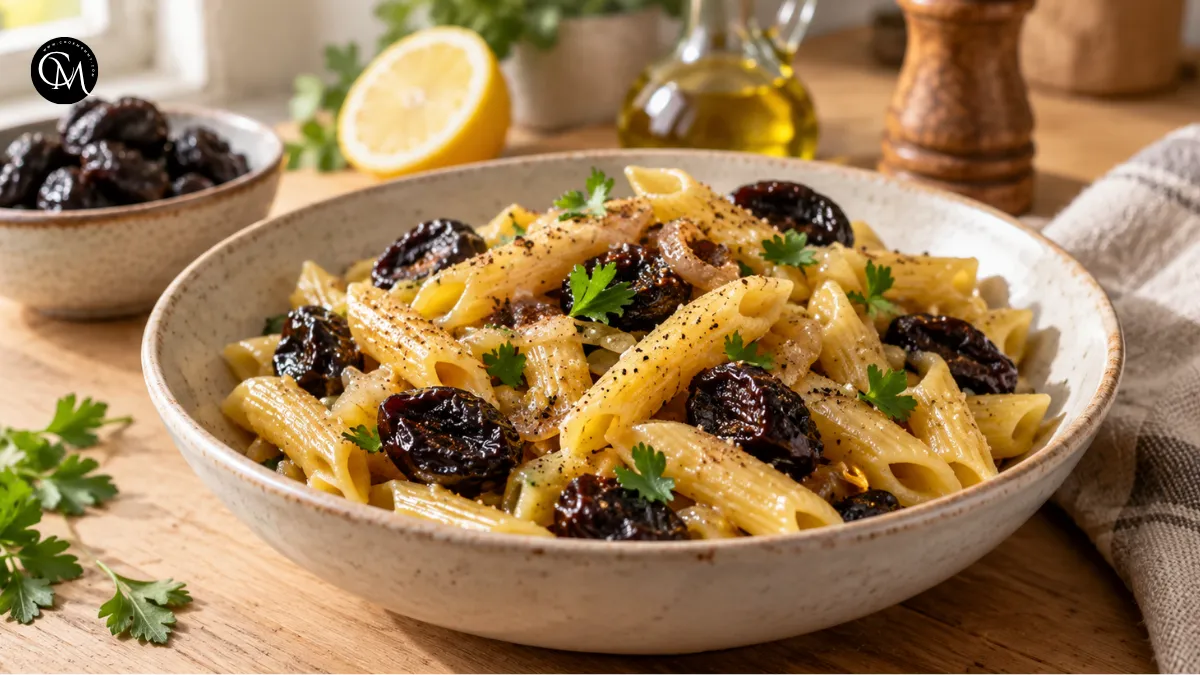
Macaroni with Prunes: 5 Best Secrets for Amazing Flavor
Can 200 grams of prunes really transform 500 grams of pasta into a balanced savory dinner in about 20 minutes? Yes and the reason is more interesting than simple sweetness. Macaroni with Prunes works because dried fruit adds body and a jammy texture, while vegetable stock, fresh lemon juice, butter, olive oil, black pepper, cinnamon, and nutmeg pull the sauce toward the savory side.
This recipe is worth knowing when you want an easy pasta dinner that tastes unusual without demanding specialty ingredients. The five secrets are straightforward: slice the prunes thinly, build the sauce gently, balance the sweetness with lemon, keep the spices restrained, and finish the pasta in the sauce. Done well, Macaroni with Prunes tastes rich, aromatic, and balanced rather than sugary.
Table of Contents
Ingredients for Macaroni with Prunes
For 5 servings:
- 500 g penne, macaroni, or another short pasta
- 200 g pitted prunes, sliced into thin strips
- 25 g unsalted butter
- 50 ml extra-virgin olive oil
- 100 ml unsalted vegetable stock
- 1 teaspoon fresh lemon juice
- 1 tablespoon sugar
- 1 small pinch ground nutmeg
- 1 small pinch ground cinnamon
- Salt and freshly ground black pepper
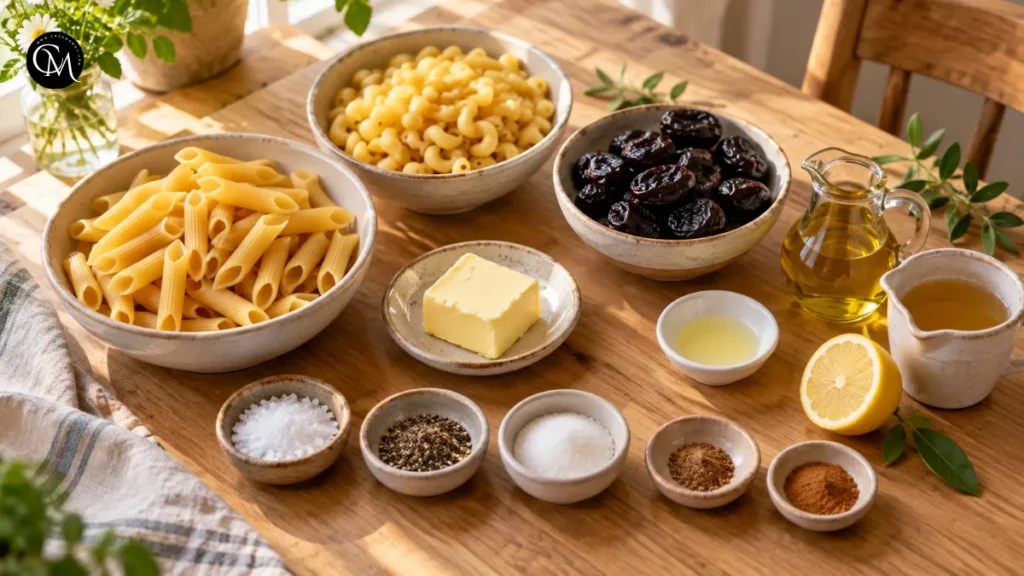
Choose soft, moist prunes because they break down more readily into the sauce. Use an unsalted or low-sodium vegetable stock so you can control the seasoning, and add the lemon juice near the end to keep its fresh acidity.
If you do not have vegetable stock, use 100 ml water with an extra small pinch of salt and 1–2 teaspoons lemon juice to taste. Replace butter with plant-based butter or extra olive oil for a dairy-free version. Brown sugar works in place of white sugar, while rigatoni, fusilli, or whole-wheat penne can stand in for macaroni.
Timing
Preparation time: 8 minutes
Cooking time: 12–15 minutes
Total time: about 20–23 minutes
Macaroni with Prunes is faster than many baked pasta dishes because the sauce cooks while the pasta boils. Having the ingredients measured before you begin keeps the timing tight and prevents overcooking.
Step-by-Step Instructions
Step 1 – Prepare the Ingredients
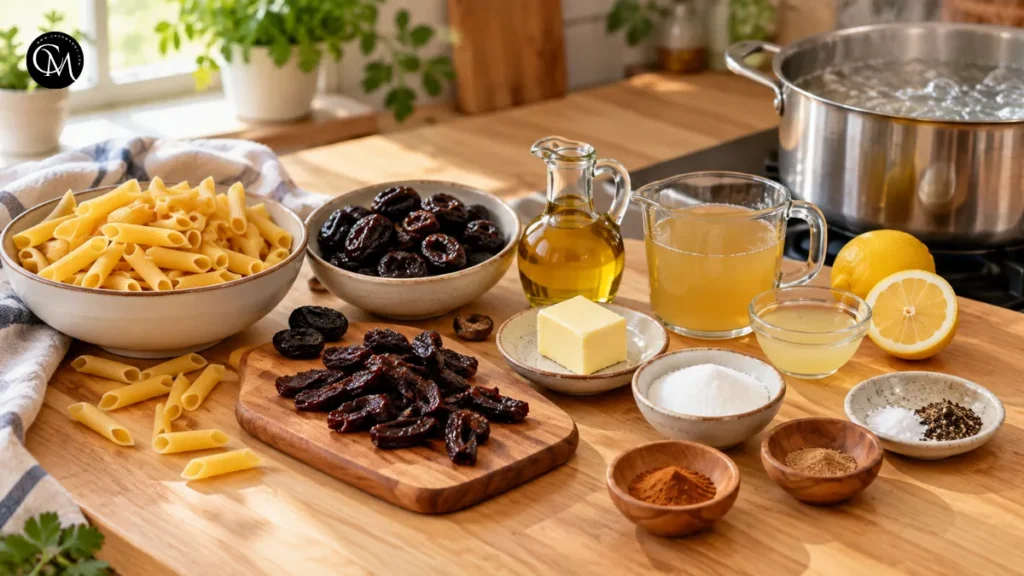
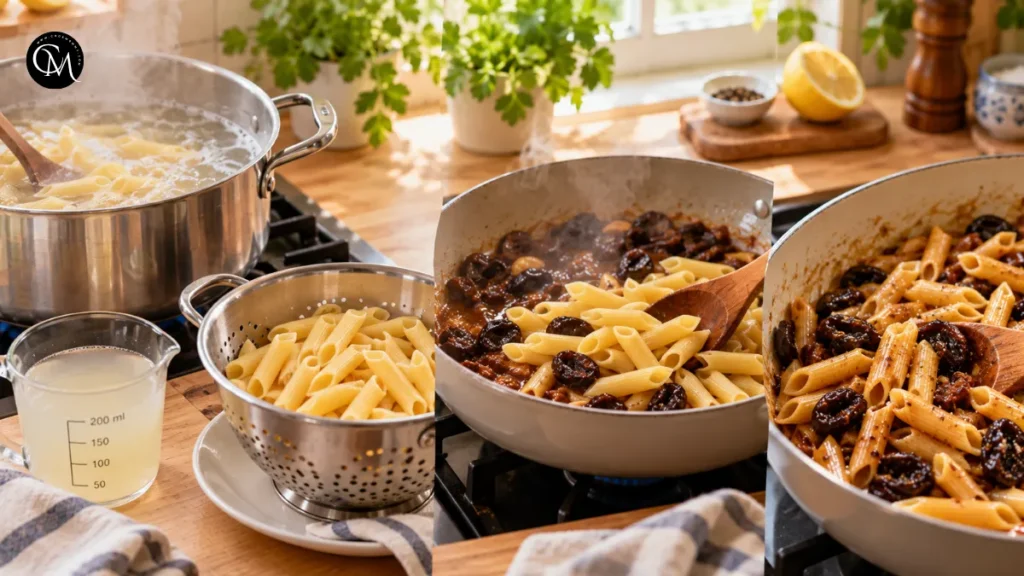
Bring a large pot of water to a boil. Meanwhile, slice the prunes, measure the vegetable stock and lemon juice, and portion the butter, oil, sugar, and spices.
Thinly sliced prunes soften quickly and spread their flavor evenly, which is the first secret to a balanced sauce. Preparation also matters because the sauce cooks fast; once the butter is warm, you should not need to stop and measure ingredients.
For Macaroni with Prunes, start with very small pinches of cinnamon and nutmeg. You can add more later, but you cannot easily remove them.
Step 2 – Build the Flavor Base
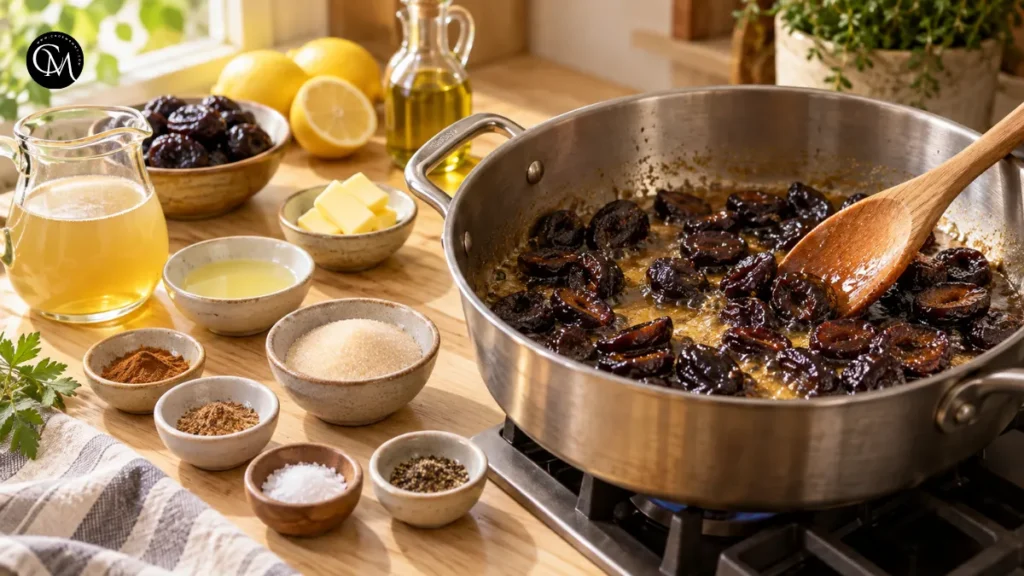
Warm the olive oil and butter in a wide saucepan over medium-low heat. Add the prunes and sauté for 1–2 minutes, stirring gently.
Warm fat carries aroma and softens the dried fruit, helping it release its natural sugars. High heat, however, can scorch those concentrated sugars and make the sauce taste bitter.
Pour in the vegetable stock, then add the sugar, salt, pepper, cinnamon, and nutmeg. Cover and simmer over very low heat for about 5 minutes. Stir in the lemon juice at the end so its acidity stays bright. This gentle cooking is what gives Macaroni with Prunes a glossy, cohesive sauce instead of separate oily and fruity elements.
Step 3 – Cook the Pasta
Salt the boiling water and cook the pasta until al dente, following the package timing. Stir during the first minute and occasionally afterward.
Keep a slight bite in the center. Since the prunes are soft, firm pasta gives the dish needed textural contrast. Before draining, reserve about 120 ml of pasta water.
That starchy water is useful for loosening and emulsifying the sauce. Even 1–3 tablespoons can help Macaroni with Prunes coat the pasta more evenly.
Step 4 – Combine Everything
Drain the pasta and add it to the prune sauce. Toss thoroughly so every piece is coated. If the sauce feels sticky, add reserved pasta water a tablespoon at a time. If it seems loose, toss over low heat for another 30–60 seconds.
Aim for balance: fruity but not dessert-like, bright from the lemon juice, savory from the vegetable stock, and rounded by butter and olive oil. Macaroni with Prunes works best when no single flavor dominates.
Step 5 – Finish and Adjust the Seasoning
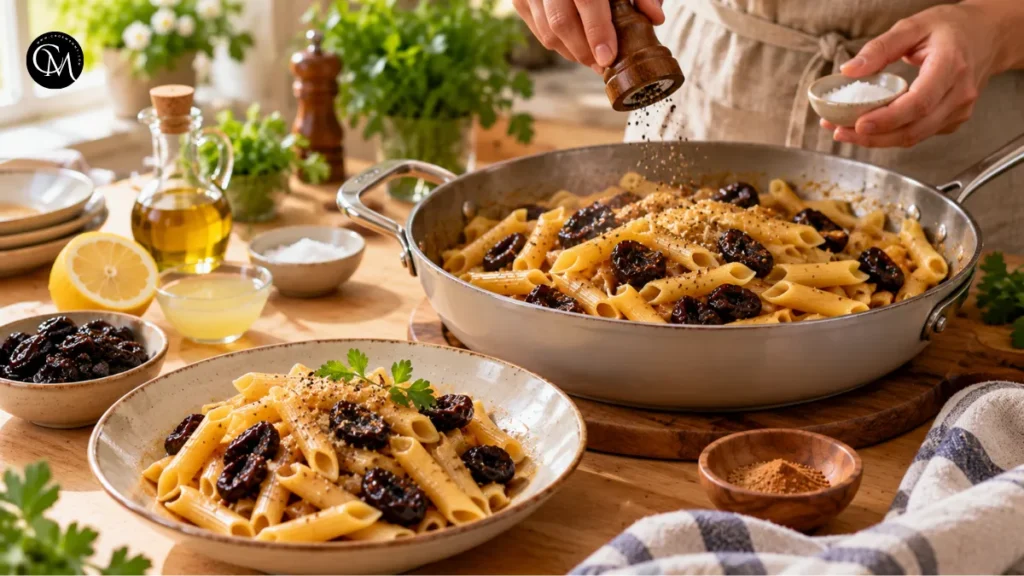
Taste before serving. Add more black pepper for warmth, a pinch of salt if the flavors seem muted, or a few drops of lemon juice if the sauce tastes too sweet.
For a smoother, restaurant-style finish, toss the pasta vigorously for 15–20 seconds so the fat and starchy water bind into a silkier coating. Serve Macaroni with Prunes immediately while the pasta is hot and the sauce is glossy.
Nutritional Information
Approximate nutrition per serving, based on 5 servings:
| NutrientApproximate Amount | |
|---|---|
| Calories | 590 kcal |
| Protein | 13 g |
| Carbohydrates | 100 g |
| Fat | 14 g |
| Fiber | 6 g |
| Sugars | 23–25 g |
| Sodium | 250–350 mg |
These values are estimates; pasta brands, prune size, vegetable stock, and the amount of salt used will change the totals. Macaroni with Prunes is fairly energy-dense because pasta, dried fruit, butter, and olive oil all contribute calories. A moderate portion served with vegetables can create a more balanced plate without changing the recipe itself.
Healthier Alternatives
- You can adapt Macaroni with Prunes without losing its character. For less added sugar, omit the tablespoon of sugar and taste the sauce first. Naturally sweet prunes may provide all the sweetness you need. A squeeze of fresh lemon can add brightness without increasing sugar.
- For more fiber, choose whole-wheat pasta. It has a slightly nuttier flavor that works especially well with dried fruit and warm spices.
- For dairy-free cooking, replace the butter with plant-based butter or a little extra olive oil. For a gluten-free version, choose a sturdy corn-and-rice or brown-rice pasta that holds its shape when tossed with sauce.
- For children, chop the prunes very finely and reduce the black pepper. For anyone watching portion size, serve a smaller amount of pasta alongside roasted vegetables or a generous salad. For seniors who prefer softer textures, cook the pasta slightly beyond firm al dente and slice the prunes extra thin.
- These adjustments make the dish more flexible while preserving the sweet-savory flavor that makes it distinctive.
Serving Suggestions
- Macaroni with Prunes pairs especially well with something fresh, bitter, or crisp. Try an arugula salad with lemon vinaigrette, roasted broccoli, sautéed spinach, or a fennel-and-orange salad. These sides cut through the buttery sauce and help the meal feel lighter.
- For extra savory depth, add a light grating of Parmesan or pecorino at the table. Use just enough to provide a salty contrast without covering the flavor of the prunes.
- Toasted walnuts or almonds are another excellent addition. Their crunch creates a welcome contrast with the tender dried fruit and pasta.
- When serving Macaroni with Prunes for guests, use warm shallow bowls and finish each portion with freshly cracked black pepper. A little chopped flat-leaf parsley adds freshness and color without competing with the cinnamon and nutmeg.
- You could also explore a simple roasted vegetable recipe or homemade vinaigrette as a companion dish if you want to turn this pasta into a complete dinner menu.
Common Mistakes to Avoid
- Skipping the acidity. Without a little lemon juice, the prune sauce can taste overly sweet or flat. Add 1 teaspoon near the end, then taste before adding more.
- Adding too much spice. Cinnamon and nutmeg should remain in the background. Too much can quickly make Macaroni with Prunes taste more like a dessert than a savory pasta dish.
- Skipping the pasta water. Just a few tablespoons of starchy cooking water can help transform an oily sauce into a smooth coating that clings to every piece.
- Overcooking the pasta. Aim for al dente. The firm texture creates contrast with the soft, almost jammy prunes.
- Cooking the prunes over high heat. Dried fruit contains concentrated natural sugars that can scorch surprisingly quickly. Keep the heat moderate to low.
- Forgetting the final taste test. Pasta naturally dilutes seasoning, so taste again after combining everything and adjust salt, pepper, sweetness, or acidity as needed.
These small corrections make Macaroni with Prunes noticeably more balanced and polished.
Storing Tips for the Recipe
- Cool leftovers promptly and store Macaroni with Prunes in an airtight container in the refrigerator for up to 3 days. The pasta will continue to absorb sauce as it sits, so reheating it without added moisture can leave it dry or heavy.
- For the best texture, warm leftovers gently in a skillet with 1–2 tablespoons of water or vegetable stock. Cover the pan for a minute, then toss until the sauce loosens. A small drizzle of olive oil at the end can help restore its glossy finish.
- You can also prepare the prune sauce one day ahead and refrigerate it separately. Warm it gently while you cook a fresh batch of pasta.
- It earns a place in a regular meal rotation because the ingredients are easy to keep on hand, the sauce comes together quickly, and the final dish feels much more special than the effort required.
Conclusion
Macaroni with Prunes proves that an unusual pasta pairing can still be simple, practical, and comforting. In about 20 minutes, prunes, vegetable stock, fresh lemon juice, warm spices, butter, and olive oil create a sauce that is sweet-savory rather than dessert-like. The biggest improvements come from small details: slice the fruit thinly, cook gently, keep the pasta al dente, and use a little reserved pasta water to bring everything together.
Try Macaroni with Prunes the next time you want a quick dinner with a distinctive twist. If you make it, leave a comment or review sharing your favorite adjustment, and subscribe for more approachable recipes, useful cooking tips, and creative ways to make everyday ingredients feel new.
FAQs
What type of pasta works best?
Short shapes such as penne, rigatoni, fusilli, or macaroni work best because they catch the sauce and pieces of prune. Pasta with ridges or curves provides even more surface for the sauce to cling to.
Can I leave out the added sugar?
Absolutely. Many prunes are naturally sweet enough. Taste the sauce after the stock has simmered, then add sugar only if you think it needs a softer, rounder sweetness.
Is Macaroni with Prunes supposed to taste sweet?
It should taste sweet-savory rather than like dessert. Vegetable stock, lemon juice, salt, pepper, butter, and restrained spices balance the fruit. Add a few more drops of lemon juice if the sauce becomes overly sweet.
Can I add cheese?
Yes. A small amount of Parmesan or pecorino adds a pleasant salty, savory contrast. Use it lightly so the cheese complements rather than overwhelms the prunes, lemon, and warm spices.
Can I freeze leftovers?
You can, but cooked pasta may become softer after thawing. For better texture, freeze only the prune sauce for up to 2 months and prepare fresh pasta when you are ready to serve it.
What can I serve with it?
Try arugula salad, roasted broccoli, sautéed spinach, or fennel-citrus salad. Fresh, bitter, or crisp side dishes provide contrast and keep the buttery pasta from feeling overly rich.
Tried it before ?
There are no reviews yet. Be the first one to write one.