
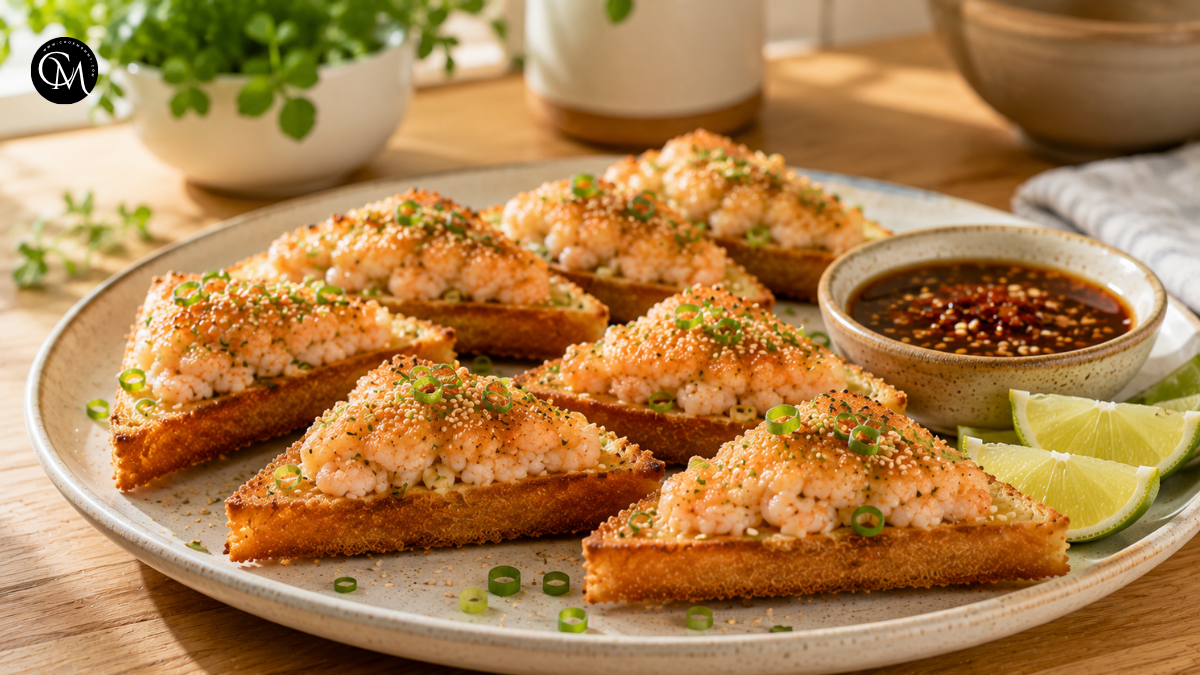
Shrimp Toast Chinese: 5 Best Secrets for Easy Homemade Toast
Have you ever wondered why restaurant shrimp toast can stay crisp on the outside while the shrimp layer remains juicy instead of dry? The answer comes down to moisture control, bread thickness, oil temperature, and how finely the seafood mixture is processed. When those details are balanced, homemade shrimp toast is far easier than it looks.
This recipe is worth learning because it turns a short list of everyday ingredients into a warm, savory appetizer with a crisp base and tender center. I have tested versions with thick bread, soft sandwich bread, pan-frying, and shallow-frying, and the biggest improvement came from keeping the shrimp mixture moist while making sure the bread never becomes oil-soaked. The method below gives you that balance without requiring restaurant equipment.
Table of Contents
Ingredients for Shrimp Toast
For about 12 small pieces, you will need:
- 8 ounces or 225 g raw shrimp, peeled and deveined
- 4 slices soft white sandwich bread, crusts removed
- 1 egg white
- 1 teaspoon soy sauce
- 1 teaspoon toasted sesame oil
- 1 teaspoon fresh ginger, finely grated
- 1 small garlic clove, minced
- 2 green onions, finely sliced
- 1 teaspoon cornstarch
- 1/4 teaspoon white pepper or black pepper
- 1/4 teaspoon salt, or less if your soy sauce is salty
- 2 tablespoons sesame seeds, optional
- Neutral frying oil such as canola, sunflower, or avocado oil
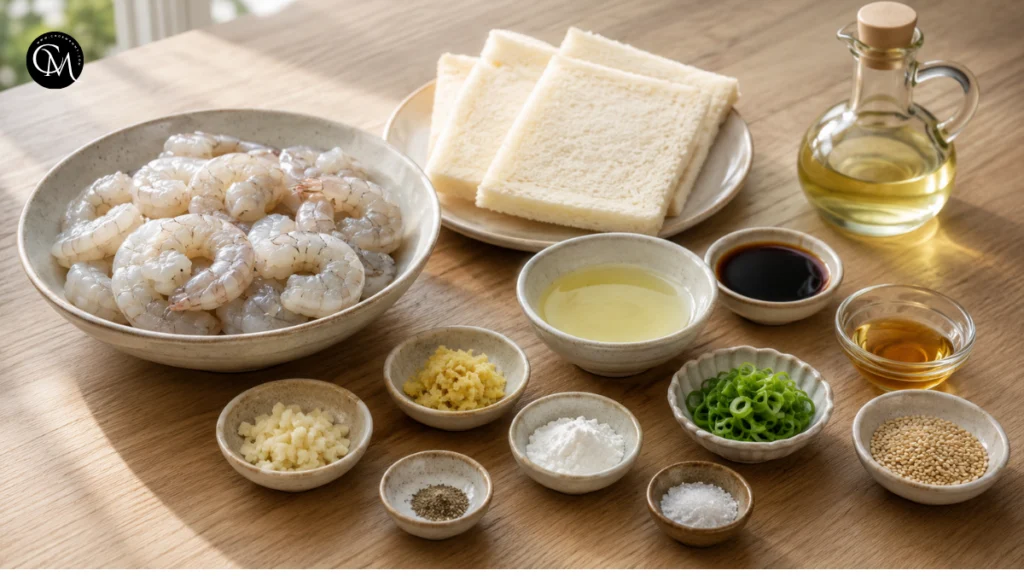
The shrimp should smell fresh and mild and feel firm rather than mushy. Medium or large shrimp work equally well because they will be chopped into a paste.
For substitutions, tamari can replace soy sauce, panko can replace sesame seeds, and the ginger or pepper can be reduced for a milder version.
Timing
- Preparation time: 20 minutes
- Cooking time: 10 minutes
- Total time: about 30 minutes
A homemade shrimp toast recipe is quicker than many filled appetizers because there is no dough to make or chill. For guests, prepare the topping several hours ahead, refrigerate it, and assemble the bread shortly before frying.
Step-by-Step Instructions for Shrimp Toast
Step 1 – Prepare the Ingredients
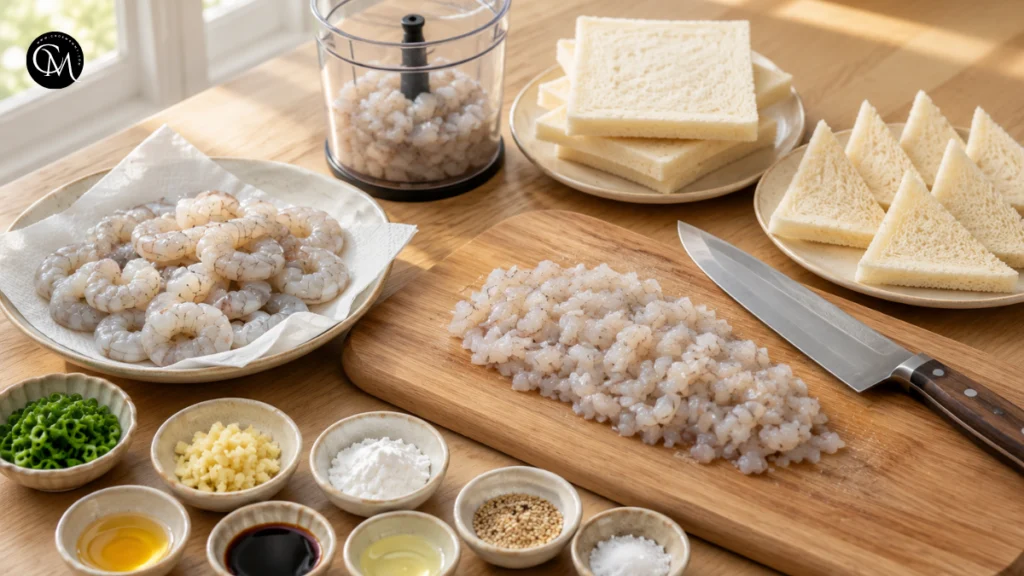
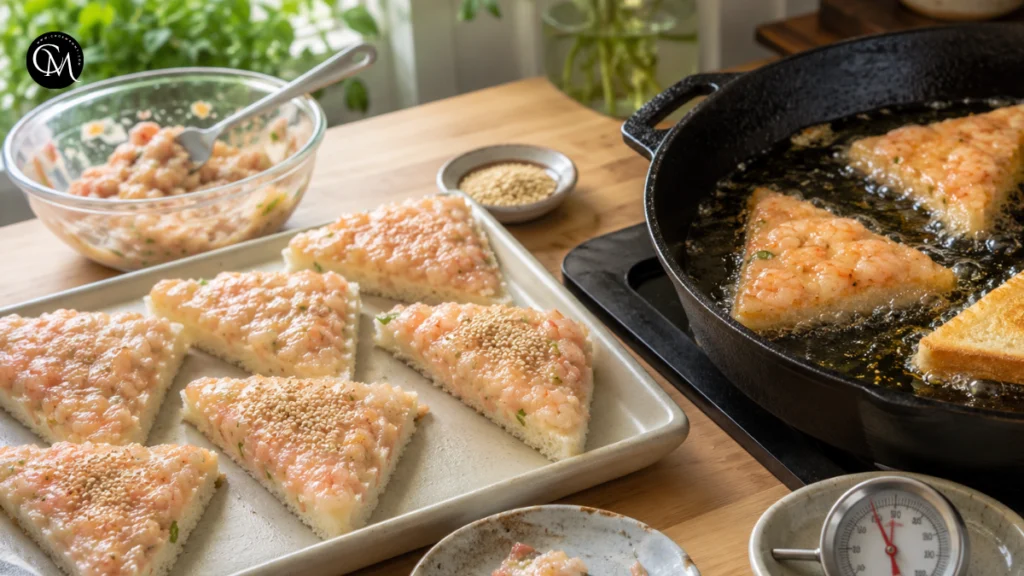
Pat the shrimp very dry; excess water loosens the topping and increases splattering. Chop by hand until sticky but still slightly textured, or pulse briefly in a food processor. Avoid a completely smooth puree because small pieces help the finished shrimp toast stay juicy.
Trim the crusts and cut the bread into even triangles. Keeping every piece similar in size helps the bread brown at roughly the same speed, which is especially useful when cooking several batches.
Step 2 – Build the Flavor Base
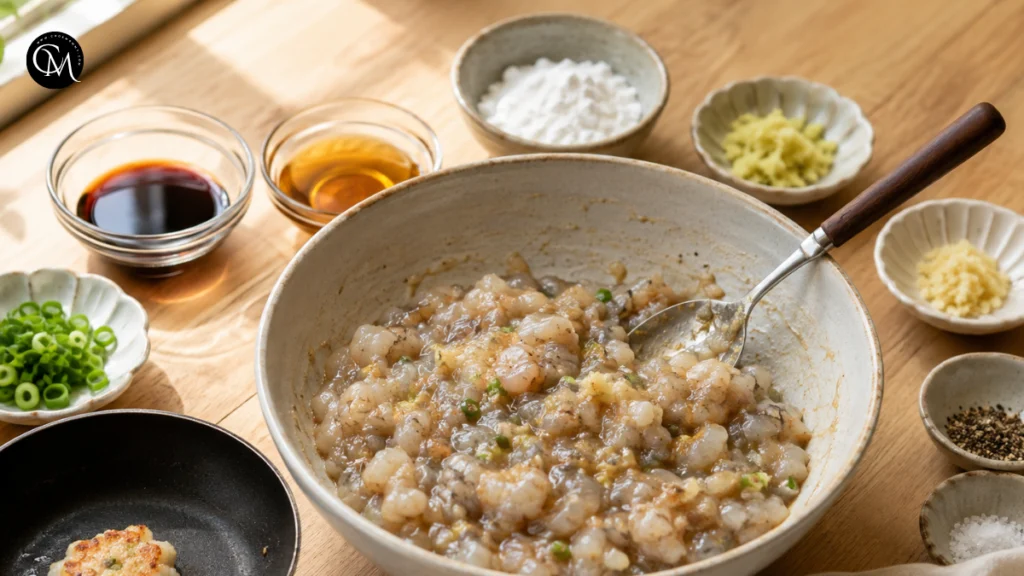
Place the chopped shrimp in a bowl with egg white, soy sauce, sesame oil, ginger, garlic, green onion, cornstarch, pepper, and salt. Stir vigorously for about 30 to 45 seconds, until the mixture looks slightly glossy and sticky.
The sticky texture helps the proteins bind, while cornstarch holds moisture so the topping stays together. Because raw shrimp should not be tasted, fry a teaspoon-sized test portion and adjust the seasoning from there.
This quick test is one of my favorite kitchen habits. It lets you correct the salt, ginger, sesame oil, or pepper before committing the entire batch.
Step 3 – Cook the Main Ingredient
Spread about one heaped tablespoon of shrimp mixture over each bread triangle. Take the topping all the way to the edges so the bread is evenly covered. Press sesame seeds lightly onto the shrimp side if using.
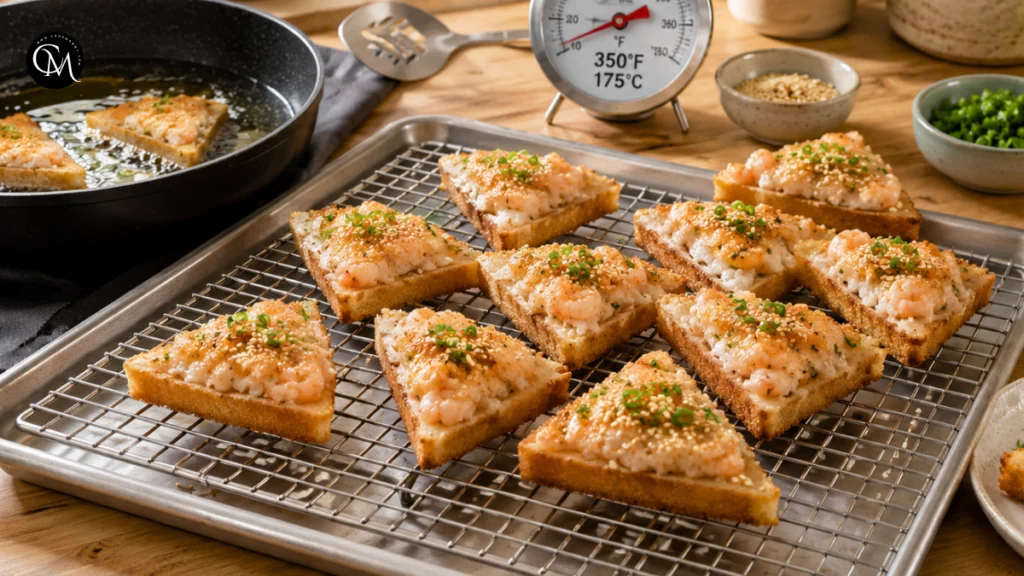
Pour about 1/2 inch of neutral oil into a heavy skillet and heat it over medium heat. A cooking thermometer is helpful: around 350°F or 175°C is a useful target for steady frying.
Cook each piece shrimp-side down for 1 1/2 to 2 minutes, then turn and cook the bread side for 45 to 60 seconds. Work in small batches so the oil stays hot.
Step 4 – Combine Everything
As each batch finishes, transfer the pieces to a wire rack set over a tray. A rack keeps steam away from the bottom, which helps preserve the crisp texture better than piling hot pieces directly on a plate.
The best shrimp toast balances crisp bread, juicy seafood, and a lightly browned surface. If the bread darkens too fast, lower the heat; if it stays pale and oily, raise it slightly.
The shrimp should be opaque and fully cooked in the center. If you are unsure, cut open one of the thicker pieces before serving the entire batch.
Step 5 – Finish and Adjust the Seasoning
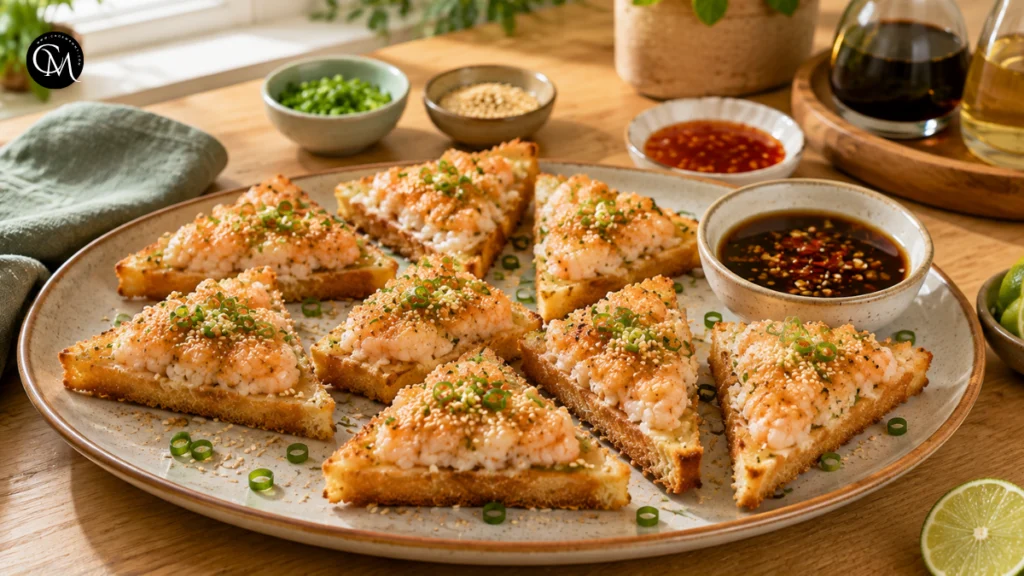
Let the pieces rest for one to two minutes before serving. Finish with thinly sliced green onion, sesame seeds, or a tiny squeeze of lime if you enjoy a brighter flavor.
I prefer serving shrimp toast with a simple dipping sauce made from soy sauce, rice vinegar, and a small amount of chili sauce. Sweet chili sauce is also popular, but use it lightly so it does not overpower the delicate shrimp flavor.
The final seasoning should balance savory, nutty, fresh, and slightly sweet notes without making the topping overly salty.
Nutritional Information
Approximate nutrition per serving, based on three pieces and four servings:
- Calories: 260
- Protein: 15 g
- Carbohydrates: 18 g
- Fat: 14 g
- Saturated fat: 2 g
- Sodium: 520 mg
- Fiber: 1 g
These values are estimates because oil absorption varies with bread, temperature, and cooking time. Shrimp supplies protein, while most carbohydrates come from the bread. Exact values depend on your ingredients.
Healthier Alternatives
- To lighten shrimp toast, use thin whole-wheat sandwich bread for extra fiber without making the base too dense. For a gluten-free version, use gluten-free bread and certified gluten-free tamari. The basic recipe is already dairy-free.
- For lower sugar, skip sweet chili sauce and use soy sauce, rice vinegar, lime, and chili instead. Since the basic filling contains no added sugar, the dipping sauce is the easiest place to make an adjustment.
- For children, make smaller triangles and reduce ginger or heat. Seniors who prefer softer food may enjoy a lightly crisp finish rather than a deeply fried crust.
- For a lighter cooking method, brush the assembled pieces with a small amount of oil and bake or air-fry them, knowing the texture will be a little drier than traditionally fried shrimp toast.
Serving Suggestions
- Serve shrimp toast immediately while the edges are crisp and the topping is still warm. For a casual meal, pair it with cucumber salad, edamame, vegetable fried rice, or a light broth.
- For parties, serve small triangles with two contrasting sauces: a sharp soy-vinegar dip and a sweeter chili sauce. Lettuce cups, herbs, cucumber ribbons, sliced scallions, and lime add freshness without overpowering the seafood.
- It also pairs beautifully with homemade spring rolls, dumplings, sesame cucumber salad, or a simple Asian-inspired slaw.
- One presentation trick I use for guests is placing the pieces on a wide platter rather than stacking them. It looks more inviting and, more importantly, prevents trapped steam from softening that carefully created crunch.
Common Mistakes to Avoid
- Using wet shrimp. Extra water weakens the mixture and increases oil splatter. Pat the seafood thoroughly dry before chopping.
- Processing the shrimp too finely. A perfectly smooth paste can become rubbery. Leave a little texture for a tender bite.
- Overloading the bread. A very thick topping cooks slowly while the bread browns too quickly. Keep the layer even and moderate.
- Frying in cool oil. Oil that is not hot enough soaks into the bread and makes shrimp toast greasy.
- Crowding the skillet. Adding too many pieces at once drops the oil temperature and creates uneven browning.
- Stacking hot pieces. Trapped steam softens the underside. Cool them briefly on a wire rack instead.
Storing Tips for the Recipe
- Shrimp toast is best fresh, but leftovers can be refrigerated in an airtight container for up to two days. Cool them completely first so condensation does not soften the bread.
- Reheat in an oven or air fryer at 375°F or 190°C until hot and crisp. Microwaving works for warming the filling but tends to make the bread soft.
- For advance preparation, mix the shrimp topping up to one day ahead and keep it covered in the refrigerator. Wait to spread it onto the bread until shortly before cooking.
- This recipe became one of my regular meals because it uses simple freezer and pantry ingredients yet still feels special enough for guests. It is quick, flexible, and easy to portion.
Conclusion
Homemade shrimp toast succeeds when you focus on a few practical details: dry the shrimp well, keep some texture in the filling, spread it evenly, maintain steady oil heat, and drain the pieces on a rack. Those five habits give you a crisp base with a juicy, savory center without complicated restaurant techniques.
Once you master the basic method, you can adjust the seasoning, choose whole-grain or gluten-free bread, experiment with baking or air-frying, and create different dipping sauces. Try this shrimp toast recipe for your next appetizer night, then leave a comment or review with the variation you used. Subscribe for more approachable recipes, cooking tips, and kitchen-tested ideas you can confidently make at home.
FAQs
Can I make shrimp toast ahead of time?
Yes. Prepare the shrimp mixture up to one day ahead, refrigerate it, and assemble the bread shortly before cooking for the best texture.
Can I bake it instead of frying?
Yes. Brush the pieces lightly with oil and bake until the shrimp is cooked and the bread is crisp, though the result will be less rich.
Can I use frozen shrimp?
Yes. Thaw frozen shrimp completely, drain well, and pat very dry before chopping. Excess water can make the topping loose.
What bread works best?
Soft, thin sandwich bread works best because it becomes crisp quickly without overpowering the shrimp. Avoid very thick or dense bread.
Why does my shrimp toast turn greasy?
The most common reason is oil that is too cool. Fry in small batches and keep the temperature close to 350°F or 175°C.
Can I use cooked shrimp?
Raw shrimp is better because it binds naturally with the other ingredients and stays juicier. Pre-cooked shrimp can become dry during the second cooking.
What sauce goes well with it?
Try sweet chili sauce, soy and rice vinegar, or a light chili-lime dip. Choose a sauce that adds acidity without masking the shrimp flavor.
Tried it before ?
There are no reviews yet. Be the first one to write one.