
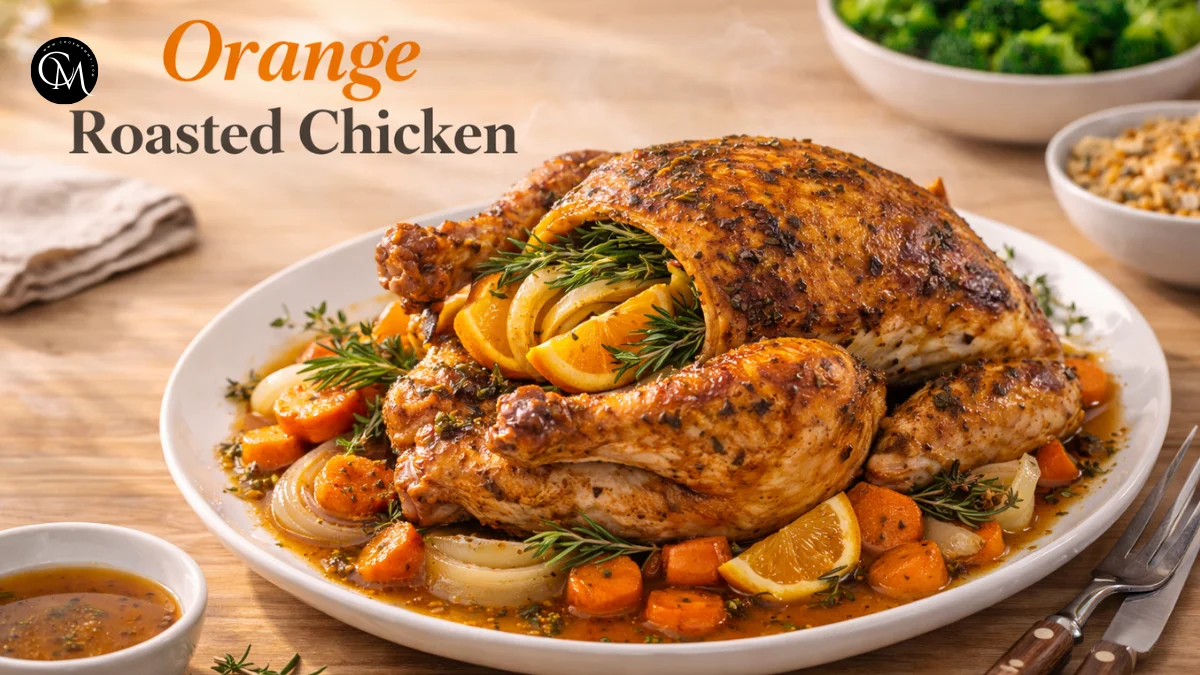
Orange Roasted Chicken: 7 Best Flavor Secrets
What if the secret to restaurant-level roasted chicken isn’t complicated seasoning but one simple ingredient used the right way? Many home cooks assume roasting chicken is straightforward, yet small technique mistakes often lead to dry meat and flat flavor.
Orange Roasted Chicken changes that expectation completely. The combination of citrus, balanced seasoning, and proper roasting technique creates a dish that feels both comforting and vibrant. The natural acidity of orange helps tenderize the meat, while its sweetness enhances browning and aroma in the oven.
This recipe is worth your time because it focuses on practical kitchen knowledge rather than complicated steps. You’ll learn how to build flavor from the inside out, manage heat for even cooking, and finish with a texture that feels juicy, aromatic, and satisfying. Whether you’re preparing a weeknight dinner or a special meal, this approach turns a simple roast into something memorable and reliable.
Table of Contents
Ingredients List
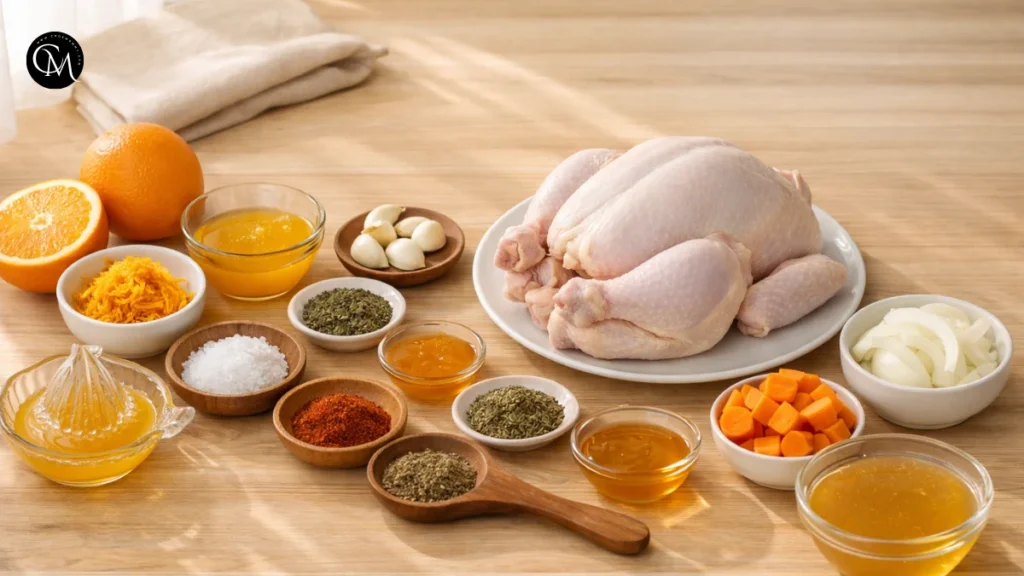
A great roast begins with thoughtful ingredient selection. Each component here plays a role in flavor balance and texture.
Main Ingredients
- 1 whole chicken (1.4–1.8 kg), cleaned and patted dry
- 2 fresh oranges (zest + juice)
- 4 garlic cloves, lightly crushed
- 2 tbsp olive oil or melted butter
- 1 tsp salt
- ½ tsp black pepper
- 1 tsp paprika
- 1 tsp dried thyme or rosemary
Flavor Enhancers
- 1 tbsp honey (optional, for gentle sweetness)
- 1 small onion, sliced
- 1 carrot, chopped
- ½ cup chicken broth
Substitution Ideas
- Use lemon instead of orange for sharper acidity.
- Replace butter with olive oil for a lighter finish.
- Maple syrup works in place of honey for deeper sweetness.
- Fresh herbs can replace dried for brighter aroma.
The orange brings freshness and mild sweetness, while garlic and herbs deepen the savory profile.
Timing
- Preparation time: 15 minutes
- Marination time (optional): 30–60 minutes
- Cooking time: 1 hour 15 minutes
- Total time: about 1 hour 30 minutes
Compared to many roasted poultry recipes, this Orange Roasted Chicken requires minimal prep while delivering layered flavor. The optional marination enhances tenderness but isn’t mandatory for good results.
Step-by-Step Instructions
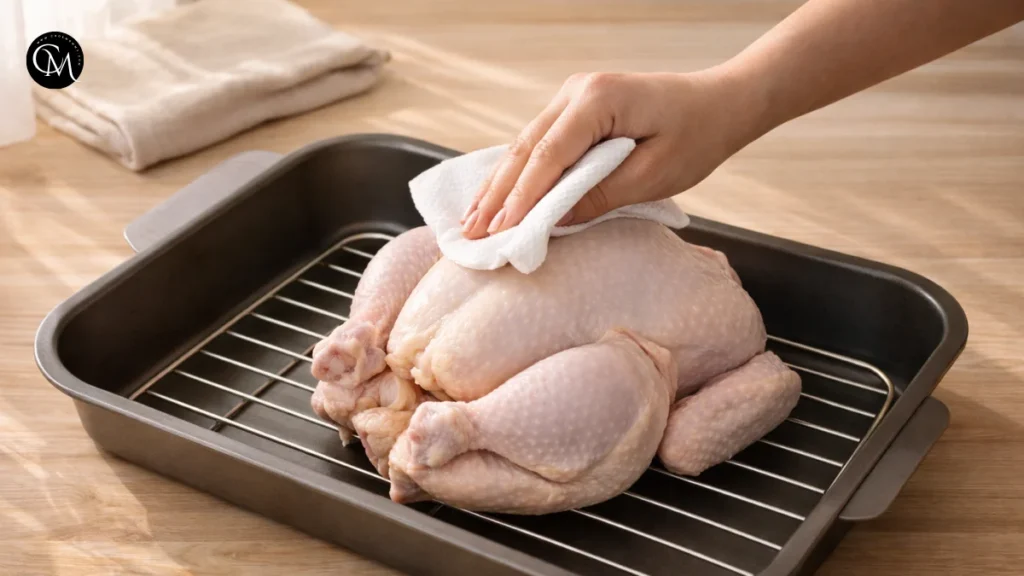
Step 1: Prepare the Chicken Properly
Pat the chicken completely dry using paper towels, including the cavity and under the wings. Removing excess moisture is essential for achieving golden, crisp skin during roasting rather than a soft, steamed surface. Place the chicken on a rack or directly in the roasting pan once dry.
Why it matters: Moisture prevents browning and slows the Maillard reaction, which is responsible for the deep color and savory flavor of roasted poultry.
Pro tip: Let the chicken sit uncovered in the fridge for 30–60 minutes if time allows. This air-dries the skin and improves crispness even more.
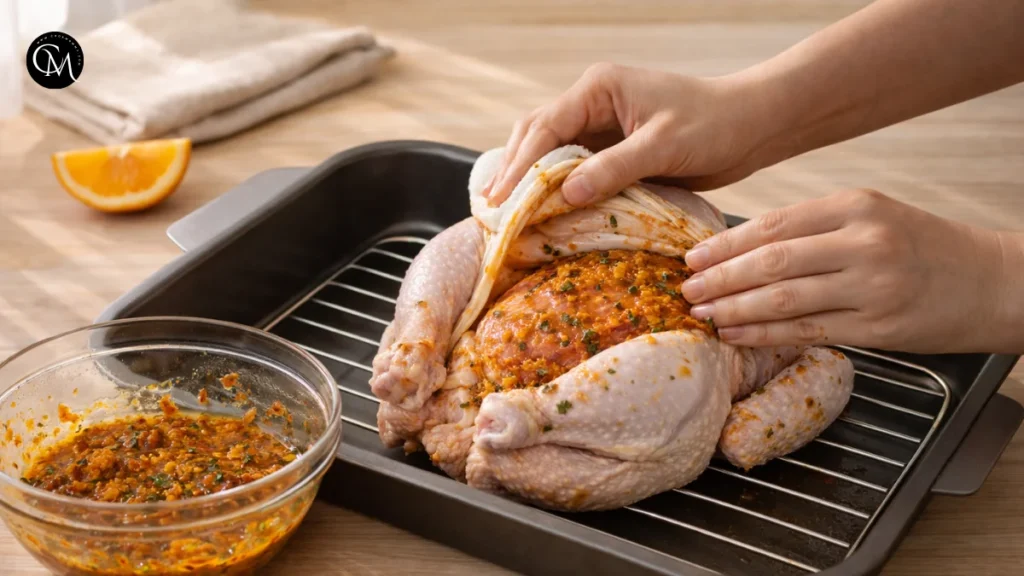
Step 2: Create a Balanced Citrus Marinade
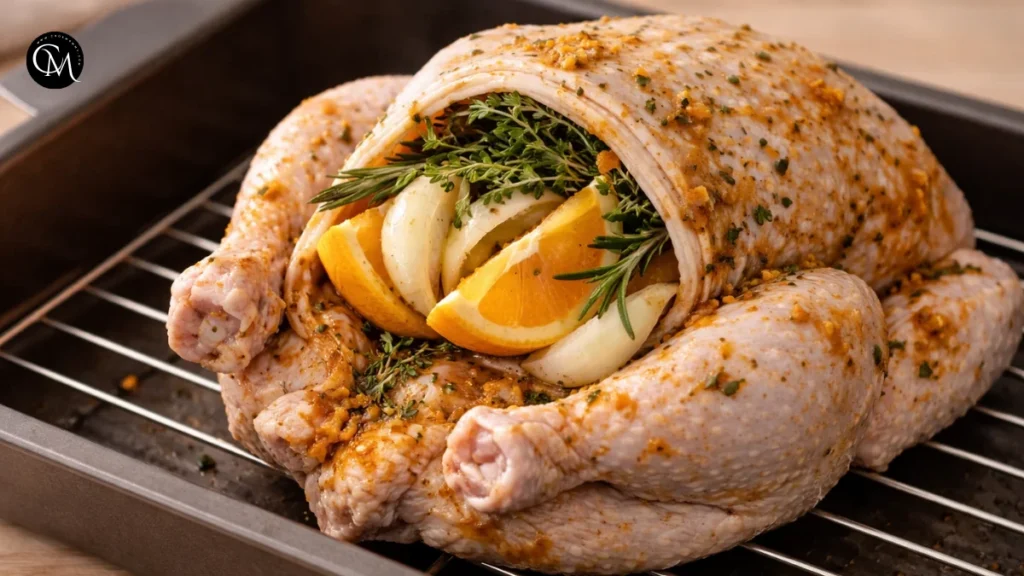
In a mixing bowl, combine orange zest, fresh orange juice, olive oil, minced garlic, chopped herbs, salt, pepper, and paprika. Stir until the mixture forms a loose, aromatic paste. Gently loosen the skin over the breast and thighs using your fingers, then rub part of the marinade directly onto the meat. Spread the rest evenly over the outside.
Tip: Focus on seasoning beneath the skin first. This ensures the flavor reaches the meat rather than staying only on the surface.
Why it matters: Direct seasoning improves depth, tenderness, and overall flavor distribution during roasting.
Step 3: Stuff the Cavity for Natural Aroma
Place orange wedges, sliced onion, and a few herb sprigs inside the cavity. Avoid overpacking so hot air can still circulate.
Insight: As the chicken roasts, the citrus and onion release steam and essential oils that gently perfume the meat from the inside, creating layered aroma and moisture.
Kitchen note: This step adds subtle flavor without overpowering the natural taste of the chicken.
Step 4: Prepare the Roasting Base
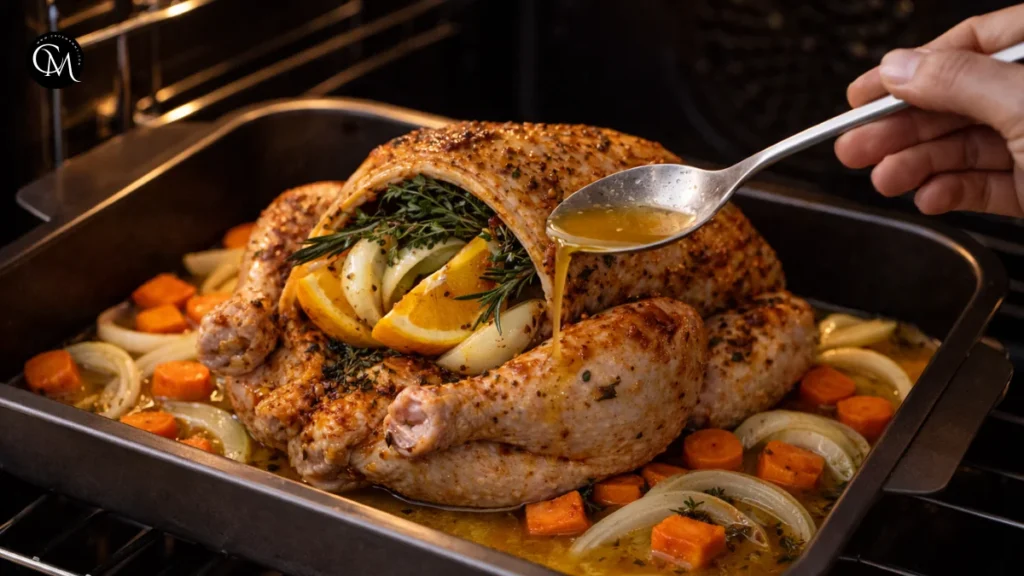
Arrange carrots and remaining onion slices in the roasting pan, then pour in a small amount of chicken broth. Set the chicken on top of this vegetable layer.
Why it matters: The vegetables act as a natural rack, lifting the chicken slightly so heat circulates evenly. The broth prevents drippings from burning and forms a flavorful base for pan juices.
Pro tip: These roasted vegetables can later be blended into a light sauce or served as a side.
Step 5: Roast at Controlled Heat
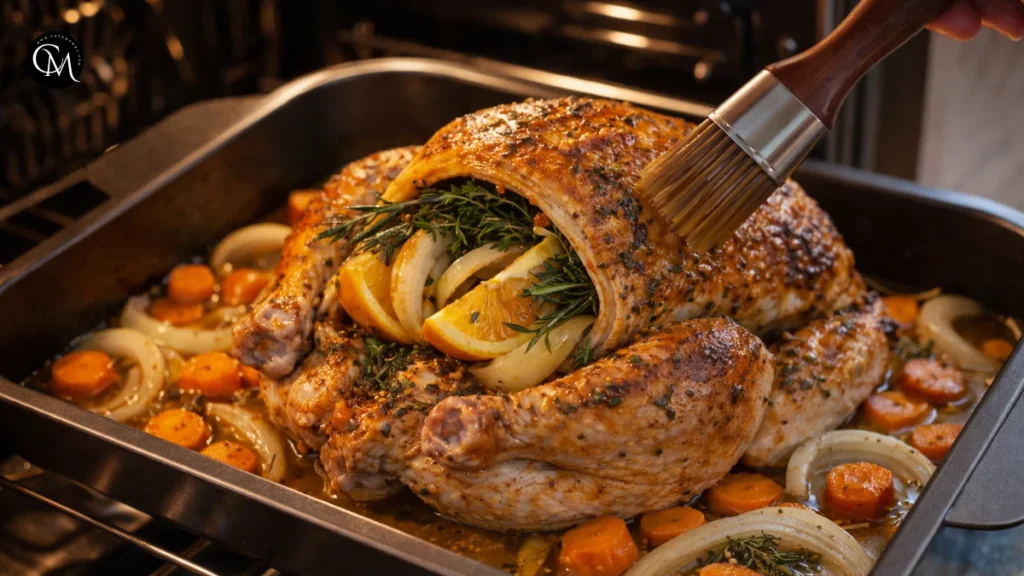
Place the pan in a preheated oven at 190°C and roast for about 70–80 minutes, depending on the chicken’s size. Baste the chicken every 20 minutes using the pan juices.
Tip: Basting redistributes fat, citrus juices, and seasoning across the surface, helping maintain moisture and build a glossy finish.
Why it matters: Consistent heat allows the interior to cook gently while the exterior develops color and flavor.
Step 6: Finish for Crisp Skin
Increase the oven temperature to 210°C during the final 10 minutes of roasting. Watch carefully to avoid over-browning.
Insight: The higher heat promotes caramelization of the natural sugars in the orange and helps tighten the skin for a crisp texture without drying the meat.
Extra tip: Rotate the pan if one side browns faster than the other.
Step 7: Rest Before Serving
Remove the chicken from the oven and let it rest for about 10 minutes before carving. Cover loosely with foil, but avoid sealing tightly to preserve crispness.
Why it matters: Resting allows the internal juices to redistribute throughout the meat, ensuring each slice remains moist and tender instead of losing moisture onto the cutting board.
Serving tip: Spoon a little of the warm citrus-infused pan juices over the carved pieces just before serving to enhance flavor and shine.
Nutritional Information
Approximate values per serving (based on 6 servings):
| Nutrient | Amount |
|---|---|
| Calories | 320 kcal |
| Protein | 30 g |
| Fat | 18 g |
| Carbohydrates | 6 g |
| Sugar | 3 g |
| Sodium | 420 mg |
This dish offers balanced nutrition lean protein from Orange Roasted Chicken, healthy fats from olive oil, and vitamins from citrus. The natural sweetness of orange eliminates the need for heavy sauces, keeping the meal lighter without sacrificing taste.
Healthier Alternatives
You can adapt Orange Roasted Chicken for different dietary needs without losing its signature flavor.
Lower sugar: Skip honey and rely on natural orange sweetness.
Lower fat: Use skinless chicken pieces and reduce oil slightly.
Whole-food approach: Add sweet potatoes or whole-grain sides instead of refined starches.
Dairy-free: Stick to olive oil instead of butter.
For children: Use milder spices and increase orange for sweetness.
For seniors: Cook at slightly lower heat for a softer texture.
For calorie-conscious diets: Serve with steamed vegetables and reduce oil.
Each variation maintains citrus brightness and savory depth.
Serving Suggestions for the Orange Roasted Chicken
This dish adapts beautifully to different meals and occasions.
- Serve with roasted vegetables for a comforting dinner.
- Pair with rice or couscous to absorb the citrus juices.
- Add a fresh green salad for balance.
- Shred leftovers into wraps or sandwiches.
- Use the pan juices as a natural sauce.
For gatherings, presenting the whole Orange Roasted Chicken at the table creates visual appeal and invites conversation.
Common Mistakes to Avoid
- Skipping the drying step: Damp skin prevents crisping.
- Overcooking the chicken: Internal temperature should reach about 75°C.
- Too much citrus juice: Excess liquid can steam instead of roast.
- Not seasoning under the skin: Surface seasoning alone limits flavor depth.
- Ignoring resting time: Cutting immediately causes juice loss.
- Using low oven heat: Insufficient heat leads to pale, rubbery skin.
Professional kitchens emphasize heat control and moisture balance for optimal roasting.
Storing Tips for the Orange Roasted Chicken
- Refrigerate leftovers within two hours.
- Store in airtight containers for up to 3 days.
- Reheat gently in the oven at 160°C to retain moisture.
- Freeze shredded meat for up to 2 months.
- Use bones to make a flavorful broth.
Preparing the marinade a day ahead can also save time while intensifying flavor.
Conclusion
Orange Roasted Chicken proves that simple ingredients, when handled with care, create memorable meals. Citrus adds brightness, roasting builds depth, and thoughtful techniques ensure consistent results. This recipe delivers juicy meat, crisp skin, and a natural balance between sweet and savory ideal for both weeknight dinners and special occasions.
Try it in your kitchen and notice how small adjustments transform the final flavor. If you enjoyed the Orange Roasted Chicken, share your experience in the comments, leave a review to help other home cooks, and subscribe for more practical, flavor-driven recipes and cooking insights.
FAQs
1. Can I use chicken pieces instead of a whole bird?
Yes. Adjust cooking time pieces usually roast in 35–45 minutes.
2. Should I marinate overnight?
Optional. Even 30 minutes improves flavor, but overnight deepens citrus notes.
3. Can I cook Orange Roasted Chicken in an air fryer?
Yes. Use medium-sized portions and cook at 180°C, turning halfway.
4. What herbs work best?
Thyme, rosemary, and sage complement orange particularly well.
5. How do I know when the chicken is done?
Use a thermometer. The thickest part should reach 75°C.
6. Can I make it spicy?
Add chili flakes or smoked paprika for a gentle kick.
7. What can I do with leftovers?
Use in salads, sandwiches, wraps, or soups for quick meals the next day.
Tried it before ?
There are no reviews yet. Be the first one to write one.