
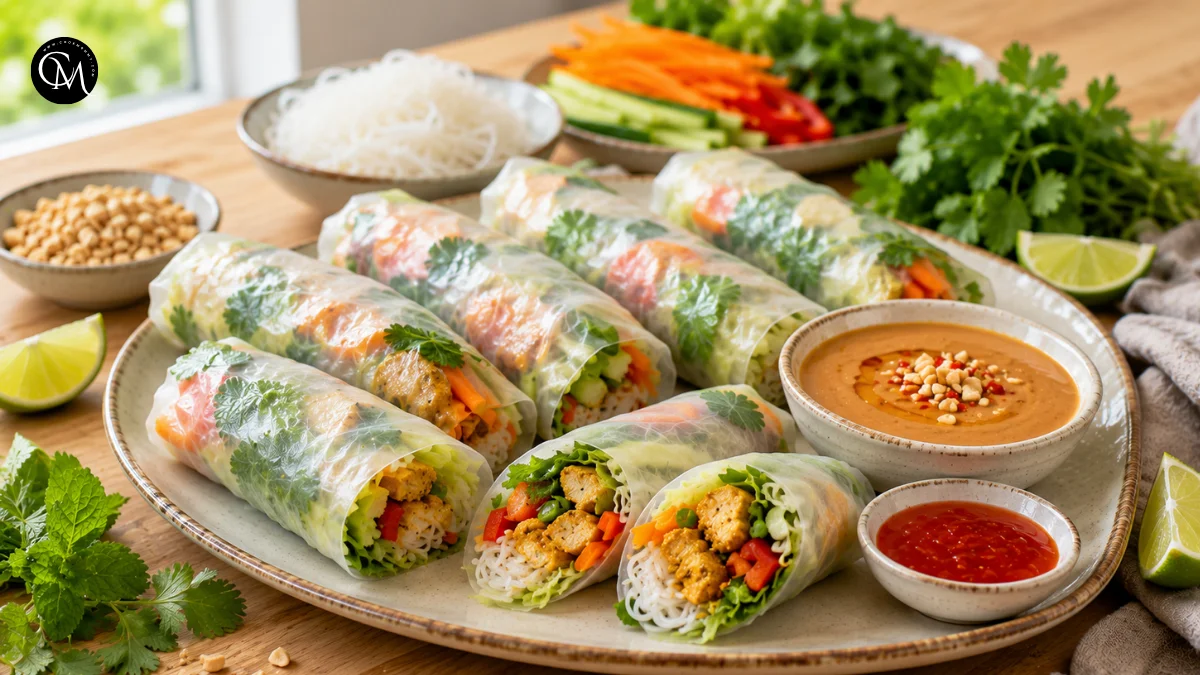
Curried Chicken Rice Paper Rolls: 5 Best Flavor Tips
Can a fresh, colorful meal be ready in about 35 minutes while still offering tender chicken, crisp vegetables, fragrant herbs, and satisfying flavor? These Curried Chicken Rice Paper Rolls show that it is possible.
The recipe combines warmly spiced Curried Chicken Rice filling with soft rice noodles, crunchy vegetables, mint, and cilantro. Everything is wrapped in delicate rice paper and served with a creamy lime-peanut dipping sauce.
These rolls are light enough for lunch but filling enough for dinner. They also make an attractive appetizer for gatherings because the colorful ingredients remain visible through the translucent wrappers.
After making rice paper rolls at home many times, I learned that success depends on a few small details. The chicken must cool before rolling, the vegetables should be dry, and the wrappers need only a quick dip in water. Follow these five flavor tips, and your rolls will taste fresh, balanced, and full of character.
Table of Contents
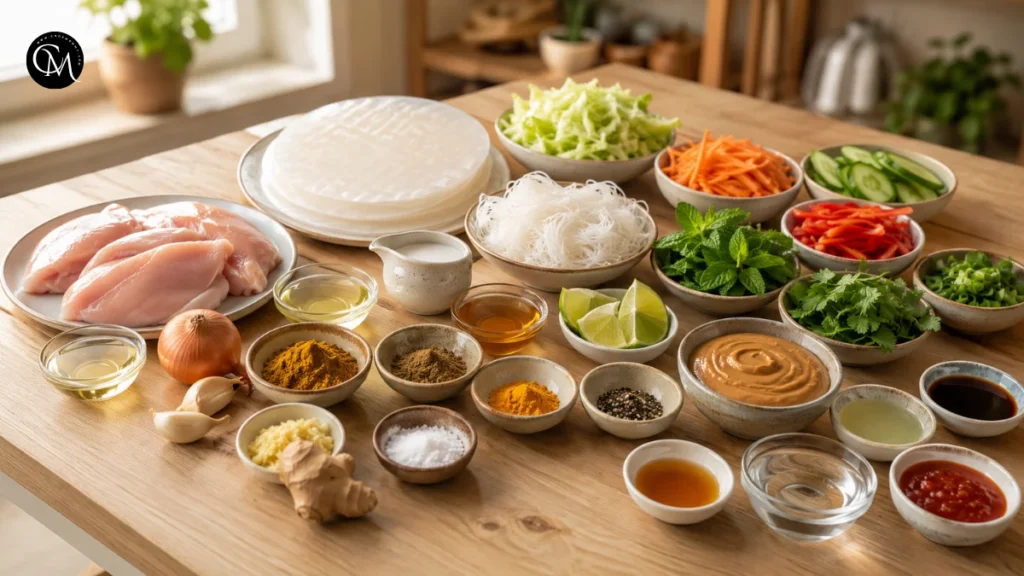
Ingredients List
For the curried chicken
- 450 g boneless, skinless chicken breast or thighs
- 1 tablespoon neutral cooking oil
- 1 small onion, finely chopped
- 2 garlic cloves, minced
- 1 teaspoon freshly grated ginger
- 1½ tablespoons mild curry powder
- ½ teaspoon ground cumin
- ¼ teaspoon turmeric
- ½ teaspoon salt
- ¼ teaspoon black pepper
- 2 tablespoons coconut milk
- 1 teaspoon fresh lime juice
- 1 teaspoon honey or maple syrup, optional
Chicken thighs give Curried Chicken Rice a slightly juicier texture. Chicken breast is leaner and cooks quickly. Firm tofu or mushrooms can replace the chicken for a meat-free version.
For the rice paper rolls
- 10 to 12 rice paper wrappers
- 100 g thin rice noodles
- 1 small carrot, cut into thin matchsticks
- ½ cucumber, thinly sliced
- 1 small red bell pepper, thinly sliced
- 1 cup shredded lettuce or cabbage
- ½ cup fresh mint leaves
- ½ cup fresh cilantro leaves
- 2 green onions, thinly sliced
- Lime wedges for serving
You may also add avocado, bean sprouts, mango, shredded red cabbage, or finely sliced radishes.
For the dipping sauce
- 3 tablespoons smooth peanut butter
- 1½ tablespoons lime juice
- 1 tablespoon soy sauce or tamari
- 1 teaspoon honey or maple syrup
- 1 teaspoon sesame oil
- 2 to 4 tablespoons warm water
- Chili sauce, optional
For a nut-free sauce, replace the peanut butter with sunflower seed butter.
Timing
- Preparation time: 25 minutes
- Cooking time: 10 minutes
- Total time: 35 minutes
- Yield: 10 to 12 rolls
Most of the preparation involves slicing the vegetables and organizing the filling. Once everything is ready, the chicken cooks quickly, and each roll takes about one minute to assemble.
Step-by-Step Instructions
Step 1 – Prepare the ingredients
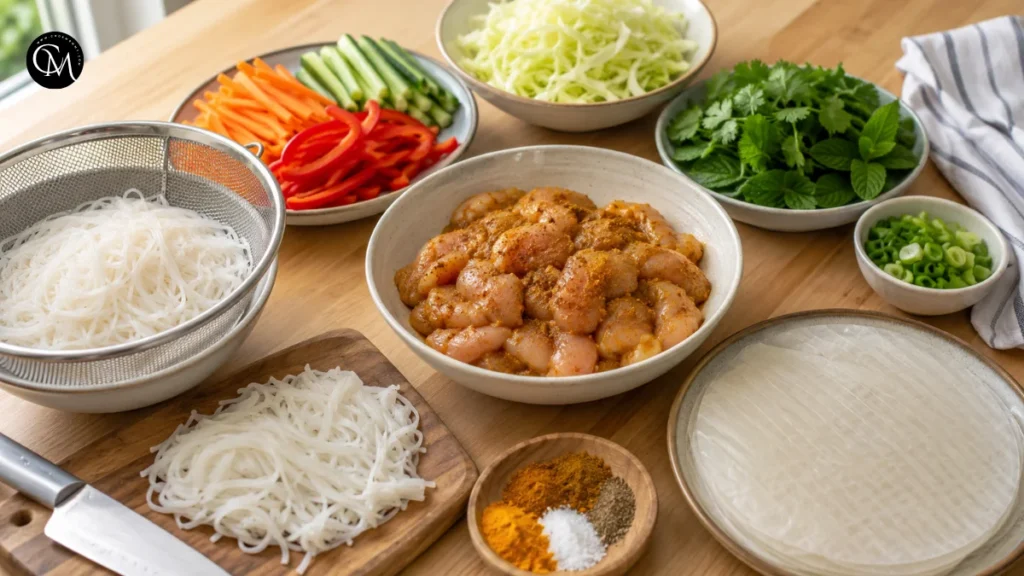
Prepare the rice noodles by following the cooking directions printed on the package.. Drain them, rinse them under cold water, and allow all excess liquid to escape. Cut long noodles into shorter strands so they are easier to arrange inside the wrappers.
Slice the vegetables into thin, even pieces. Wash the herbs and pat them completely dry.
Dry ingredients are essential because too much moisture can make rice paper slippery and fragile.
Place the sliced chicken in a bowl. Add the curry powder, cumin, turmeric, salt, and black pepper. Toss until every piece is evenly coated. Let the seasoned chicken rest for five to ten minutes while you finish preparing the vegetables.
This short resting period helps the Curried Chicken Rice filling absorb the spices without requiring a long marinade.
Step 2 – Build the flavor base
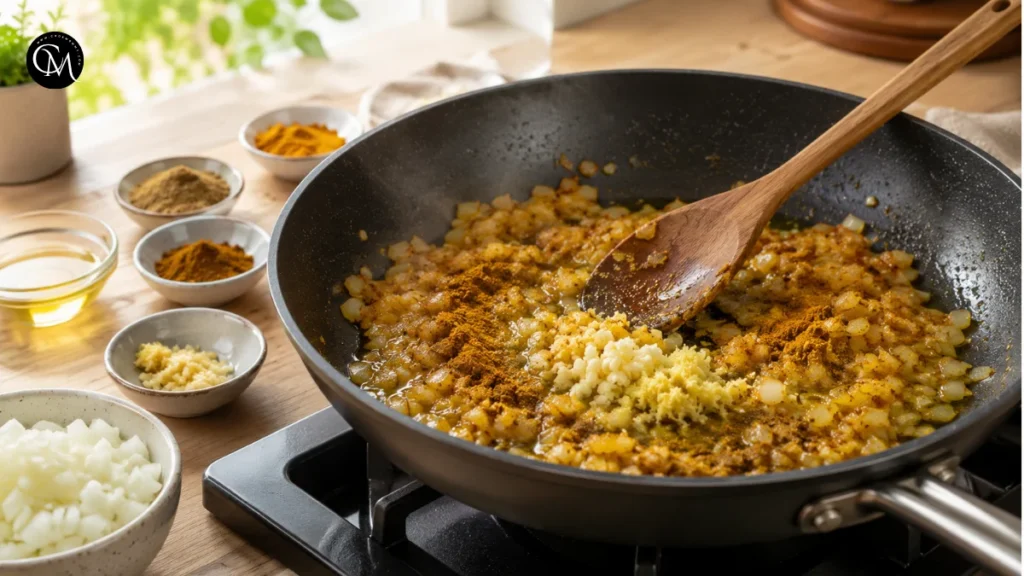
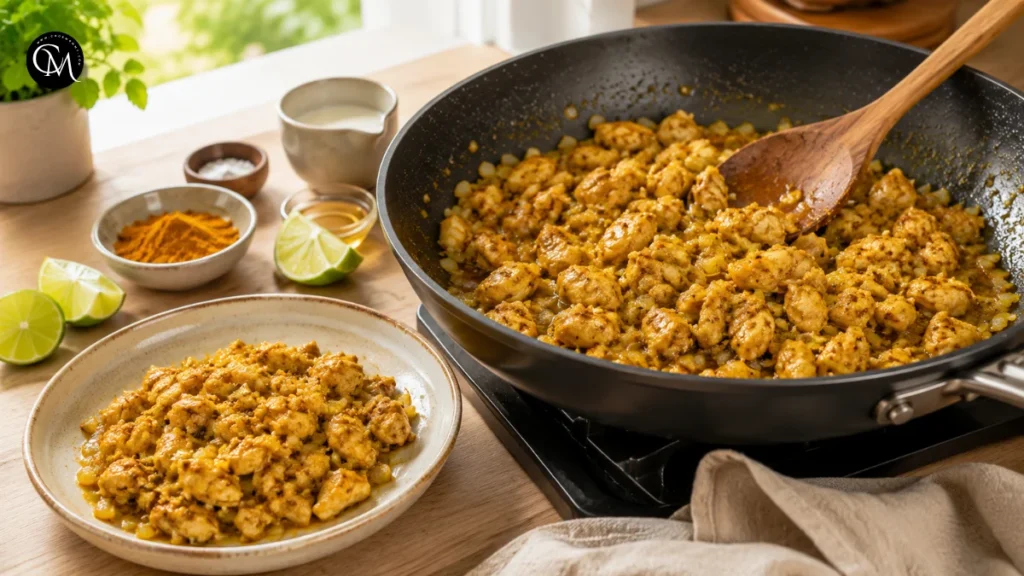
Warm the cooking oil in a wide frying pan over moderate heat. Add the onion and cook for three to four minutes, stirring occasionally, until it becomes soft and lightly golden.
Add the garlic and ginger. Cook for about 30 seconds, just until fragrant.
The warm oil helps release the aroma of the curry spices. This process, often called blooming, creates a deeper and more rounded flavor than simply stirring spices into a cold sauce.
Avoid using excessively high heat. Burned garlic or curry powder can give Curried Chicken Rice a bitter taste that is difficult to correct.
Step 3 – Cook the main ingredient
Add the seasoned chicken to the skillet. Cook for five to seven minutes, stirring occasionally, until the pieces are fully cooked and lightly browned.
Pour in the coconut milk during the final two minutes. Add the optional honey and stir until the chicken is lightly coated. The filling should be moist but not surrounded by liquid.
Chicken is safely cooked when the thickest pieces reach an internal temperature of 74°C or 165°F.
Spoon the curried chicken filling onto a wide plate so it can cool more quickly. Stir in the lime juice and allow the filling to cool for at least ten minutes.
Cooling matters because hot chicken creates steam inside the wrappers. That steam can soften the vegetables and cause the rice paper to tear.
Step 4 – Combine everything
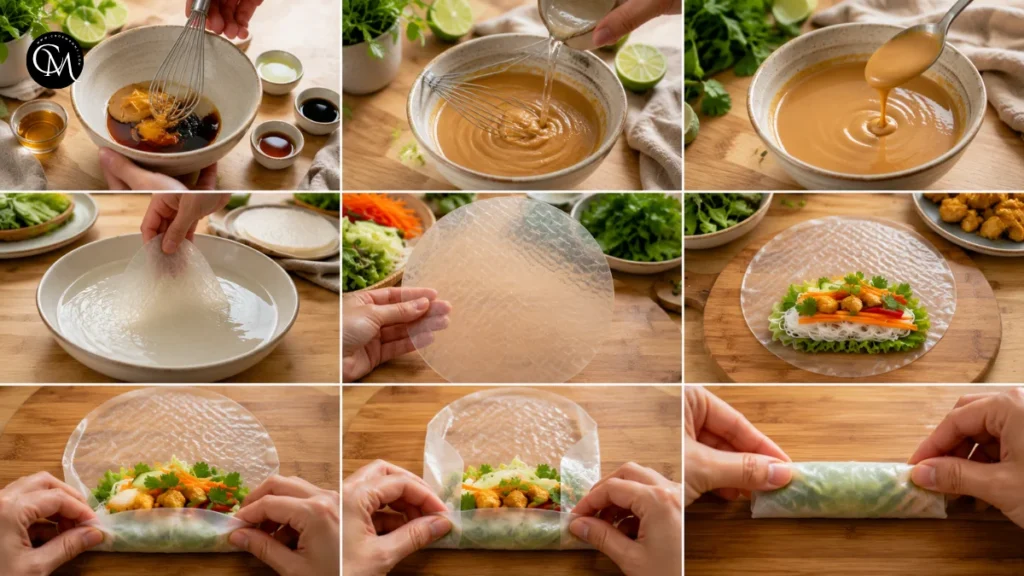
Prepare the dipping sauce by whisking together the peanut butter, lime juice, soy sauce, sweetener, and sesame oil. Add warm water one tablespoon at a time until the sauce becomes smooth and pourable.
Fill a wide, shallow dish with lukewarm water. Dip one rice paper wrapper into the water for approximately five to eight seconds.
Remove the rice paper from the water while it is still a little firm, as it will continue to soften afterward. That is normal because it will continue softening on the work surface.
Place a small amount of lettuce, noodles, carrot, cucumber, bell pepper, herbs, and Curried Chicken Rice near the lower third of the wrapper.
Fold the bottom edge over the filling. Fold both sides inward, then roll firmly without squeezing too hard. Use only two or three tablespoons of filling per wrapper to prevent tearing.
Step 5 – Finish and adjust the seasoning
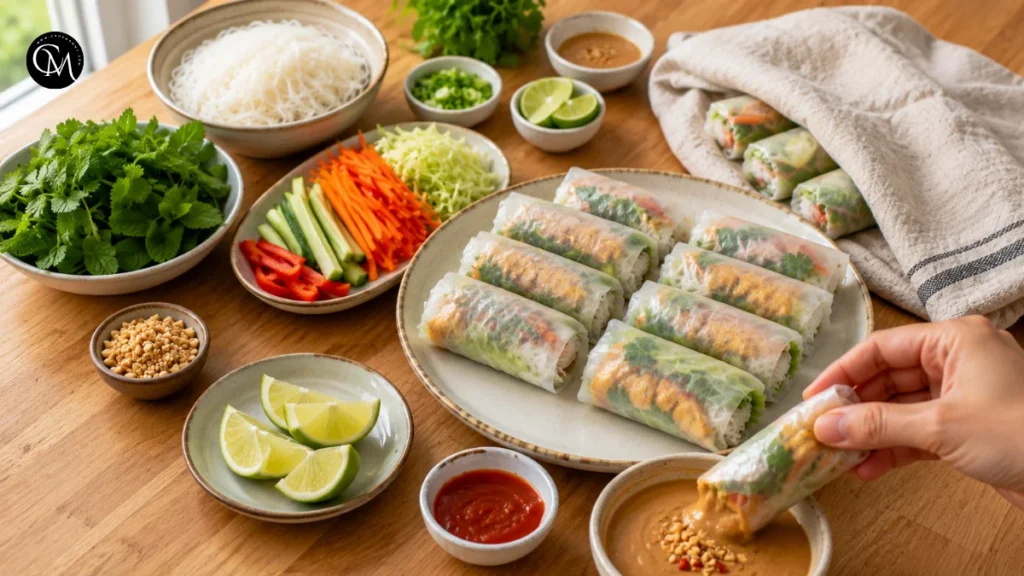
Place each completed roll seam-side down on a clean plate. Leave space between the rolls so they do not stick together.
Cover them with a slightly damp, clean kitchen towel while assembling the remaining portions.
Taste one roll with the dipping sauce before serving. Add extra lime juice if the curry tastes rich, a pinch of salt if the filling seems muted, or chili sauce if you prefer more heat.
This final adjustment gives Curried Chicken Rice a brighter, more polished flavor.
Serve the rolls within one hour for the freshest texture.
Five Best Flavor Tips
- Bloom the curry spices Let the curry powder, cumin, garlic, and ginger warm gently in the skillet. Heat releases their aroma and creates a more developed flavor.
- Add acidity after cooking Fresh lime juice brings contrast to the coconut milk and curry spices. Stir in the lime juice once the heat is turned off to maintain its lively citrus flavor.
- Use two fresh herbs Mint provides a cooling note, while cilantro adds a fresh citrus-like flavor. Together, they prevent Curried Chicken Rice from tasting too heavy.
- Combine soft and crisp textures Tender chicken and noodles need crunchy vegetables for contrast. Carrot, cucumber, cabbage, and bell pepper all work especially well.
- Make a contrasting sauce The dipping sauce should complement the rolls instead of repeating the same curry flavor. Peanut, lime, soy sauce, and sesame create a rich but balanced contrast.
Nutritional Information
Approximate values per roll, based on 12 rolls with a moderate amount of sauce:
- Calories: 175
- Protein: 12 g
- Carbohydrates: 20 g
- Fat: 6 g
- Fiber: 2 g
- Sodium: 310 mg
Actual values depend on the wrapper size, chicken cut, amount of noodles, and quantity of dipping sauce. Curried Chicken Rice Paper Rolls provide protein, carbohydrates, vegetables, and herbs in one convenient serving, but they should still be enjoyed as part of a balanced diet.
Healthier Alternatives
- For a lower-sugar version, leave out the honey or maple syrup. The curry spices, ginger, garlic, and lime provide plenty of flavor without extra sweetness.
- For a whole-grain alternative, use brown rice vermicelli or replace part of the noodles with cooked quinoa.
- The recipe is naturally dairy-free when made with coconut milk. For a gluten-free version, use certified gluten-free rice paper, noodles, curry powder, and tamari instead of regular soy sauce.
- For children, choose mild curry powder and serve the dipping sauce separately. Keep the vegetables very thin and avoid adding chili.
- Seniors may prefer softer fillings, such as cooked carrots, avocado, or finely shredded lettuce. For a lighter version, use more vegetables and slightly fewer noodles.
- You can also prepare plant-based Curried Chicken Rice-style rolls with firm tofu. Press the tofu well, cut it into strips, and cook it with the same spices until golden.
Serving Suggestions
- Arrange the rolls on a large serving platter with lime wedges, mint leaves, and small bowls of dipping sauce. Their bright colors make them attractive for parties, lunches, and summer dinners.
- For a complete meal, serve Curried Chicken Rice Paper Rolls with cucumber salad, mango slaw, steamed edamame, or a light coconut soup.
- A build-your-own rolling station is another practical option. Arrange the cooked chicken, noodles, fresh vegetables, herbs, rice paper sheets, and dipping sauces in individual bowls. Everyone can choose their preferred fillings and spice level.
- For entertaining, cut the rolls in half diagonally and arrange them with the colorful filling facing upward.
Common Mistakes to Avoid
- Soaking the wrappers too long: Rice paper continues to soften after leaving the water. A brief dip is usually enough.
- Using hot filling: Warm chicken creates condensation and weakens the wrapper.
- Leaving ingredients wet: Moist noodles, vegetables, and herbs make the rolls slippery and more likely to tear.
- Adding too much filling: Overfilled rolls are difficult to close and may split while being served.
- Rolling too loosely: A loose roll falls apart when dipped into the sauce. Roll firmly but gently.
- Forgetting acidity: Lime juice keeps Curried Chicken Rice fresh and prevents the curry and coconut flavors from becoming too rich.
Storing Tips for the Recipe
- Rice paper rolls taste best immediately, but leftovers can be refrigerated for up to 24 hours.
- Wrap each roll separately in a slightly damp paper towel and place it in an airtight container. Keep the rolls from touching because softened rice paper sticks easily.
- For meal preparation, store the cooked Curried Chicken Rice, noodles, vegetables, herbs, sauce, and wrappers separately. Assemble the rolls shortly before serving.
- The cooked chicken filling can be stored in the refrigerator for up to three days. Allow it to cool completely before placing it inside rice paper.
- Avoid freezing assembled rolls. The fresh vegetables lose their texture, and the wrappers can become tough or watery after thawing.
- This recipe became one of my regular meals because it transforms leftover chicken and simple vegetables into something fresh, colorful, and satisfying without requiring complicated cooking.
Conclusion
Curried Chicken Rice Paper Rolls combine warm curry spices, tender chicken, crisp vegetables, soft noodles, and fragrant herbs in one fresh and versatile recipe. They are quick enough for lunch, attractive enough for entertaining, and easy to adjust for different dietary preferences.
The most important techniques are simple: keep the ingredients dry, cool the chicken before rolling, dip the wrappers briefly, and balance the curry with lime and fresh herbs. These details protect the texture and improve every bite.
Try the recipe with your favorite vegetables and adjust the heat to suit your household. After making it, leave a comment or review sharing your favorite filling combination. Subscribe for more approachable recipes, practical cooking advice, and flavorful meal ideas.
FAQs
Can I prepare Curried Chicken Rice Paper Rolls in advance?
Yes. Prepare them a few hours before serving and store each roll separately under a damp towel or in an airtight container.
Can I use leftover cooked chicken?
Yes. Shred the chicken, warm it with the curry spices, onion, and coconut milk, then let it cool completely before rolling.
Why do my rice paper wrappers tear?
The wrappers may be over-soaked, overfilled, or wrapped around wet ingredients. Use a short soaking time and modest portions of filling.
Is this recipe very spicy?
No. Mild curry powder creates warmth without intense heat. Add chili sauce, cayenne, or fresh chili only when you want more spice.
What can replace the peanut dipping sauce?
Try sweet chili-lime sauce, sesame-ginger sauce, sunflower seed sauce, coconut yogurt with lime, or tamari mixed with rice vinegar.
Can I replace the rice noodles?
Yes. Use brown rice vermicelli, cooked quinoa, shredded lettuce, bean sprouts, or additional vegetables for a lighter filling.
Are Curried Chicken Rice Paper Rolls gluten-free?
They can be gluten-free when prepared with certified gluten-free wrappers, rice noodles, curry powder, and tamari. Always check packaged ingredient labels carefully.
Tried it before ?
There are no reviews yet. Be the first one to write one.