
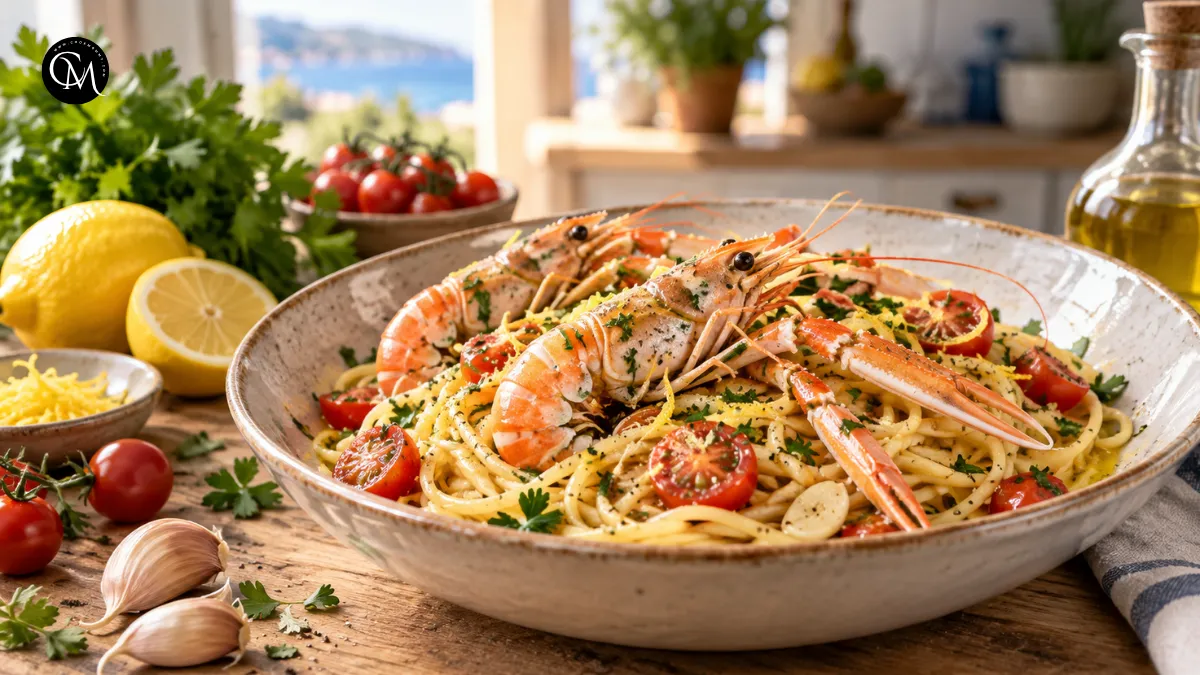
Italian Langoustine Spaghetti with Tomato Sauce
If dried spaghetti can cook in roughly 8–12 minutes, why does seafood pasta so often turn out dry, bland, or overcooked? The answer is usually timing. Langoustines cook quickly, garlic can turn bitter in seconds, and a glossy sauce depends on using starchy pasta water at the right moment.
This Italian Langoustine Spaghetti recipe is built around five practical tips: prepare everything first, build the sauce gently, cook the shellfish briefly, emulsify with pasta water, and finish with fresh lemon and herbs. The result is a bright, savory pasta with tender shellfish and a silky saucespecial enough for guests but realistic for a weeknight.
Table of Contents
Ingredients List for Langoustine Spaghetti
For 4 servings:
- 350 g dried spaghetti. Linguine is a good substitute.
- 8–12 whole langoustines, depending on size. Langoustine tails or large prawns also work.
- 3 tablespoons extra-virgin olive oil.
- 3 garlic cloves, thinly sliced.
- 1 small shallot, finely chopped.
- 200 g cherry tomatoes, halved, or 250 g canned cherry tomatoes.
- 80 ml seafood stock plus 1 teaspoon lemon juice.
- 1/4 teaspoon red pepper flakes, optional.
- 1 teaspoon finely grated lemon zest.
- 1 tablespoon fresh lemon juice.
- 2 tablespoons chopped flat-leaf parsley.
- Fine sea salt and freshly ground black pepper.
- 120–180 ml reserved pasta water.
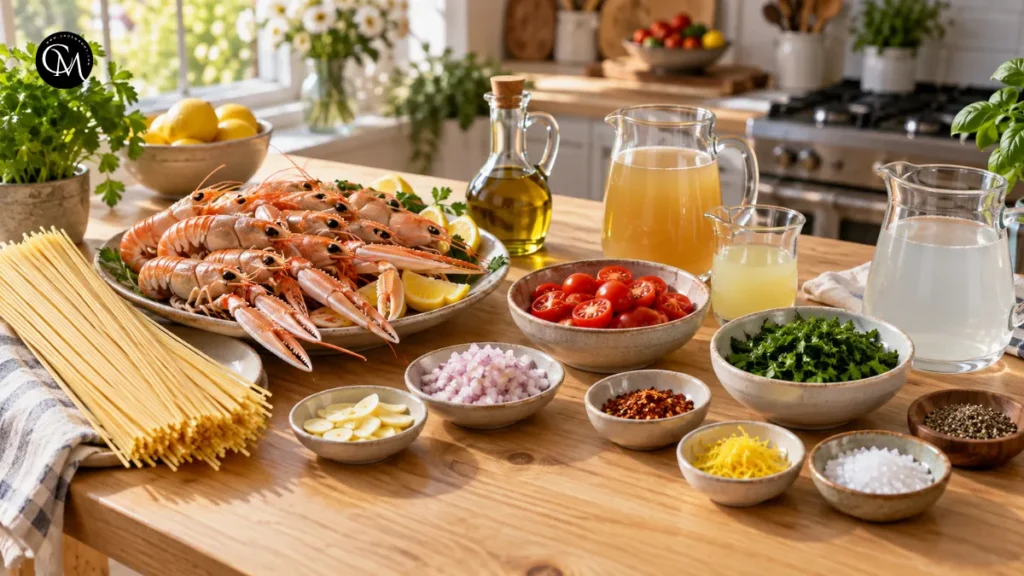
The key to flavorful Langoustine Spaghetti is restraint. Garlic, tomato, parsley, lemon, and olive oil should support the shellfish’s natural sweetness, not cover it with a heavy sauce.
For the best Langoustine Spaghetti, choose shellfish that smells fresh and clean rather than strongly fishy. If fresh langoustines are unavailable, good-quality frozen ones are a practical substitute.
Timing
Preparation time: 15 minutes
Cooking time: 20 minutes
Total time: 35 minutes
That is comparable to many weeknight pasta recipes, which often fall around the 25–40 minute mark. Once the seafood is cleaned and the ingredients are measured, the cooking itself moves quickly.
Step-by-Step Instructions
Step 1 – Prepare ingredients
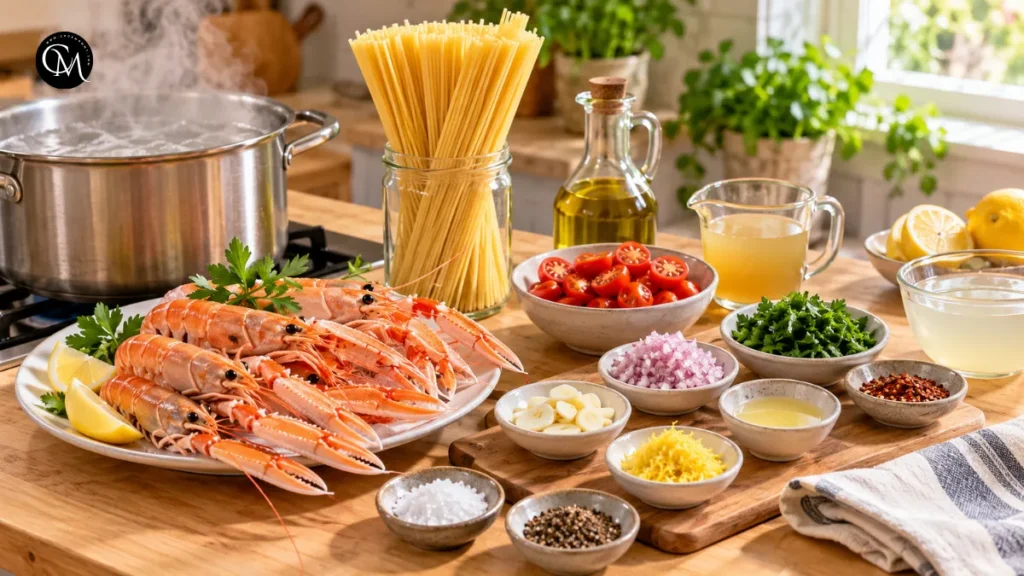
Fill a roomy pot with water, season it generously with salt, and bring it to a steady boil. Rinse the langoustines briefly under cold water and pat them dry. Leave them whole for presentation or split them lengthwise for faster cooking and easier eating.
Measure and chop everything before heating the skillet. Langoustine Spaghetti moves fast once the garlic hits the oil, so good preparation prevents overcooked shellfish or burnt aromatics. Drying the langoustines also helps them sear rather than steam.
Step 2 – Build flavor base
Warm the olive oil gently in a large, wide skillet over medium-low heat. Add the shallot and cook for 2–3 minutes until soft. Add garlic and red pepper flakes; cook for 30–60 seconds without letting the garlic turn dark.
Garlic releases aroma quickly, while excess browning creates bitterness. Moderate heat gives the oil time to absorb flavor.
Stir in the tomatoes, then season them lightly with a pinch of salt. Cook for 4–5 minutes until they soften, then pour in the wine. Simmer for about 2 minutes. The base for Langoustine Spaghetti should taste fresh and savory rather than thick like a long-cooked tomato sauce.
Step 3 – Cook the main ingredient
Add the langoustines in a single layer. Cook whole langoustines for about 2–3 minutes per side, depending on size; peeled tails may need only 1–2 minutes per side.
Look for opaque flesh that is just firm. If they finish early, transfer them to a warm plate rather than leaving them in the pan.
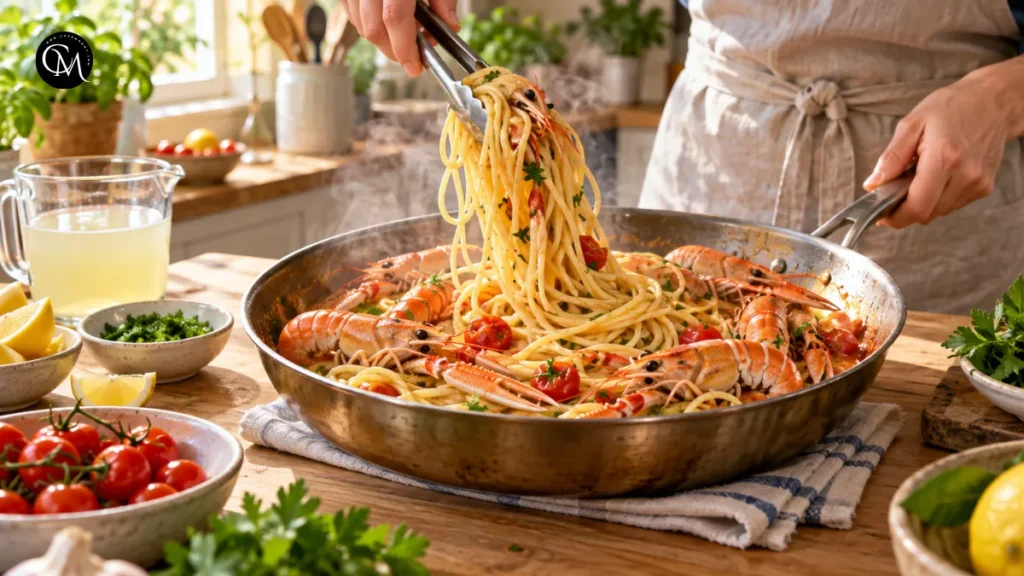
Boil the spaghetti until it is nearly al dente, stopping about a minute early. Scoop out at least 1 cup of the starchy cooking water before draining the pasta. That cloudy liquid is crucial to Langoustine Spaghetti because its starch helps bind the oil and cooking juices into a glossy sauce.
Step 4 – Combine everything
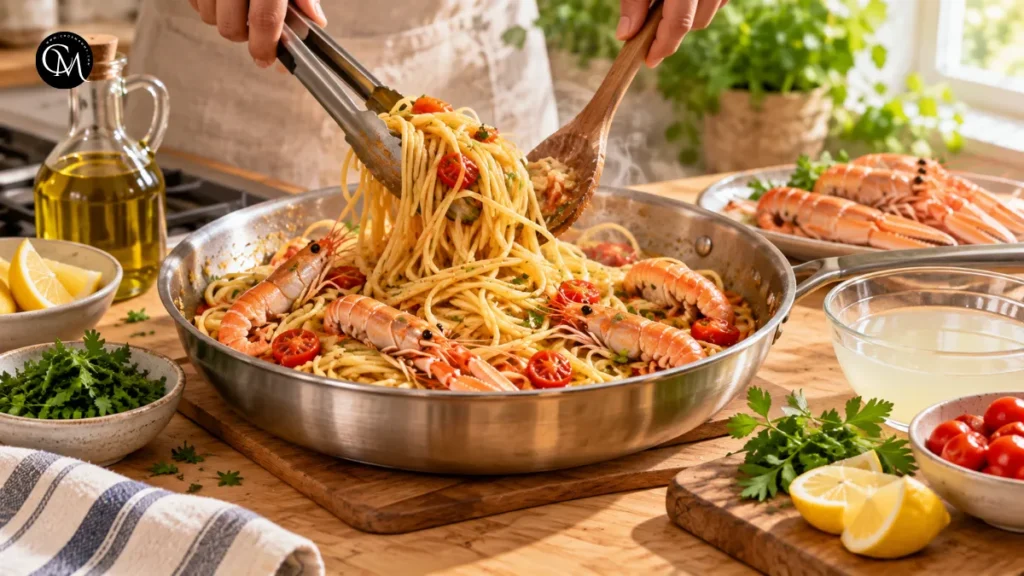
Transfer the spaghetti to the skillet. Add about 120 ml pasta water and toss over medium heat for 1–2 minutes.
The starch helps olive oil, tomato juices, and seafood liquid cling to the noodles rather than pooling underneath. If the sauce looks tight, add more pasta water one tablespoon at a time.
Return the langoustines and toss gently. Proper Langoustine Spaghetti should look glossy and loose enough to twirl easily without becoming watery.
Step 5 – Finish & adjust seasoning
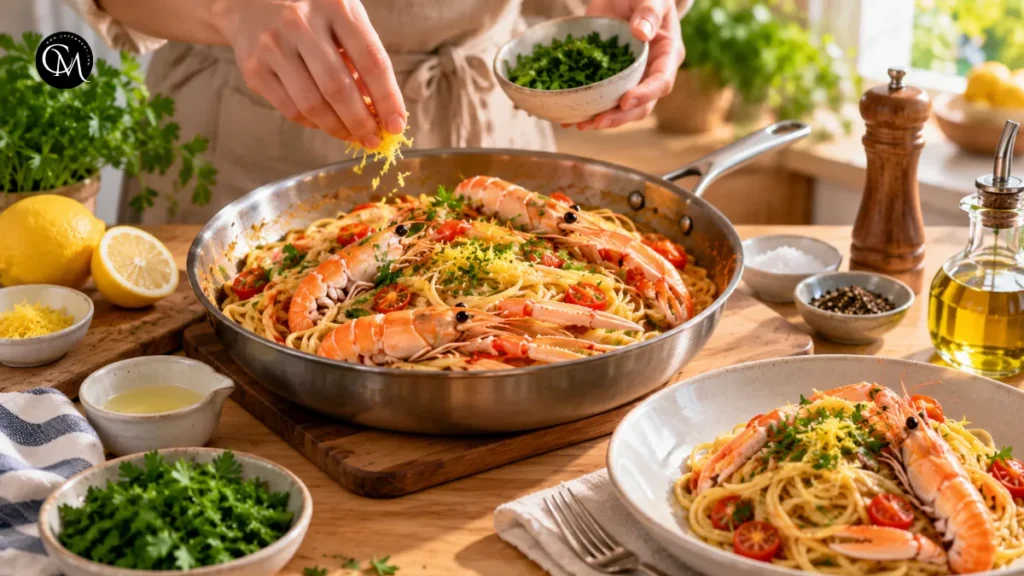
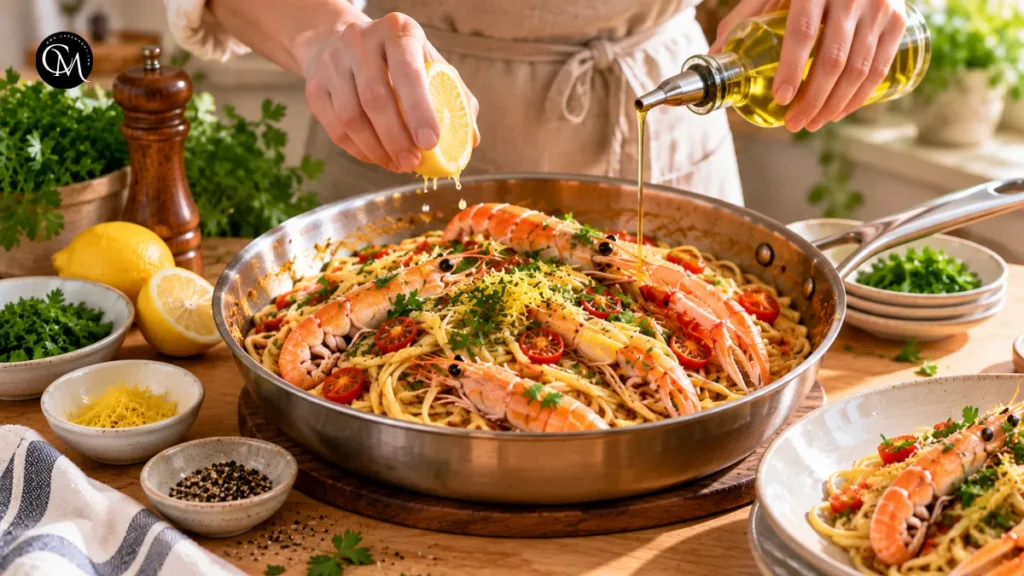
Turn off the heat. Finish the dish by folding in fresh lemon zest, a splash of lemon juice, chopped parsley, and freshly ground black pepper. Taste before adding more salt because the pasta water and seafood already contribute seasoning.
Adjust lemon gradually: a little brightens the shellfish, while too much can dominate it. Finish with a small drizzle of extra-virgin olive oil for aroma and richness. Serve Langoustine Spaghetti immediately, while the seafood is tender and the sauce is fluid.
Nutritional Information
Approximate values per serving, based on four servings:
| Nutrient | Approximate amount |
|---|---|
| Calories | 520 kcal |
| Protein | 29 g |
| Carbohydrates | 67 g |
| Fat | 15 g |
| Saturated fat | 2.5 g |
| Fiber | 5 g |
| Sodium | 620 mg |
Actual values vary with langoustine size, olive oil, pasta brand, and seasoning. Langoustine Spaghetti provides carbohydrates, protein, and fat in one dish, but portion size and side dishes will change the nutritional totals.
Healthier Alternatives
- This recipe contains no added sugar. If using canned tomatoes, choose a variety without added sweeteners.
- For extra fiber, replace half or all of the regular pasta with whole-wheat spaghetti. Its nuttier flavor works well with seafood, although you may need a little more pasta water.
- The recipe is already dairy-free. For gluten-free Langoustine Spaghetti, use a sturdy corn-and-rice spaghetti or another gluten-free pasta that holds its shape well.
- For children, omit the chili and remove shellfish from the shells before serving. For lighter portions, increase the tomatoes and vegetables while reducing the pasta slightly. Seniors who prefer softer textures can cook the spaghetti a little beyond firm al dente while still keeping the langoustines tender.
Serving Suggestions
- Serve Langoustine Spaghetti in warm shallow bowls so the sauce stays fluid longer. A lemony arugula salad works especially well because its peppery freshness cuts through the olive oil without competing with the shellfish.
- For a fuller meal, add roasted zucchini, grilled asparagus, or shaved fennel salad. Crusty bread is excellent for catching the garlicky tomato juices.
- For guests, place one whole langoustine on top of each bowl and mix peeled meat through the pasta. You get an impressive presentation without making every bite difficult to eat.
Common Mistakes to Avoid
- Overcooking the langoustines. An extra minute or two can make the flesh firm and rubbery.
- Burning the garlic. Keep it pale and fragrant; dark garlic can make the sauce bitter.
- Forgetting pasta water. Its starch helps emulsify Langoustine Spaghetti and makes the sauce cling.
- Using too much tomato. Keep the sauce light enough for the shellfish flavor to stay clear.
- Adding lemon too early. Add it off the heat to preserve its fresh aroma.
- Letting the finished pasta sit. Spaghetti keeps absorbing liquid, so serve it as soon as the sauce looks glossy.
Storing Tips for the Recipe
- Seafood pasta is best fresh, but leftovers can be refrigerated in an airtight container for up to 1 day. Cool them promptly and refrigerate rather than leaving the dish at room temperature.
- Reheat leftover Langoustine Spaghetti gently in a skillet over low heat with a splash of water or stock, stopping as soon as the pasta is hot. Long reheating can toughen the shellfish.
- You can chop the shallot, garlic, parsley, and tomatoes several hours ahead. Keep raw langoustines refrigerated and cook them only when needed.
- This is the kind of recipe that becomes a regular meal because the ingredient list is short, the cooking time is manageable, and the finished plate feels far more special than the effort involved.
Conclusion
Langoustine Spaghetti works because each step protects what matters most: tender shellfish, al dente pasta, fresh aromatics, and a sauce that clings without feeling heavy. The five habits are simple prepare first, cook the garlic gently, avoid overcooking the langoustines, use starchy pasta water, and finish with lemon and herbs off the heat.
Once you know the method, you can adapt it with prawns, whole-grain pasta, seasonal tomatoes, or extra chili. Try the recipe, taste as you go, and make it your own. If you cook it, leave a comment or review with your favorite variation, and subscribe for more practical Italian-inspired recipes and seafood cooking tips.
FAQs
Can I make Langoustine Spaghetti with frozen langoustines?
Yes. Thaw them overnight in the refrigerator, drain well, and pat completely dry before cooking. Frozen langoustines work well, but extra moisture can dilute the sauce and reduce browning.
Can I use prawns instead of langoustines?
Yes. Large prawns are the easiest substitute. Their flavor and texture differ slightly, but they pair well with the same garlic, tomato, lemon, parsley, and olive oil base.
Should I remove the langoustine shells?
Either method works. Whole shells add visual appeal, while peeled tails are easier to eat. For guests, combining whole langoustines with peeled meat gives you presentation and convenience.
What pasta shape works best?
Spaghetti and linguine are ideal because they carry the light sauce well. Very small pasta shapes are less effective at showcasing the langoustines and the glossy, emulsified sauce.
Can I make the sauce ahead?
Prepare the tomato-garlic base a few hours ahead, but cook the pasta and shellfish just before serving. Freshly cooked seafood gives Langoustine Spaghetti its best texture and aroma.
Why is my seafood pasta sauce watery?
Wet shellfish, under-reduced wine, or too much pasta water are common causes. Add liquid gradually and toss over heat so the starch can help emulsify and thicken the sauce.
What wine pairs well with this recipe?
A crisp, dry white such as Pinot Grigio, Vermentino, or Sauvignon Blanc complements the shellfish without overpowering it. Sparkling water with lemon is a refreshing alcohol-free alternative.
Tried it before ?
There are no reviews yet. Be the first one to write one.