
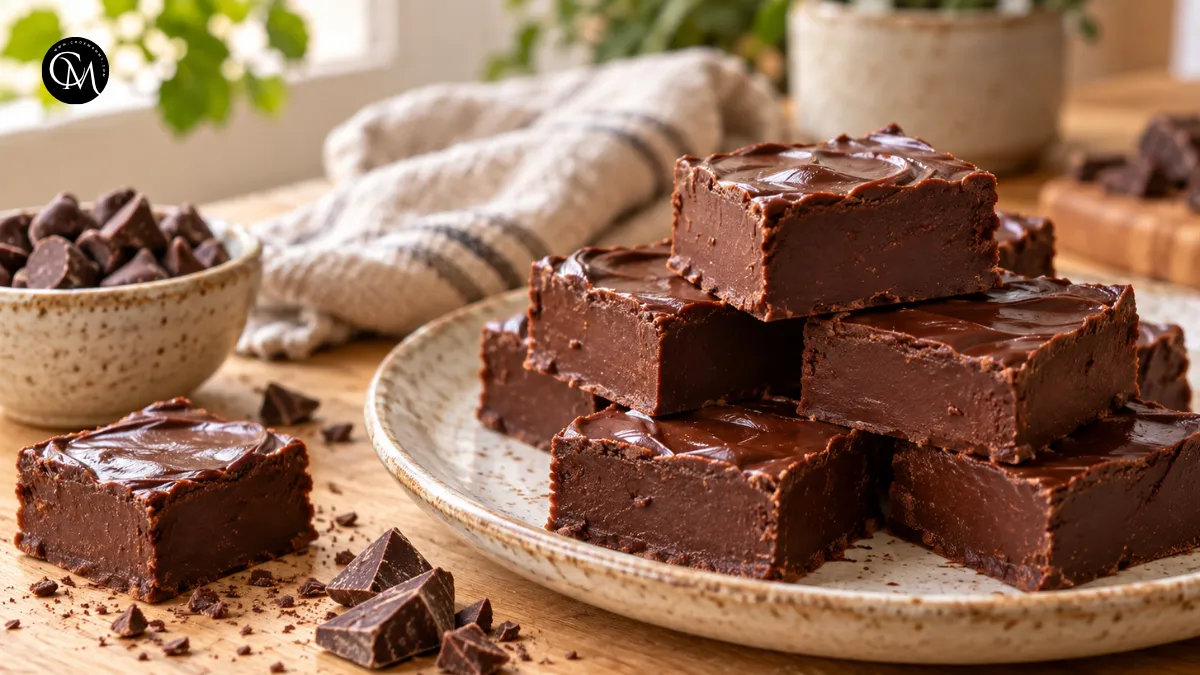
salted caramel chocolate fudge: 5 Easy Recipe Tricks
Did you know traditional fudge is usually cooked to the soft-ball stage, about 234–240°F (112–116°C), yet many home cooks still judge it mainly by sight? That narrow temperature window helps explain why homemade fudge can shift from silky to grainy quickly. This salted caramel chocolate fudge recipe removes much of that guesswork with five practical tricks for better texture, flavor, and consistency.
What makes this chocolate fudge worth making is the contrast: deep cocoa, buttery caramel, sea salt, and a creamy bite that feels rich without being cloying. The method is also home-kitchen friendly. You need only a saucepan, lined pan, spatula, and a little patience while the fudge chills.
The result cuts cleanly, stores well, and works for holidays, edible gifts, bake sales, or an after-dinner treat.
Table of Contents
Ingredients List
For one 8-inch square pan, about 25 small pieces:
- 2 cups semi-sweet chocolate chips or 340 g chopped dark chocolate. Darker chocolate gives a less-sweet chocolate fudge.
- 1 can (14 ounces) sweetened condensed milk for body and creaminess.
- 2 tablespoons unsalted butter for a glossy, soft finish.
- 1 teaspoon vanilla extract for warmth and aroma.
- 1/3 cup thick caramel sauce, homemade or store-bought.
- 1/2 teaspoon fine sea salt for even seasoning.
- 1/2 teaspoon flaky sea salt for finishing.
- Optional: 1/2 cup toasted pecans or walnuts.
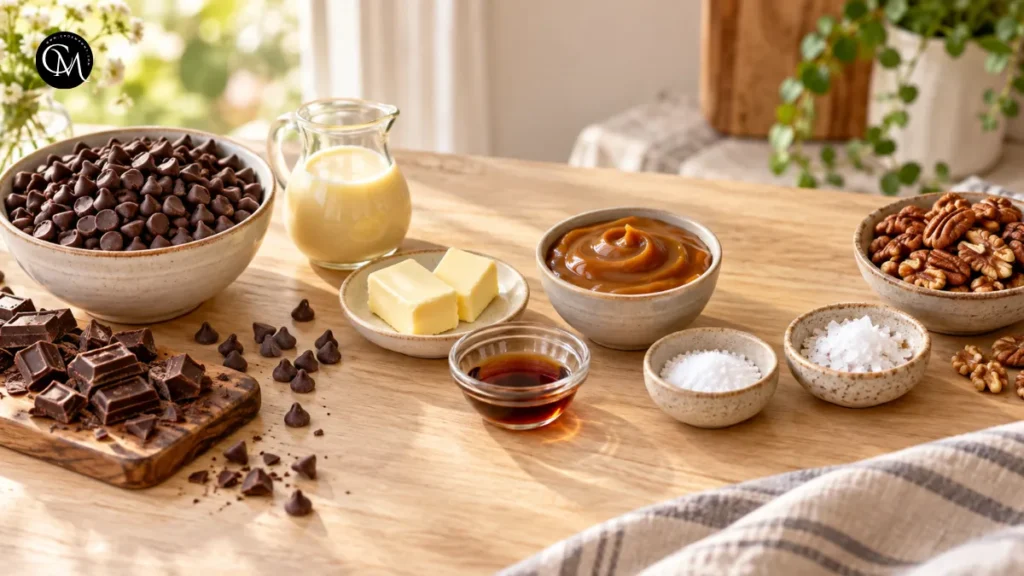
Milk chocolate can replace semi-sweet, but the fudge will taste sweeter. For more cocoa depth, use chocolate in the 60–70% range. If your caramel is already salty, reduce the fine salt and adjust at the end.
Timing
- Preparation: 10 minutes
- Cooking: 8–10 minutes
- Chilling: 2–3 hours
- Active time: about 20 minutes
- Total elapsed time: about 2 1/2 hours
Traditional cooked fudge often needs close monitoring of sugar temperature and a beating stage. This chocolate fudge is quicker and more forgiving because the condensed milk helps create a stable, creamy texture.
Step-by-Step Instructions
Step 1 – Prepare Ingredients
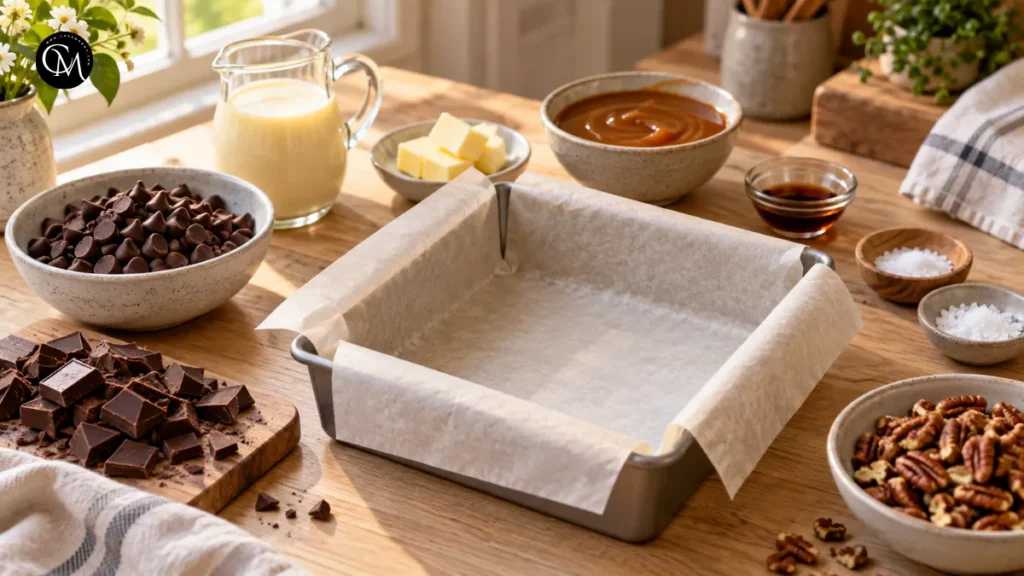
Line an 8-inch square pan with parchment, leaving overhang for easy lifting. Measure every ingredient before turning on the heat, and chop chocolate into small, even pieces if you are not using chips.
Preparation matters because chocolate reacts quickly to heat. Once the condensed milk is warm, stopping to hunt for vanilla or open a jar can lead to overheating. Having everything ready keeps the chocolate fudge smooth and the process relaxed.
Step 2 – Build the Flavor Base
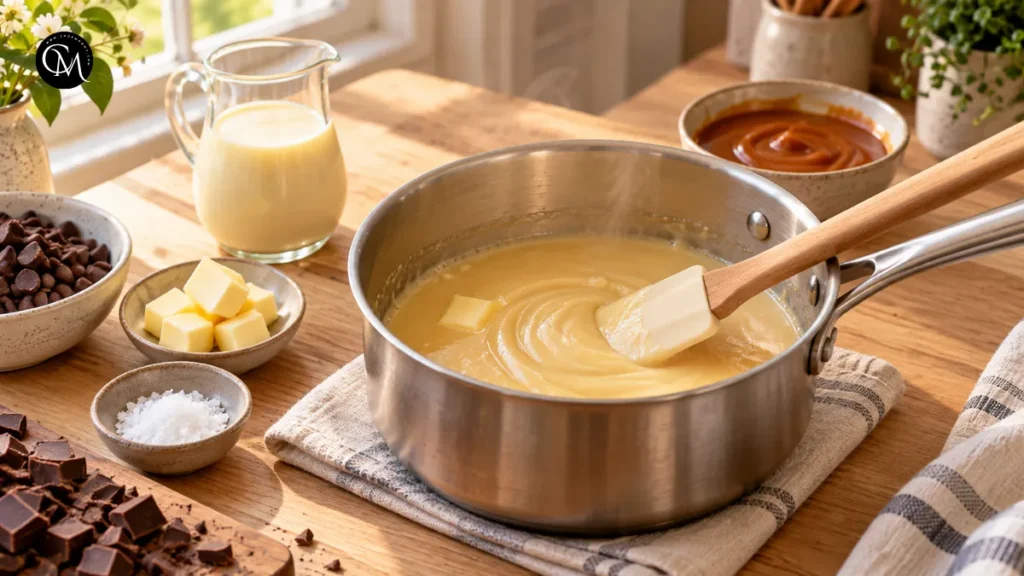
Add the condensed milk, butter, and fine sea salt to a heavy-bottomed saucepan.Keep the saucepan over gentle heat and stir continuously until the butter is fully incorporated and the mixture becomes smooth and shiny. Stir in half the caramel, reserving the rest for swirling.
Low heat is crucial. Strong heat can scorch milk solids before the chocolate is added. Gentle warmth distributes heat evenly and helps the sugar and fat blend, giving salted caramel chocolate fudge a rich, clean flavor rather than a greasy finish.
Step 3 – Cook the Main Ingredient
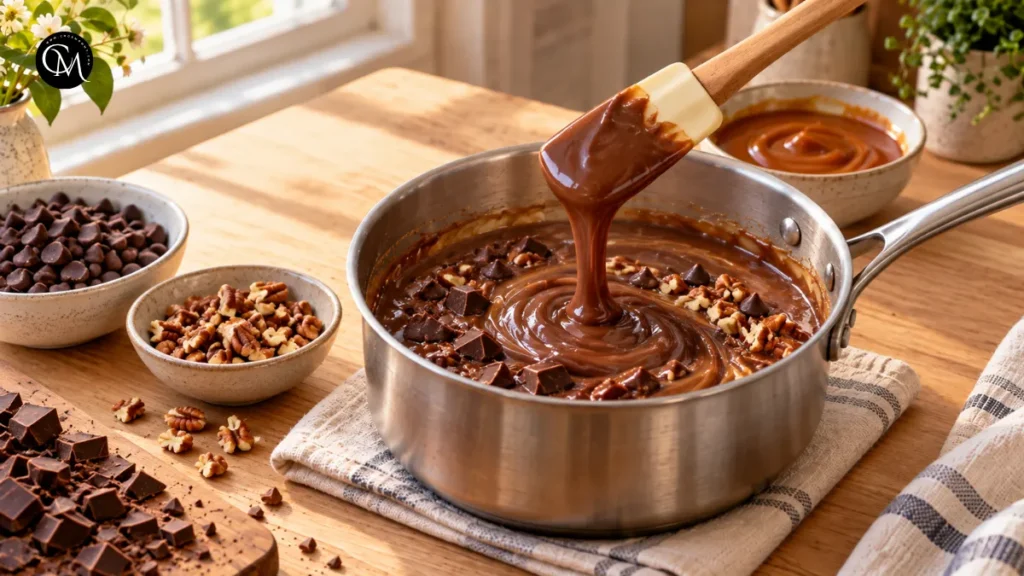
Add the chocolate and stir slowly over low heat until almost melted. Take the saucepan off the heat, then keep mixing until no chocolate pieces remain and the texture is silky.
Residual heat finishes melting the final pieces without pushing the chocolate too far. In my kitchen, this is the difference between glossy chocolate fudge and a thick, dull batch. When lifted with a spatula, the fudge mixture should flow back into the pan in a thick, steady stream. Fold in nuts now, if using.
Step 4 – Combine Everything
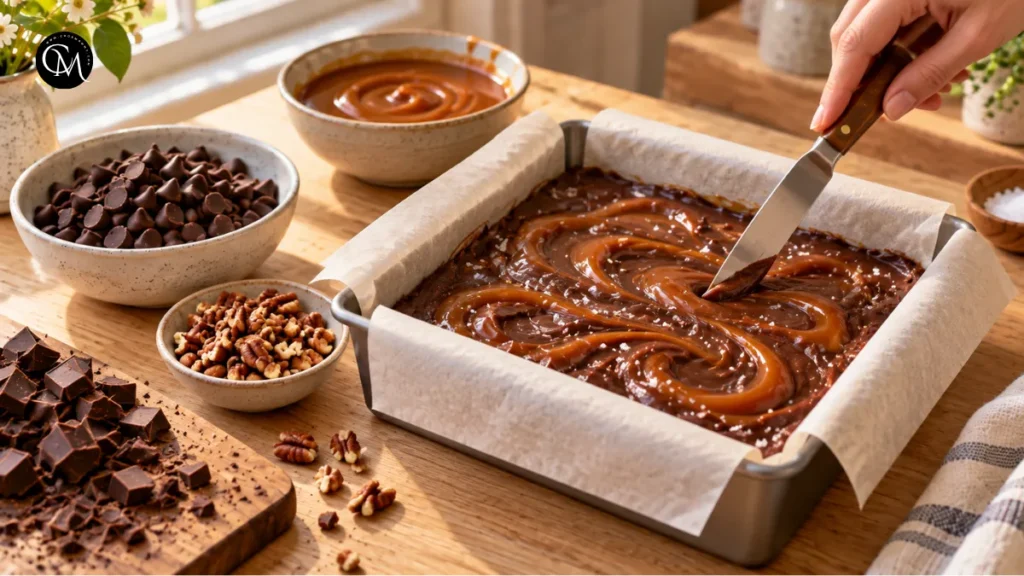
Transfer the fudge into the lined pan, spreading it evenly and leveling the surface with a spatula. Drizzle over the remaining caramel, then drag a butter knife through it in loose figure-eight motions.
Do not over-swirl. A few passes create distinct caramel pockets and preserve the sweet-salty contrast. That balance makes salted caramel chocolate fudge more interesting than a uniformly sweet square. Tap the pan lightly on the counter to settle air pockets.
Step 5 – Finish and Adjust Seasoning
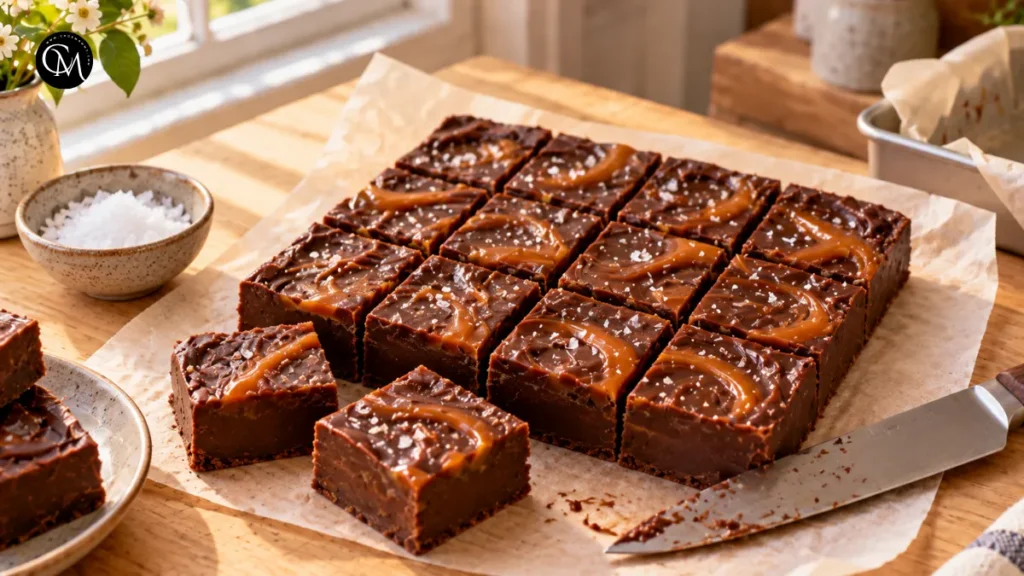
Sprinkle flaky sea salt lightly over the soft surface. Chill for at least 2 hours, preferably 3, until firm.
For neat, even squares, remove the chilled fudge from the pan and leave it at room temperature for about 5 minutes. Heat a sharp knife with hot water, dry the blade completely, and clean it after every slice.
Add finishing salt conservatively. You can add more to individual pieces, but too much can overwhelm the caramel and chocolate fudge instead of sharpening their flavors.
Nutritional Information
Approximate values per piece, based on 25 pieces:
- Calories: 150
- Carbohydrates: 20 g
- Sugars: 17 g
- Fat: 8 g
- Saturated fat: 5 g
- Protein: 2 g
- Sodium: 70–90 mg
Actual values depend on the chocolate, caramel, and portion size. Chocolate fudge is a rich confection, so smaller squares make satisfying portions while still delivering plenty of caramel and cocoa flavor.
Healthier Alternatives
- For a lower-sugar version, choose darker chocolate with a higher cocoa percentage and a reduced-sugar caramel sauce. Sweetened condensed milk provides much of the structure, so replacing it entirely can change the texture; reducing sweetness through the chocolate and caramel is more reliable.
- A whole-grain swap is not necessary because this recipe contains no flour. For extra fiber and crunch, add a modest amount of toasted oats, almonds, pecans, or walnuts without overwhelming the chocolate fudge base.
- For dairy-free fudge, use dairy-free condensed coconut milk, plant-based butter, dairy-free dark chocolate, and coconut caramel. The recipe is naturally gluten-free when all packaged ingredients are certified gluten-free.
- For children, cut smaller squares and use less finishing salt. For portion-conscious eaters, cut 36 bite-size pieces. For seniors who prefer softer textures, let chilled pieces sit at room temperature for several minutes before serving.
Serving Suggestions
- Serve salted caramel chocolate fudge with strawberries, raspberries, or sliced pears. The fruit adds freshness and acidity, which balances the rich sweetness.
- Coffee lovers can pair a square with espresso or an unsweetened cappuccino. For a holiday dessert board, add pretzels, berries, plain cookies, and roasted nuts. The mix of crisp, fresh, salty, and creamy textures keeps every bite interesting.
- For an easy sundae, chop a piece of chocolate fudge over vanilla ice cream and add a small spoonful of warm caramel. It feels special without requiring another complicated dessert.
Common Mistakes to Avoid
- Using high heat. Chocolate and condensed milk scorch easily, so keep the burner low.
- Using wet utensils. Even a little water can make melted chocolate seize; dry everything thoroughly.
- Overcooking. Remove the pan when the chocolate is almost melted and let residual heat finish the job.
- Over-swirling the caramel. Too much mixing erases the ribbons and makes the top muddy.
- Cutting too early. Warm chocolate fudge sticks to the knife and loses clean edges.
- Oversalting. Caramel sauces vary, so taste first and finish with salt gradually.
Storing Tips for the Recipe
- Store fudge in an airtight container with parchment between layers. At cool room temperature, it is best within 4–5 days. Refrigerated, it keeps well for about 2 weeks, though the texture becomes firmer.
- For longer storage, freeze pieces in an airtight container for up to 2 months. Thaw overnight in the refrigerator, then let them soften briefly at room temperature before serving.
- You can also make the batch a day or two before a party and cut it on serving day. This recipe became one of my regular make-ahead treats because the flavor settles nicely overnight and dessert is finished before guests arrive.
Conclusion
Salted caramel chocolate fudge looks impressive, but the method is simple once you control the heat, prepare ingredients first, and let residual warmth melt the chocolate gently. These five tricks mise en place, low heat, careful melting, restrained swirling, and smart seasoning help produce smoother, more consistent results.
Try this chocolate fudge for a holiday tray, homemade gift, bake sale, or weekend dessert, then adjust the caramel and sea salt to your taste. If you make it, leave a comment or review with your favorite variation. Subscribe for more tested dessert recipes, practical kitchen tips, and easy ideas that make home baking more reliable.
FAQs
Can I make salted caramel chocolate fudge without a thermometer?
Yes. This condensed-milk version does not require cooking sugar to a precise candy stage. Keep the heat low, stir constantly, and remove the pan once the chocolate is almost melted.
Why did my chocolate fudge turn grainy?
Graininess usually comes from overheating, scorching, or moisture entering the chocolate. Use low heat, dry utensils, and let residual warmth melt the final pieces after removing the pan.
Can I use milk chocolate instead of semi-sweet chocolate?
Yes, but milk chocolate creates a sweeter, softer fudge. Reduce the caramel slightly or choose a less-sweet caramel sauce if you want a more balanced flavor.
How long should the fudge chill before cutting?
Give it at least 2 hours, though 3 hours generally gives cleaner slices. If your kitchen is warm or the layer is thick, allow a little extra chilling time.
Can I freeze salted caramel chocolate fudge?
Yes. Freeze well-wrapped pieces in an airtight container for up to 2 months. Thaw in the refrigerator, then let them soften briefly at room temperature before serving.
What kind of caramel works best?
Use a thick caramel sauce rather than a thin syrup. Thicker caramel creates defined swirls and is less likely to make the surface overly soft or sticky.
How can I make the flavor less sweet?
Use dark chocolate with 60–70% cocoa, choose a less-sweet caramel, and keep the flaky salt balanced. These changes deepen the cocoa flavor without changing the basic method.
Tried it before ?
There are no reviews yet. Be the first one to write one.