

Turkish Yogurt Soup: 5 Ways to Make It Creamy and Delicious
Did you know that one cup of plain whole-milk yogurt typically provides around 8–9 grams of protein while also creating a naturally creamy texture without relying on heavy cream? That combination is one reason traditional Turkish Yogurt Soup feels both comforting and surprisingly light.
Known in Turkey as yayla çorbası, this soothing soup combines yogurt, rice, egg, flour, dried mint, and butter into a tangy, velvety bowl that tastes far more complex than its short ingredient list suggests.
The challenge is texture. Yogurt can separate or curdle when exposed to sudden heat, which is why technique matters as much as ingredients. After making Yogurt Soup many times at home, I have found that five details make the biggest difference: using full-fat yogurt, tempering it slowly, controlling the heat, cooking the rice properly, and finishing with a fragrant mint-butter topping.
If you have ever ended up with a grainy yogurt-based soup, this recipe will show you exactly how to keep it smooth, balanced, and creamy.
Table of Contents
Ingredients List
This recipe makes approximately 4 generous servings.
- 1/2 cup uncooked short- or medium-grain rice
- 5 cups water or mild chicken stock
- 2 cups plain whole-milk yogurt
- 1 large egg
- 2 tablespoons all-purpose flour
- 1 teaspoon salt, plus more to taste
- 2 tablespoons unsalted butter
- 1 tablespoon dried mint
- 1/4 teaspoon freshly ground black pepper
- Optional: pinch of red pepper flakes
- Optional: lemon wedges for serving

For the creamiest Yogurt Soup, I recommend using unsweetened, full-fat yogurt with a smooth texture. Greek yogurt also works, although it is thicker, so whisk in a few tablespoons of water before using it.
If you do not eat eggs, you can omit the egg and add another tablespoon of flour or cornstarch for stability. Vegetable stock works beautifully for a vegetarian version.
Rice is traditional, but bulgur can add a nuttier flavor. Just remember that it absorbs liquid differently, so you may need a little extra stock.
Timing
- Preparation time: 10 minutes
- Cooking time: 30 minutes
- Total time: about 40 minutes
- Servings: 4
Compared with many homemade soups that require an hour or more of simmering, Yogurt Soup comes together relatively quickly. Most of the cooking time is simply waiting for the rice to become tender.
The active work takes only about 15 minutes, making this especially practical for a weeknight dinner or a warming lunch.
Step-by-Step Instructions
Step 1 – Prepare the Ingredients
- Start by rinsing the rice under cool running water until the water looks mostly clear. This removes excess surface starch and helps prevent the soup from becoming unnecessarily gluey.
- Place your yogurt, egg, and flour on the counter while the rice cooks. Allowing the yogurt mixture to lose some of its refrigerator chill reduces the temperature difference when you eventually combine it with the hot broth.
- In a medium bowl, whisk together the yogurt, egg, and flour until completely smooth. Take an extra minute here. Small flour lumps are much harder to remove once the mixture is heated.
- Good preparation is particularly important when making Yogurt Soup because the final combining stage happens quickly.
Step 2 – Build the Flavor Base
- Add the rinsed rice and water or stock to a medium saucepan. Bring it to a gentle boil, then reduce the heat so the liquid simmers steadily rather than aggressively.
- Using chicken stock creates a deeper savory flavor, while water gives the soup the lighter, cleaner taste commonly associated with traditional versions.
- Avoid heavily salted or strongly seasoned stock. The yogurt and mint should remain the dominant flavors.
- One important cooking principle here is evaporation. A violent boil reduces the liquid too quickly and can leave you with an overly thick soup before the rice has finished cooking.
Step 3 – Cook the Main Ingredient
- Simmer the rice for about 15–18 minutes, or until it is completely tender.
- Do not stop when the rice is merely al dente. Slightly softer rice works better in Yogurt Soup because it releases enough starch to give the broth gentle body without needing cream.
- If the pot looks dry before the rice is tender, add another 1/2 cup of hot water.
- Once cooked, remove about one cup of hot cooking liquid from the saucepan. You will use this to temper the yogurt mixture.
- This is one of the most important parts of the recipe.
Step 4 – Combine Everything
- While whisking the yogurt mixture continuously, slowly drizzle in the reserved hot rice broth.
- Begin with just a tablespoon or two. Then gradually add the rest.
- This process, called tempering, raises the temperature of the yogurt gradually rather than shocking it with boiling liquid. It is the best defense against curdling.
- When the mixture feels warm, slowly pour it into the saucepan while stirring constantly.
- Return the pot to low heat.
- Do not allow Yogurt Soup to reach a hard boil after adding the yogurt. Gentle heat helps the proteins remain smooth and suspended in the broth.
- Cook for another 5–7 minutes, stirring occasionally, until the soup has slightly thickened.
- Taste before seasoning heavily. Yogurt naturally brings acidity, so the finished soup should taste pleasantly tangy rather than sharply sour.
Step 5 – Finish and Adjust the Seasoning
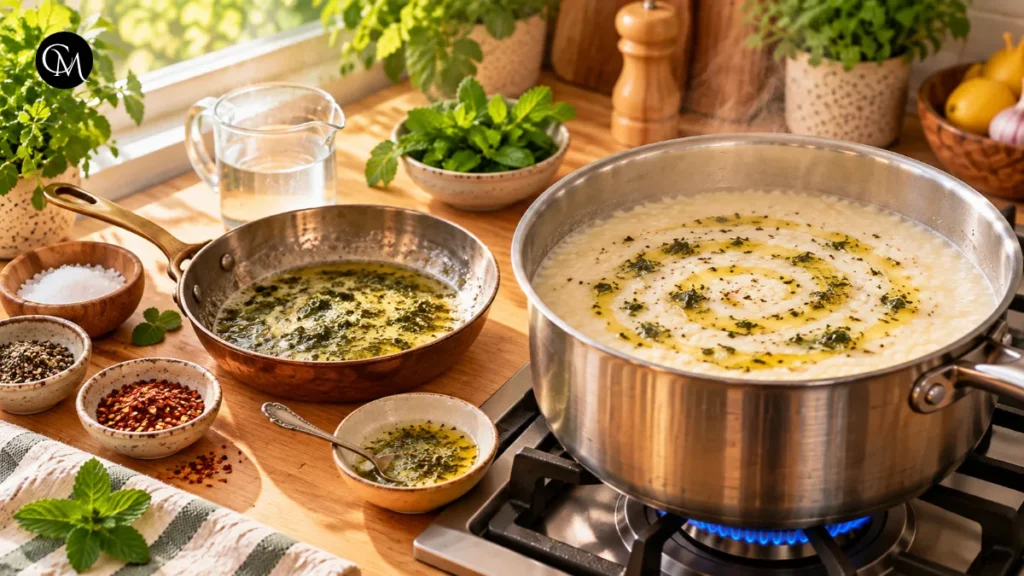
- Melt the butter in a small pan over medium-low heat.
- Add the dried mint and stir for roughly 20–30 seconds, just until fragrant. The butter may foam slightly.
- Avoid cooking the mint for too long. Dried herbs burn quickly and can become bitter.
- Pour most of the mint butter into the soup and stir gently. Reserve a small spoonful for garnishing individual bowls.
- Season the Yogurt Soup with salt and black pepper. If you enjoy mild heat, add a pinch of red pepper flakes.
- My final adjustment is usually texture. If the soup feels too thick, stir in a splash of hot water. If it seems thin, let it rest for five minutes; the rice will continue absorbing liquid.



Nutritional Information
Approximate nutrition per serving, based on four servings prepared with whole-milk yogurt and butter:
| Nutrient | Approximate Amount |
|---|---|
| Calories | 260 kcal |
| Protein | 10 g |
| Carbohydrates | 30 g |
| Fat | 11 g |
| Saturated Fat | 6 g |
| Fiber | 1 g |
| Sodium | 500 mg |
These values will vary depending on the yogurt, stock, rice, and butter you use. Yogurt Soup provides a useful combination of carbohydrates, protein, and fat, which is one reason it feels satisfying despite its relatively simple ingredients.
For more precise nutrition information, calculate the values using the exact brands and quantities in your kitchen.
Healthier Alternatives
- One advantage of Yogurt Soup is how easily it adapts without losing its comforting character.
- For a lighter version, replace whole-milk yogurt with plain 2% yogurt. I would avoid completely fat-free yogurt when possible because it tends to separate more easily and produces a thinner mouthfeel.
- There is no added sugar in the traditional recipe, so no sugar reduction is necessary.
- For more whole-grain goodness, replace white rice with brown rice or bulgur. Brown rice requires considerably longer cooking, so cook it until tender before adding the yogurt mixture.
- For gluten-free Yogurt Soup, replace the flour with cornstarch or certified gluten-free rice flour. Cornstarch thickens efficiently, so about one tablespoon is usually enough.
- For a dairy-free version, choose an unsweetened plant-based yogurt with a neutral flavor and relatively high fat content. Coconut yogurt works texturally but gives the soup a noticeable coconut flavor. Unsweetened soy yogurt is often more neutral.
- For children, keep the seasoning mild and skip red pepper flakes. Seniors who prefer softer foods may enjoy the rice cooked a few minutes longer. Anyone watching portion sizes can serve a smaller bowl alongside a large salad or roasted vegetables.
Serving Suggestions
- Serve Yogurt Soup warm rather than aggressively hot. The flavor of the yogurt and mint becomes easier to appreciate once the soup has cooled slightly.
- For a traditional-feeling meal, pair it with warm flatbread, crusty bread, or a simple tomato-and-cucumber salad.
- I also like serving it with roasted chickpeas scattered over the top. They add crunch against the creamy soup without overpowering its delicate flavor.
- For dinner, pair a bowl with grilled chicken, roasted vegetables, stuffed peppers, or a fresh herb salad.
- A squeeze of lemon is optional. Taste first because the yogurt already supplies acidity.
- If you enjoy Turkish cooking, this is also a good recipe to pair with homemade pide, gözleme, lentil soup, or a mezze-style spread. Those related recipes can create useful internal links if you are building a broader Turkish recipe collection on your site.
Common Mistakes to Avoid
The difference between silky Yogurt Soup and a separated bowl usually comes down to a handful of preventable mistakes.
- Adding cold yogurt directly to boiling liquid. The sudden temperature change encourages the yogurt proteins to tighten and separate. Temper the mixture gradually instead.
- Boiling the soup after adding yogurt. Keep the heat low and aim for gentle steaming rather than bubbling.
- Undercooking the rice. Fully tender rice contributes starch and creates a smoother, more cohesive texture.
- Using strongly flavored stock. Highly seasoned broth can overwhelm the mild yogurt-and-mint character.
- Burning the dried mint. Twenty or thirty seconds in warm butter is generally enough to release its aroma.
- Over-thickening the soup. Yogurt Soup becomes thicker as it sits because the rice continues absorbing liquid. Stop cooking while it is slightly looser than your ideal serving consistency.
The most common problem I see is excessive heat. Treat the yogurt mixture gently and you eliminate most texture issues before they happen.
Storing Tips for the Recipe
- Allow leftovers to cool before transferring them to an airtight container. Refrigerate Yogurt Soup for up to three days.
- The rice will absorb more liquid overnight, so the soup will almost certainly look thicker the next day. Stir in a few tablespoons of water or stock while reheating.
- Warm leftovers slowly over low heat and stir frequently. Avoid bringing the soup to a vigorous boil because reheating too aggressively can cause separation.
- I do not recommend freezing this soup. Yogurt-based sauces and soups often become grainy after freezing and thawing.
- You can, however, cook the rice a day ahead and refrigerate it separately. Prepare the yogurt mixture shortly before finishing the soup for the best texture.
- This recipe became one of my regular meals because it turns basic ingredients I nearly always have at home into something warm, filling, and genuinely comforting in less than an hour.
Conclusion
Turkish Yogurt Soup proves that a short ingredient list can still produce remarkable flavor. Tender rice, tangy yogurt, fragrant dried mint, and buttery richness create a creamy soup that feels comforting without depending on heavy cream.
The five techniques that matter most are simple: start with good yogurt, fully cook the rice, temper the yogurt gradually, control the heat, and finish with freshly warmed mint butter. Once you understand those steps, Yogurt Soup becomes surprisingly easy to make consistently.
Try the recipe the next time you want a cozy lunch or simple homemade dinner. If you make it, leave a comment or review sharing how it turned out and any variations you tried. Subscribe for more practical recipes, traditional dishes, and kitchen-tested cooking tips.
FAQs
Why does my Yogurt Soup curdle?
Curdling usually happens when cold yogurt meets very hot liquid or the soup boils too aggressively. Temper the yogurt gradually and keep the finished soup over low heat.
Can I make Yogurt Soup without eggs?
Yes. Replace the egg with extra flour, rice flour, or a small amount of cornstarch. The texture may be slightly different, but careful tempering still produces a creamy soup.
What type of yogurt works best?
Plain full-fat yogurt offers the richest texture and tends to be more forgiving during heating. Greek yogurt also works; simply thin it slightly with water before whisking.
Can I use bulgur instead of rice?
Absolutely. Bulgur adds a pleasant nutty flavor and works well in Yogurt Soup. Monitor the liquid level because different types of bulgur absorb broth at different rates.
Why is my soup too thick the next day?
Rice continues absorbing liquid during refrigeration. Add a splash of water or stock while gently reheating, stirring until the soup returns to your preferred consistency.
Can I make this recipe vegetarian?
Yes. Use water or a mild vegetable stock instead of chicken stock. The yogurt, rice, mint, and butter provide plenty of flavor without meat-based broth.
What herbs can I use besides dried mint?
Mint is traditional, but a little dill or parsley can add freshness. Keep alternative herbs subtle so they complement rather than overpower the tangy yogurt base.
Tried it before ?
There are no reviews yet. Be the first one to write one.