
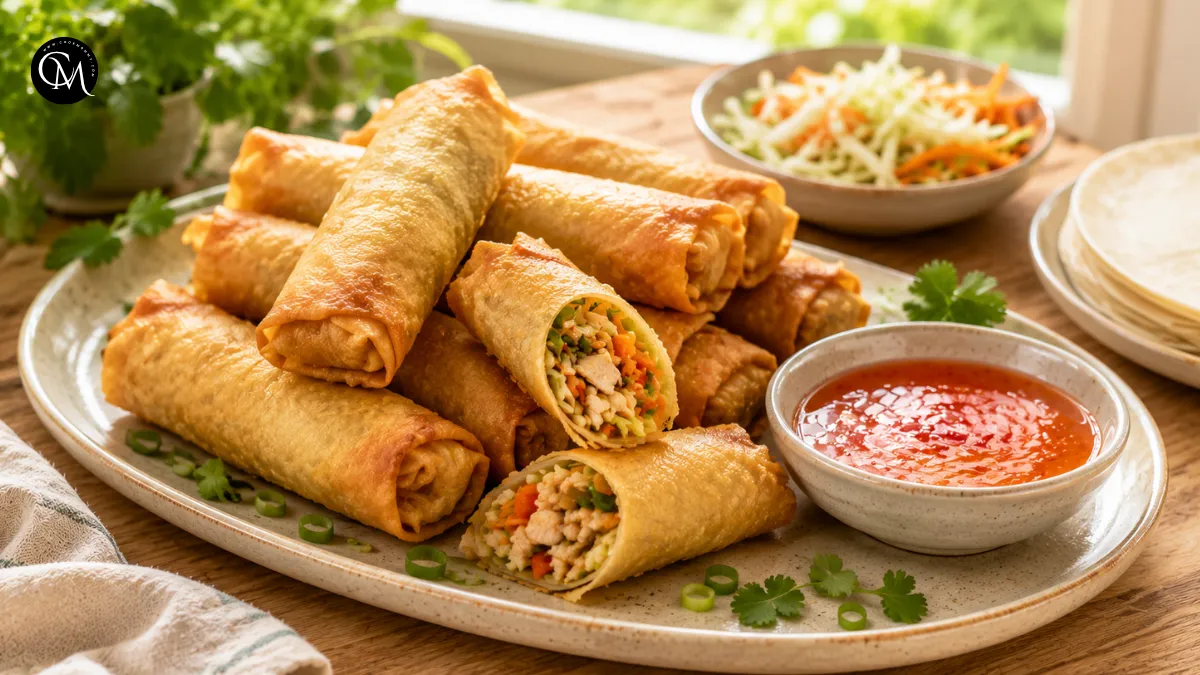
Chicken Spring Rolls: 5 Best Tips for Crispy Results
What makes a spring roll stay crisp instead of turning greasy or soft after only a few minutes? In my kitchen, the biggest difference comes down to moisture control and frying temperature. When oil stays around 175–180°C (350–355°F), the wrapper browns quickly while steam escapes from the filling instead of soaking into the pastry.
That is exactly why these Chicken Spring Rolls work so well. They have a juicy, savory chicken-and-vegetable center wrapped in a thin shell that cooks up golden and crackly. The filling is cooked before rolling, which gives you more control over texture and seasoning, while a short cooling period keeps excess steam away from the wrappers.
If you have struggled with torn wrappers, soggy centers, loose rolls, or oily results, this recipe focuses on the small techniques that fix those problems. Chicken Spring Rolls are simple enough for a weekend snack yet attractive enough for parties, family dinners, or holiday appetizer trays.
Table of Contents
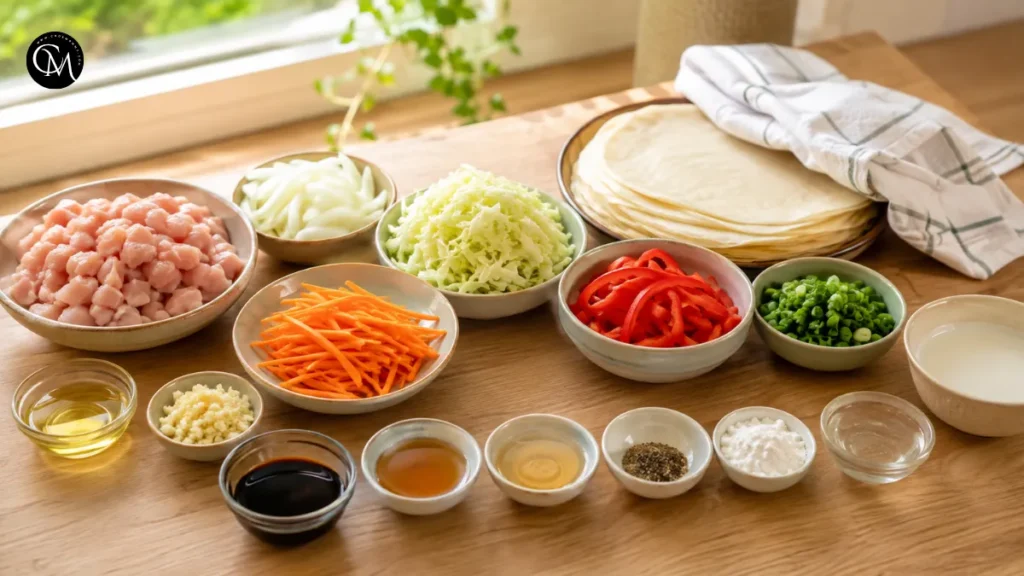
Chicken Spring Rolls Ingredients List
The best Chicken Spring Rolls start with a filling that is flavorful but not wet. I like a combination of lean chicken, crisp vegetables, garlic, ginger, and a light savory sauce.
For the filling
- 450 g boneless, skinless chicken breast or thighs, finely chopped
- 1 tablespoon neutral cooking oil
- 2 garlic cloves, minced
- 1 teaspoon fresh ginger, finely grated
- 1 small onion, thinly sliced
- 1 medium carrot, cut into thin matchsticks
- 1 cup finely shredded cabbage
- ½ red bell pepper, thinly sliced
- 2 green onions, sliced
- 1½ tablespoons soy sauce
- 1 teaspoon sesame oil
- 1 teaspoon rice vinegar
- ½ teaspoon ground black pepper
- 1 teaspoon cornstarch
- 1 tablespoon water
For assembling
- 12–14 spring roll wrappers
- 1 tablespoon flour
- 2 tablespoons water, for sealing
- Neutral oil for frying
Timing
Easy substitutions
Chicken thighs create a slightly richer filling, while chicken breast gives a leaner result. Ground chicken also works if you want faster preparation.
For extra vegetables, try bean sprouts, mushrooms, zucchini, or finely sliced green beans. Keep watery vegetables to a minimum unless you cook off their moisture first.
Tamari can replace soy sauce. If using gluten-free wrappers, check that your soy sauce or tamari is also certified gluten-free.
- Preparation time: 25 minutes
- Cooking time: 20 minutes
- Total time: 45 minutes
- Yield: About 12–14 rolls
Most of the preparation time goes into chopping and rolling. Once everything is ready, the Chicken Spring Rolls fry quickly, usually in about 3–4 minutes per batch.
Compared with many homemade appetizer recipes that require long baking or marinating periods, these rolls are relatively quick. You can also prepare the filling in advance to make assembly much easier.
Step-by-Step Instructions
Step 1 – Prepare the ingredients carefully
- Cut the chicken and vegetables into small, thin pieces before turning on the stove. This matters because spring roll filling cooks quickly, and evenly sized ingredients prevent you from ending up with raw carrot beside overcooked chicken.
- Mix the flour and water in a small bowl until you have a thin paste. This will act like edible glue when you seal each wrapper.
- Keep the wrappers covered with a slightly damp kitchen towel while working. They dry out surprisingly fast, and dry wrappers are much more likely to crack during rolling.
Step 2 – Build the flavor base
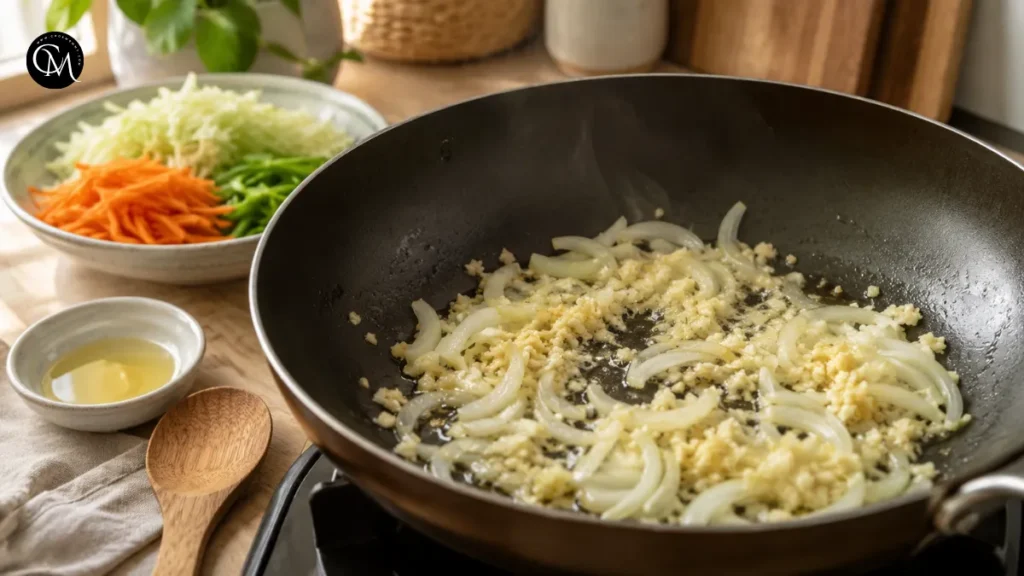
- Heat one tablespoon of neutral oil in a large skillet or wok over medium-high heat.
- Add the garlic, ginger, and onion. Cook for about 60–90 seconds, stirring constantly, until fragrant.
- This quick sauté is more important than it looks. Heating garlic and ginger in oil helps release their aromatic compounds, spreading their flavor throughout the entire filling rather than leaving sharp raw pockets.
- For Chicken Spring Rolls with a restaurant-style aroma, avoid browning the garlic heavily. Dark garlic can become bitter and overpower the lighter vegetables.
Step 3 – Cook the chicken and vegetables
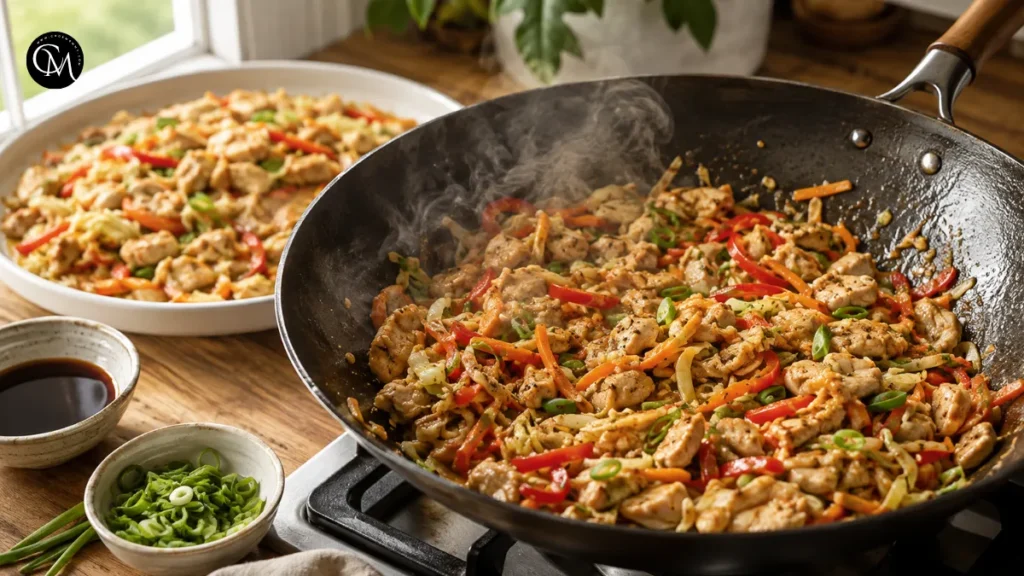
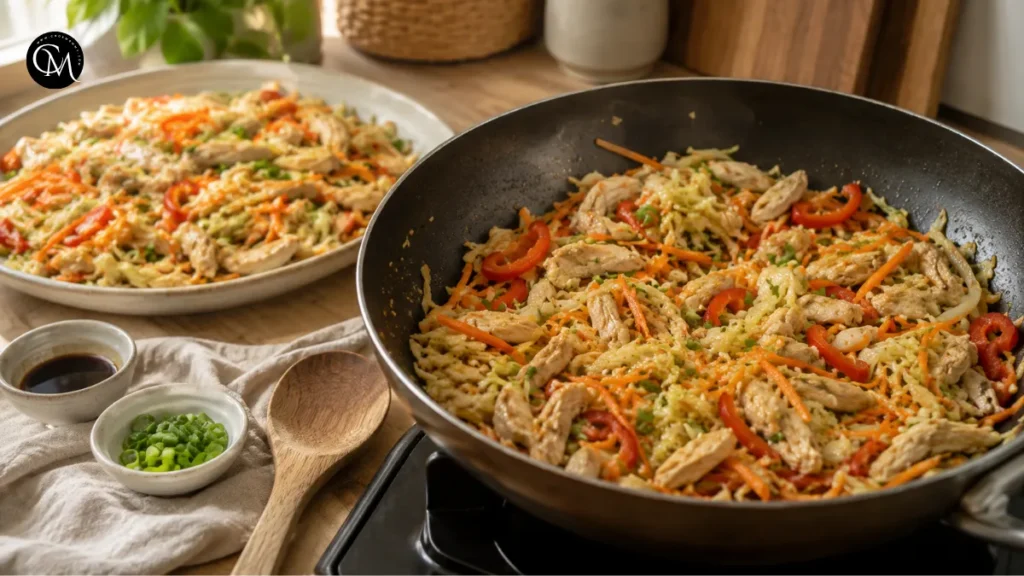
- Add the chopped chicken and cook for about 4–5 minutes, breaking apart any larger pieces.
- Once the chicken is almost cooked through, add the carrot, cabbage, and bell pepper. Stir-fry for another 2–3 minutes.
- You want the vegetables softened slightly while still retaining some bite. Overcooking them creates excess moisture and makes the filling mushy.
- Add the soy sauce, sesame oil, rice vinegar, pepper, and green onions.
- Mix the cornstarch with one tablespoon of water, then stir it into the pan. Cook for another 30–60 seconds until the liquid lightly coats the ingredients.
- Transfer the filling to a wide plate. Let it cool completely.
- This cooling step is one of my most important rules for Chicken Spring Rolls. Warm filling produces steam inside the wrapper, and that steam can soften the pastry before it even reaches the oil.
Step 4 – Combine and roll everything tightly
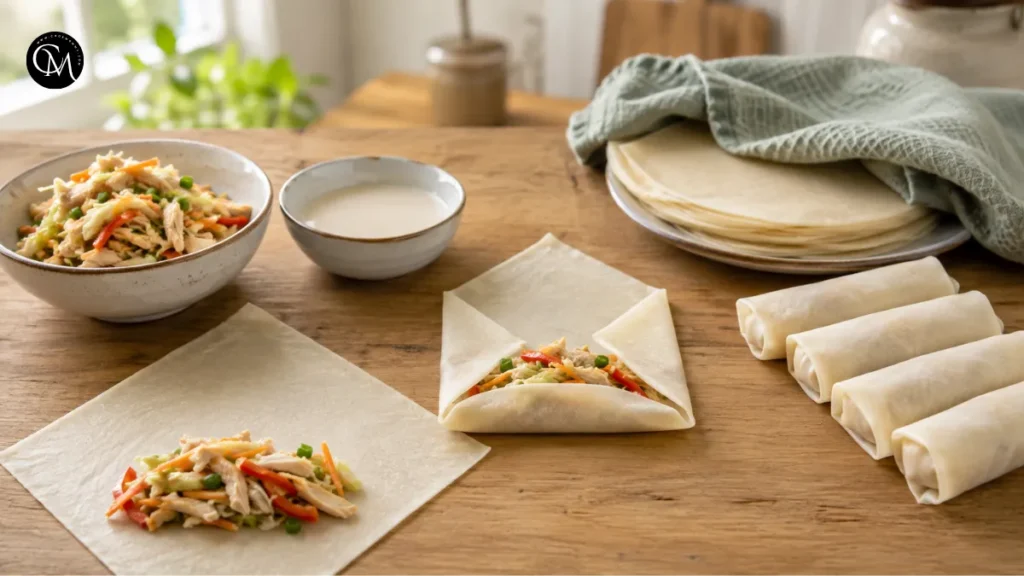
- Place one wrapper on a clean surface with one corner pointing toward you, creating a diamond shape.
- Spoon about two tablespoons of cooled filling near the lower third of the wrapper. Avoid overfilling.
- Fold the bottom corner over the filling. Fold both sides inward, then roll firmly toward the top corner.
- Brush the final corner with flour paste and press gently to seal.
- The roll should feel secure but not compressed. If you roll too loosely, oil can enter the gaps. If you roll too tightly, steam expansion may cause the wrapper to split.
- Continue until all Chicken Spring Rolls are assembled.
Step 5 – Fry, finish, and adjust seasoning
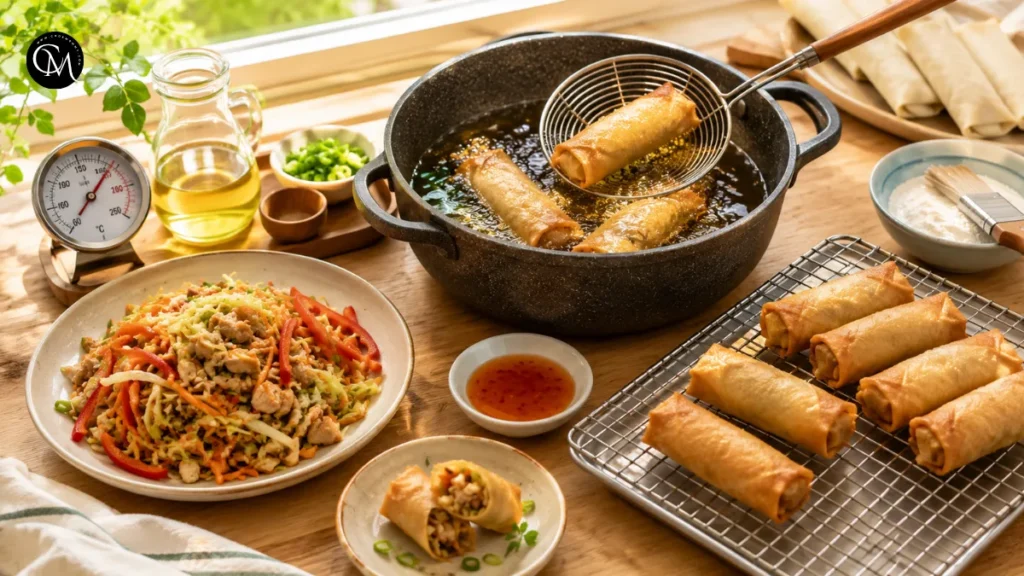
- Heat 5–7 cm of neutral frying oil in a deep saucepan to approximately 175–180°C.
- Fry the Chicken Spring Rolls in small batches for about 3–4 minutes, turning occasionally, until evenly golden and crisp.
- Do not overcrowd the pan. Adding too many cold rolls at once lowers the oil temperature, which encourages the wrappers to absorb more oil before they become crisp.
- Transfer each batch to a wire rack rather than stacking them directly on paper towels. Air circulating underneath helps preserve the crunchy shell.
- Taste one after it has cooled for a minute. If the filling needs more brightness, serve the rolls with a tangy dipping sauce rather than adding extra liquid inside.
Nutritional Information
Approximate values per Chicken Spring Roll, assuming 12 rolls and excluding dipping sauce:
- Calories: 175
- Protein: 11 g
- Carbohydrates: 16 g
- Fat: 7 g
- Saturated fat: 1.5 g
- Fiber: 1.5 g
- Sodium: 320 mg
- Sugar: 2 g
These values will vary depending on wrapper size, the amount of oil absorbed during frying, and whether chicken breast or thighs are used. Treat them as practical estimates rather than exact nutritional measurements.
Healthier Alternatives
- Chicken Spring Rolls are easy to adapt without losing the contrast between tender filling and crisp exterior.
- For a lighter version, brush the rolls lightly with oil and air-fry them at about 190°C for 10–12 minutes, turning halfway through. They can also be baked at 200°C until golden, although the texture will be slightly different from deep-fried rolls.
- There is very little added sugar in this recipe, so no major adjustment is needed for a lower-sugar version. Choose a dipping sauce without added sweeteners if sugar intake is your priority.
- For more whole grains and fiber, serve the rolls with brown rice, quinoa, or a whole-grain noodle salad instead of adding more fried sides.
- The filling itself is dairy-free. For gluten-free Chicken Spring Rolls, use certified gluten-free wrappers and tamari.
- For children, reduce ginger and pepper slightly and serve with a mild yogurt-free dipping sauce. For older adults or anyone who prefers softer textures, chop the vegetables finely and avoid over-crisp frying.
Serving Suggestions
- Freshly cooked Chicken Spring Rolls are at their best when served hot with something bright and acidic beside them.
- I often pair them with sweet chili sauce, soy-ginger dipping sauce, or a simple mixture of rice vinegar, soy sauce, lime juice, and chopped green onions.
- For dinner, serve them with jasmine rice and cucumber salad. For a party, cut each roll diagonally and arrange the pieces around a small bowl of dipping sauce.
- A crunchy cabbage slaw with lime is another favorite because its freshness balances the fried wrapper.
- If you are building an Asian-inspired menu, pair the rolls with fried rice, sesame noodles, dumplings, chicken lettuce wraps, or a light vegetable soup.
Common Mistakes to Avoid
- Using filling that is too wet Excess moisture is the most common cause of soggy Chicken Spring Rolls. Cook off visible liquid and cool the filling completely.
- Overfilling the wrappers Two tablespoons is usually enough. Too much filling makes sealing difficult and increases the chance of bursting.
- Letting wrappers dry out Keep unused wrappers covered. Even a few minutes of exposed air can make some brands brittle.
- Frying at low temperature Oil below roughly 170°C tends to produce heavier, oilier rolls. Use a thermometer when possible.
- Crowding the pan Large batches cool the oil rapidly. Fry only enough rolls to leave space around each one.
- Stacking hot rolls Steam becomes trapped between them and softens the wrappers. A wire cooling rack gives Chicken Spring Rolls better airflow.
Storing Tips for the Recipe
- Cooked Chicken Spring Rolls are crispiest on the day they are made, but leftovers can still be enjoyable.
- Cool them completely before transferring them to an airtight container. Refrigerate for up to 3 days.
- For reheating, skip the microwave if crispness matters. An oven or air fryer at approximately 190°C works better because dry circulating heat refreshes the wrapper.
- You can prepare the chicken filling 1–2 days ahead and refrigerate it separately. Assemble the rolls shortly before cooking for the best texture.
- Uncooked assembled rolls can also be frozen in a single layer before being transferred to a freezer-safe container. Place parchment between layers to prevent sticking.
- This recipe became one of my regular meals because I can prepare the filling ahead, use vegetables already sitting in the refrigerator, and cook only as many rolls as the family needs.
Conclusion
Homemade Chicken Spring Rolls become much easier once you focus on five things: a dry filling, completely cooled ingredients, secure rolling, properly heated oil, and good airflow after frying. Those details create the crisp golden shell and juicy savory center that make spring rolls so satisfying.
The recipe is flexible enough for weeknight dinners, appetizers, parties, or make-ahead freezer meals, and the filling can easily be adjusted to suit what you already have in your kitchen.
Try these Chicken Spring Rolls and experiment with your favorite vegetables or dipping sauces. If you make them, leave a comment or review sharing what worked for you. Subscribe for more practical homemade recipes, cooking techniques, and easy meal ideas.
FAQs
Can I make Chicken Spring Rolls in an air fryer?
Yes. Lightly brush or spray the rolls with oil, then air-fry around 190°C for 10–12 minutes, turning halfway through, until crisp and golden.
Why are my spring rolls soggy?
The filling may contain too much moisture, the oil may be too cool, or the cooked rolls may be stacked while hot. Cool the filling and fry in small batches.
Can I prepare the filling ahead of time?
Yes. Prepare and refrigerate the filling for up to two days. Let it remain cold before rolling because chilled, relatively dry filling helps protect the wrappers from moisture.
Can I freeze uncooked Chicken Spring Rolls?
Yes. Freeze them individually on a tray first, then transfer them to a freezer container. Separate layers with parchment so the wrappers do not stick together.
What oil is best for frying?
Choose a neutral oil with a relatively high smoke point, such as vegetable, canola, sunflower, or peanut oil. Avoid strongly flavored oils that can overpower the filling.
How do I stop spring rolls from opening while frying?
Roll firmly, fold the sides inward, and seal the final corner with flour-and-water paste. Place the sealed edge downward briefly when the roll first enters the oil.
What dipping sauce works best?
Sweet chili sauce is classic, but soy sauce mixed with rice vinegar, lime, ginger, and green onions gives Chicken Spring Rolls a fresher, savory contrast.
Tried it before ?
There are no reviews yet. Be the first one to write one.