
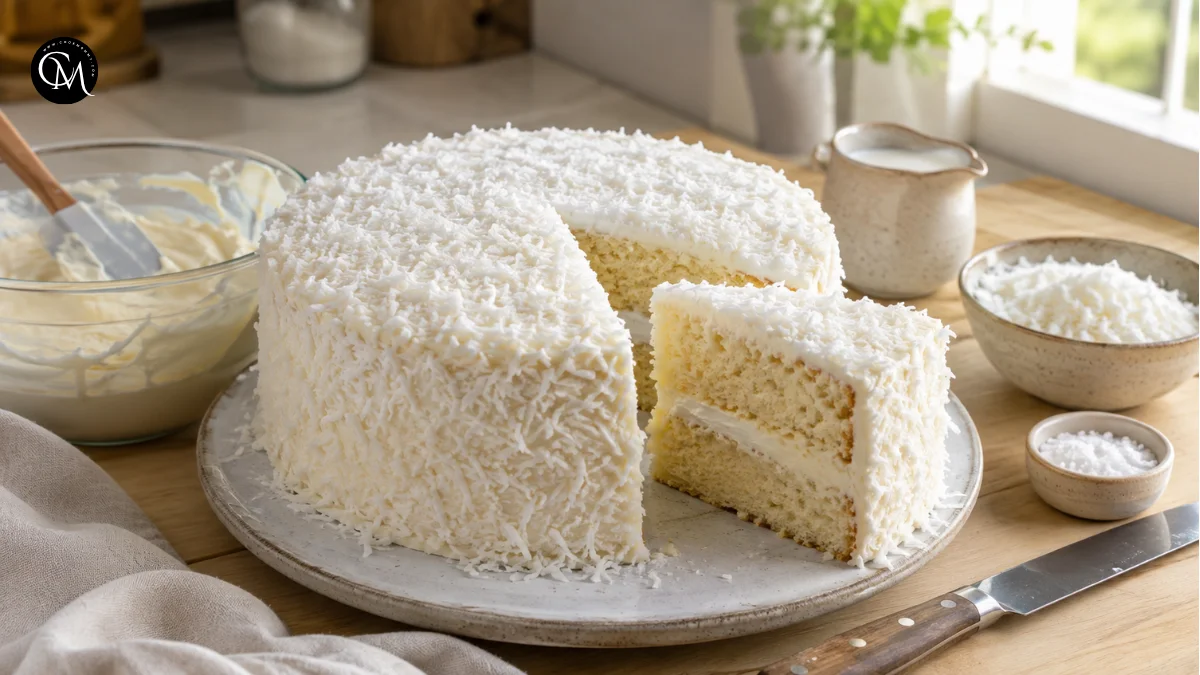
Coconut Cake: 5 Best Tips for a Moist, Fluffy Dessert
Did you know that baking a layer cake only five minutes too long can leave it noticeably drier, especially when shredded coconut continues absorbing moisture after baking? That narrow timing window explains why homemade Coconut Cake can be wonderfully tender one day and disappointingly crumbly the next.
This recipe solves the usual problems with full-fat coconut milk, sour cream, cake flour, and whipped egg whites. Together, they produce soft layers with a fine crumb, clear coconut flavor, and enough structure for creamy frosting.
The five practical tips below explain why each technique matters. They will help you prepare a moist, fluffy Coconut Cake without complicated baking methods or decorating techniques.
Table of Contents
Ingredients List
Cake Layers
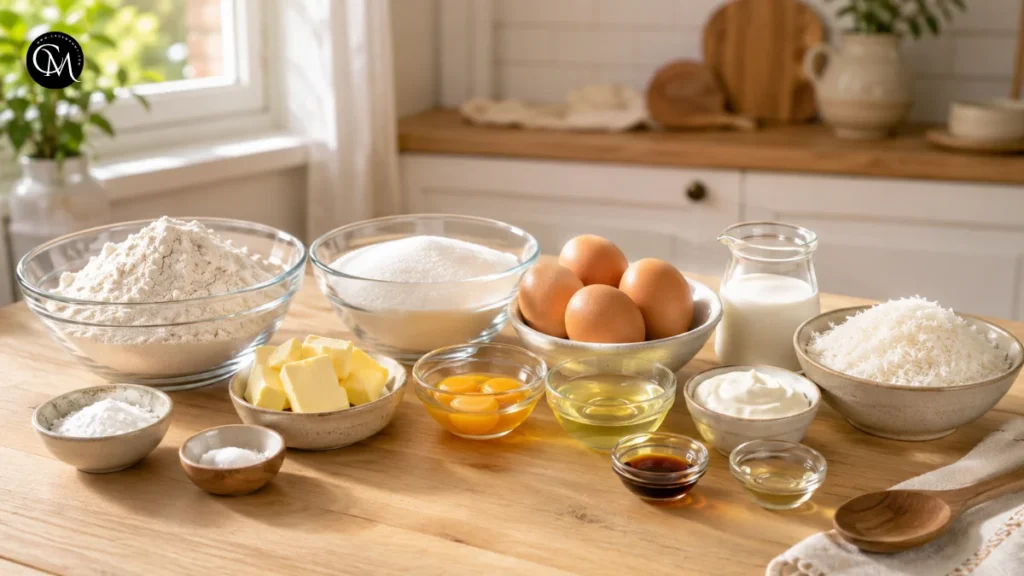
- 2¾ cups cake flour, spooned and leveled
- 2½ teaspoons baking powder
- ½ teaspoon fine salt
- ¾ cup unsalted butter, softened
- 1¾ cups granulated sugar
- 4 large eggs, separated and at room temperature
- 1 teaspoon vanilla extract
- 1 teaspoon coconut extract
- 1 cup full-fat canned coconut milk, well stirred
- ½ cup full-fat sour cream
- 1½ cups sweetened shredded coconut
Cake flour gives Coconut Cake a lighter crumb than standard all-purpose flour. To make a substitute, replace each cup of cake flour with ¾ cup plus 2 tablespoons of all-purpose flour and 2 tablespoons of cornstarch. Sift the mixture well before measuring.
Use full-fat canned coconut milk rather than a thin refrigerated coconut beverage. Its higher fat content improves moisture, richness, and coconut flavor.
Coconut Cream Cheese Frosting
- 8 ounces cream cheese, softened
- ½ cup unsalted butter, softened
- 4 cups powdered sugar, sifted
- 1 teaspoon vanilla extract
- ½ teaspoon coconut extract
- 1–2 tablespoons coconut milk
- Pinch of salt
- 1½ cups shredded coconut for coating
You can use unsweetened shredded coconut for the coating when you prefer a less sugary finish.
Timing
- Preparation time: 30 minutes
- Baking time: 25–30 minutes
- Cooling and decorating time: 1 hour 30 minutes
- Total time: About 2 hours 30 minutes
- Yield: 12 slices
Coconut Cake takes longer than a basic sheet cake because the layers must cool completely before they are frosted. However, most of the cooling time is hands-off.
Step-by-Step Instructions
Step 1 – Prepare the Ingredients
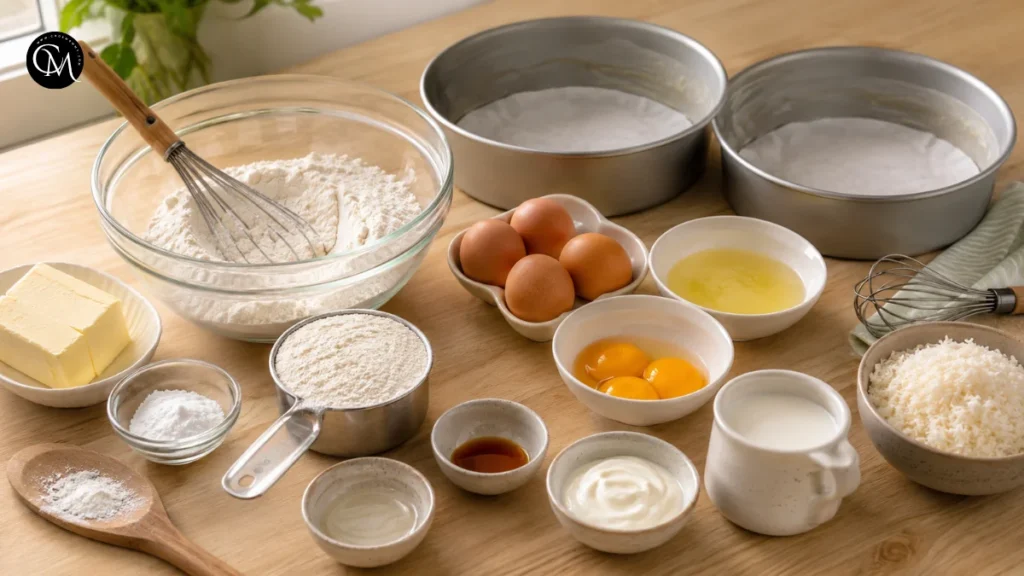
Heat the oven to 350°F or 175°C. Grease two 8-inch round cake pans, line the bottoms with parchment paper, and lightly grease the paper.
Whisk the cake flour, baking powder, and salt in a medium bowl. Bring the butter, eggs, coconut milk, and sour cream to room temperature before mixing. Ingredients at a similar temperature combine more evenly and help the batter retain air.
Measure the flour by spooning it into the measuring cup and leveling the top. Scooping directly from the bag can compress the flour and add more than the recipe needs, making Coconut Cake dense or dry.
Step 2 – Build the Flavor Base
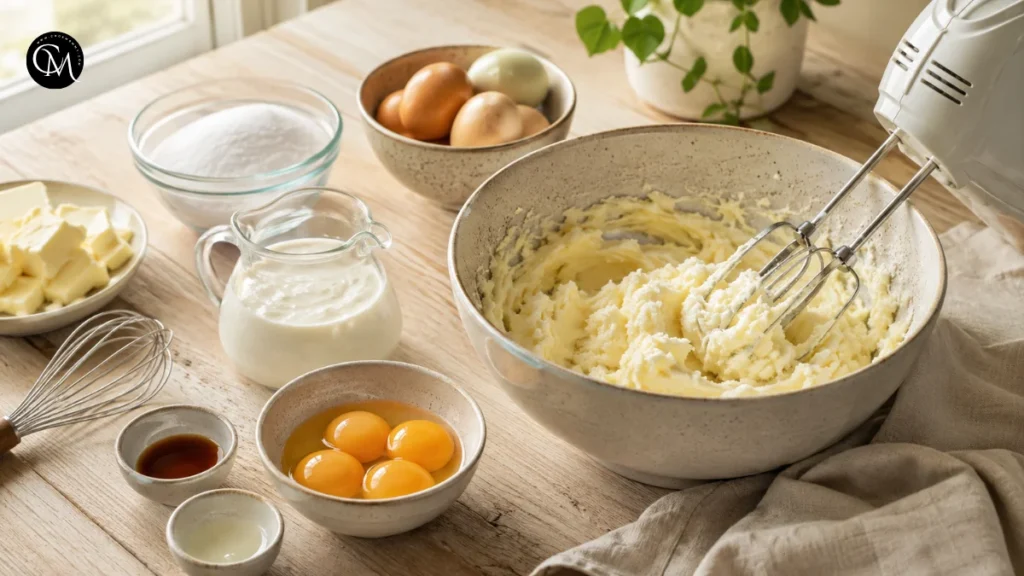
Beat the softened butter and sugar with an electric mixer for 3–4 minutes, until the mixture looks pale, light, and fluffy. Proper creaming creates tiny air pockets that expand during baking and help produce a soft crumb.
Add the egg yolks one at a time, mixing briefly after each addition. Stir in the vanilla and coconut extracts.
In a separate jug, whisk the coconut milk and sour cream until smooth. Real coconut milk provides moisture and richness, while a small amount of coconut extract strengthens the aroma without giving the cake an artificial taste.
Step 3 – Mix and Bake the Cake Layers
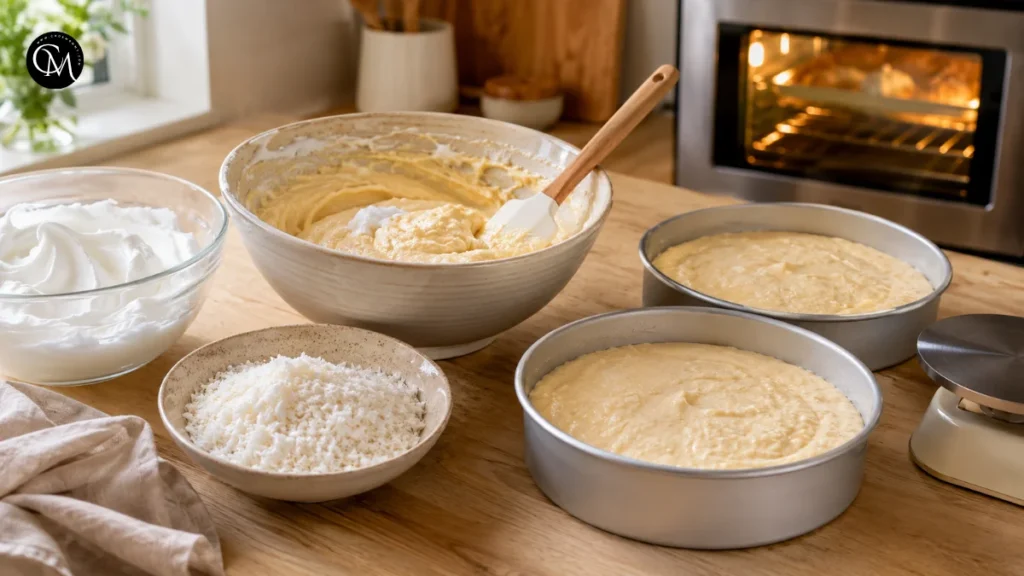
Add the dry ingredients to the butter mixture in three additions, alternating with the coconut milk mixture. Begin and finish with the dry ingredients. Mix on low speed only until the visible flour disappears.
Fold in the shredded coconut using a flexible spatula.
In a clean bowl, beat the egg whites until they form medium peaks. The peaks should hold their shape but curl slightly at the tips. Fold one-third of the whites into the batter to loosen it, then gently fold in the remaining whites.
Divide the batter evenly between the prepared pans. Using a kitchen scale helps ensure both layers bake at the same speed.
Bake for 25–30 minutes. The centers should spring back when lightly touched, and a toothpick should come out with a few moist crumbs. Do not wait for a completely dry toothpick, because that can mean the Coconut Cake is already overbaked.
Step 4 – Combine the Layers
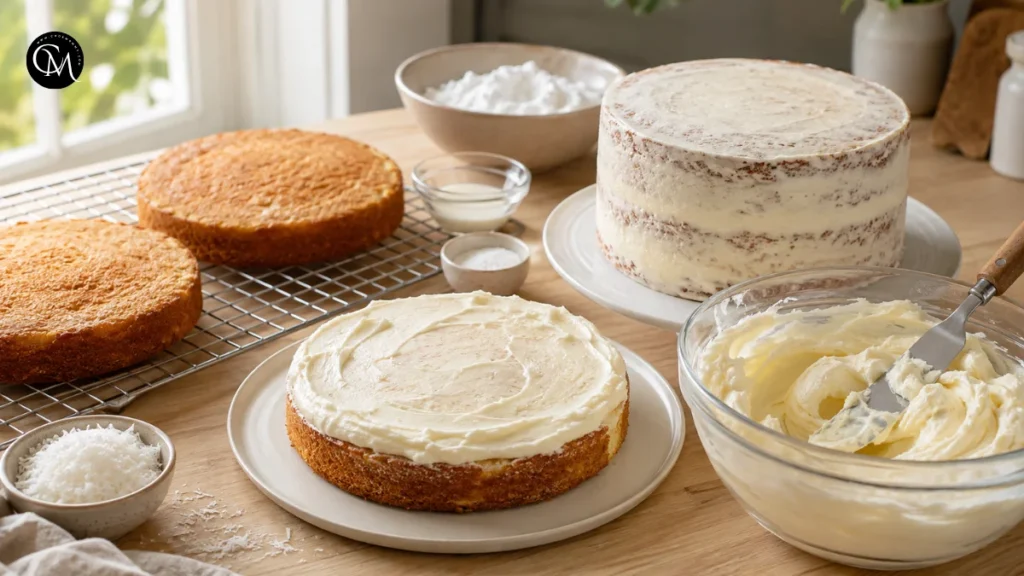
Allow the cakes to cool in their pans for 10 minutes. Carefully turn them onto a wire rack, remove the parchment paper, and let them cool completely.
To prepare the frosting, beat the cream cheese and butter until smooth. Gradually add the powdered sugar, followed by the vanilla, coconut extract, salt, and enough coconut milk to create a soft, spreadable consistency.
Place one cake layer on a serving plate. Spread approximately one cup of frosting evenly over the top, stopping slightly before the edge.
Place the second layer on top. Cover the entire cake with a thin crumb coat, then refrigerate it for 15–20 minutes. This first layer traps loose crumbs and creates a smoother final finish.
Step 5 – Finish and Adjust
Cover the chilled Coconut Cake with the remaining frosting. Gently press shredded coconut over the top and sides using clean hands or a small sheet of parchment paper.
Taste the frosting before finishing the decoration. Add another pinch of salt if it tastes overly sweet. If it feels too thick, add coconut milk one teaspoon at a time.
For neat slices, refrigerate the finished cake for about 20 minutes, then leave it at room temperature for 15 minutes. Cut it with a warm, dry knife, wiping the blade between slices.
Nutritional Information
Approximate values per slice, based on 12 servings:
- Calories: 610
- Carbohydrates: 78 g
- Protein: 6 g
- Total fat: 32 g
- Saturated fat: 23 g
- Sugar: 57 g
- Fiber: 2 g
- Sodium: 270 mg
These figures are estimates. The exact nutritional content will depend on the ingredient brands, amount of frosting used, and size of each slice. Coconut Cake is a rich celebration dessert, so a moderately sized serving is usually satisfying.
Healthier Alternatives
- For a lower-sugar version, reduce the granulated sugar in the cake to 1½ cups. You can also use 3 to 3½ cups of powdered sugar in the frosting instead of four cups. The frosting will be softer but still flavorful.
- For a whole-grain option, replace up to one-third of the cake flour with white whole-wheat flour. Replacing all the flour may make Coconut Cake heavy and reduce its delicate texture.
- For a dairy-free version, use plant-based butter, thick dairy-free yogurt, and dairy-free cream cheese. Select products intended for baking because very soft spreads may not provide enough structure.
- For gluten-free Coconut Cake, use a cup-for-cup gluten-free baking blend containing xanthan gum. Let the mixed batter rest for 10 minutes before baking so the flour can absorb the liquid evenly.
- For children or calorie-conscious guests, bake the batter as cupcakes. Smaller portions are easier to serve, and each cupcake needs only a light swirl of frosting. Seniors may also prefer a lightly frosted slice served with soft fresh fruit.
Serving Suggestions
- Serve Coconut Cake slightly cool or at room temperature. When served directly from the refrigerator, the butter becomes firm and the coconut aroma is less noticeable.
- Fresh raspberries, strawberries, mango, or pineapple provide color and refreshing acidity. For an elegant dessert plate, serve each slice with lightly whipped cream and a few toasted coconut flakes.
- A cup of coffee balances the sweetness, while black tea or mild chai makes the cake especially inviting for an afternoon gathering.
- You can also transform leftover Coconut Cake into an easy trifle. Cut the cake into cubes and layer it in glasses with fresh berries, whipped cream, or vanilla custard.
Common Mistakes to Avoid
- Adding too much flour Spoon the flour into the measuring cup and level it carefully. For greater accuracy, weigh the flour with a kitchen scale.
- Using cold ingredients Cold butter, eggs, and dairy products do not combine smoothly. This may create a curdled batter and an uneven crumb.
- Overmixing after adding flour Too much mixing develops gluten and removes air from the batter. Stop mixing as soon as the ingredients are combined.
- Overbeating the egg whites Dry, stiff egg whites are difficult to fold evenly and may leave small rubbery pockets in the finished cake.
- Opening the oven too early Wait at least 22 minutes before checking the layers. Opening the door early can cause a sudden temperature drop and sinking centers.
- Frosting warm cake layers Even slightly warm layers can soften the cream cheese frosting, causing it to melt, slide, or collect crumbs.
Storing Tips for the Recipe
- Store the finished Coconut Cake in a covered container in the refrigerator for up to four days. Allow individual slices to stand at room temperature for 20–30 minutes before serving.
- Unfrosted cake layers can be wrapped tightly and stored at room temperature for one day. They can also be frozen for up to two months.
- Thaw frozen layers while they are still wrapped. This allows condensation to form on the wrapping rather than directly on the surface of the cake.
- The cream cheese frosting can be prepared one day ahead and refrigerated. Allow it to soften briefly, then stir it gently before decorating.
- This recipe became one of my regular celebration desserts because the layers remain moist, the coconut flavor improves overnight, and the coating creates an impressive finish without requiring advanced decorating skills.
Conclusion
A memorable Coconut Cake should be fragrant, moist, and soft without feeling excessively heavy. This version achieves that balance with cake flour, coconut milk, sour cream, whipped egg whites, and careful baking. Cream cheese frosting adds a pleasant tang, while shredded coconut creates the familiar snowy finish.
Remember the five essentials: measure accurately, use room-temperature ingredients, cream the butter properly, fold the egg whites gently, and avoid overbaking. These habits make the recipe dependable enough for birthdays, holidays, potlucks, and relaxed weekend baking.
Try this Coconut Cake, then leave a comment or rating to share your results. Subscribe for more practical baking guides, seasonal desserts, and dependable recipes created for real home kitchens.
FAQs
Can I Make Coconut Cake One Day Ahead?
Yes. Bake and frost it the day before, refrigerate it in a covered container, and bring it toward room temperature before serving for the softest texture and fullest flavor.
Can I Use Fresh Coconut?
Yes. Freshly grated coconut contains more moisture, so pat it lightly dry and use it mainly for coating instead of adding a large amount to the batter.
Why Did My Cake Layers Sink?
The oven may have been opened too early, the batter may have been overmixed, or the centers may not have baked long enough before removal.
Can I Use a 9-by-13-Inch Pan?
Yes. Bake at the same temperature and begin checking after approximately 32 minutes. The exact baking time will depend on your pan material and oven.
Is Coconut Extract Necessary?
It is optional, but a small amount strengthens the aroma. Combining coconut extract with real coconut milk creates a more natural and rounded flavor.
Can Frosted Slices Be Frozen?
Yes. Freeze the slices until firm, wrap them tightly, and store them for up to one month. Thaw overnight in the refrigerator before serving.
What Other Frosting Can I Use?
Vanilla buttercream, coconut buttercream, mascarpone frosting, or stabilized whipped cream all pair well with Coconut Cake. Choose a frosting firm enough to support two layers.
Tried it before ?
There are no reviews yet. Be the first one to write one.