
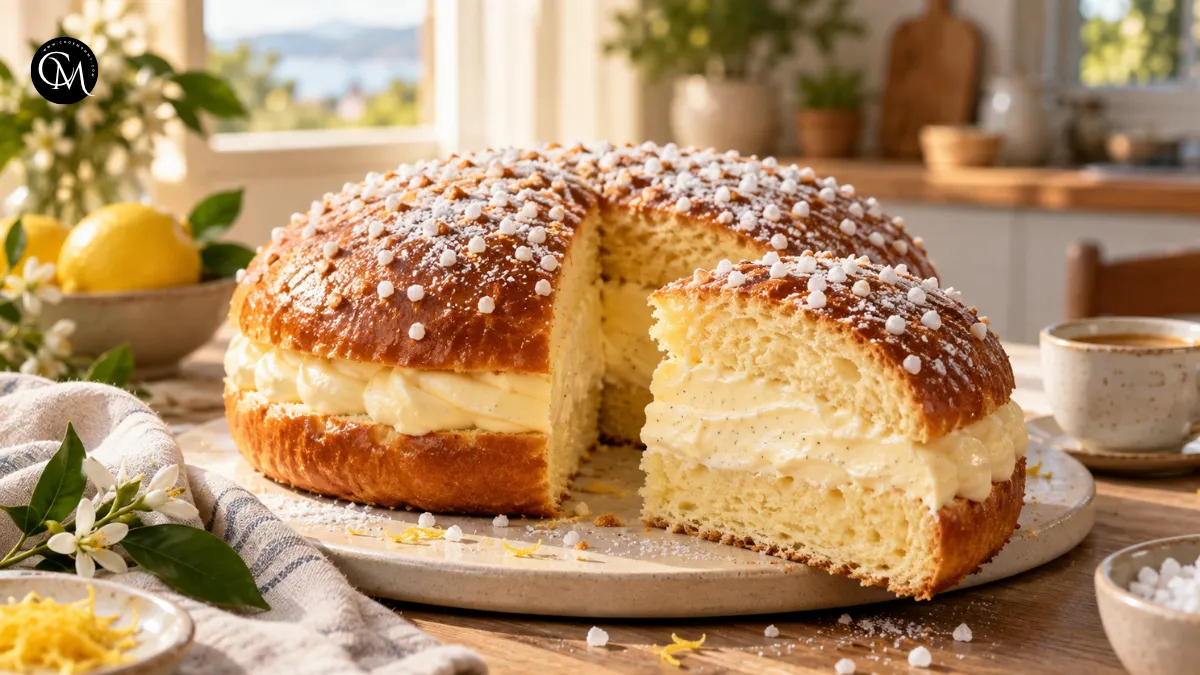
Tarte Tropézienne or Saint-Tropez Tart: 5 Easy Steps to Make It at Home
Did you know this Saint-Tropez classic can spend nearly six times longer rising, cooling, and chilling than it does baking? That slower pace is what gives Tarte Tropézienne its soft brioche, delicate crumb, and cool vanilla cream.
Tarte Tropézienne is worth making at home because you can control the sweetness, fragrance, and texture. This version uses orange blossom water for a subtle floral note, but vanilla alone works beautifully.
Once you understand the two main components enriched brioche and creamy vanilla filling the recipe feels far less intimidating. Most of the preparation is simply allowing the dough, baked brioche, and cream enough time to rest.
Table of Contents
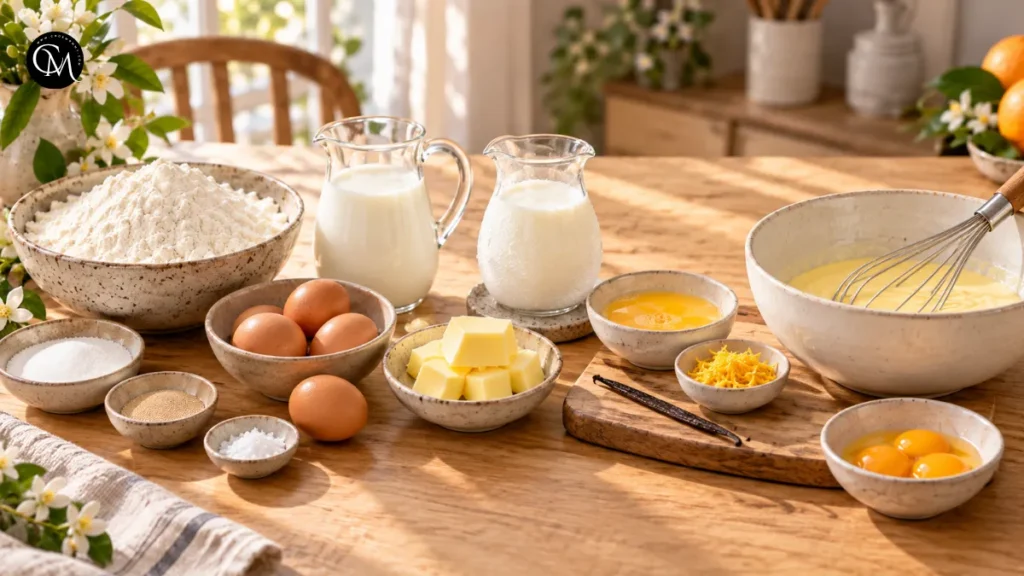
Tarte Tropézienne Ingredients
For the brioche
- 2 1/4 teaspoons instant yeast
- 1/3 cup whole milk, lukewarm
- 3 tablespoons granulated sugar
- 2 large eggs, room temperature
- 2 1/2 cups all-purpose flour
- 1/2 teaspoon fine sea salt
- 7 tablespoons unsalted butter, very soft
- 1 teaspoon orange blossom water, optional
- 1 egg whisked together with 1 teaspoon of milk, to use as an egg wash
- 2 tablespoons pearl sugar or coarse sugar
For the cream filling
- 2 cups whole milk
- 1 vanilla bean or 2 teaspoons vanilla extract
- 4 large egg yolks
- 1/3 cup granulated sugar
- 3 tablespoons cornstarch
- 2 tablespoons unsalted butter
- 3/4 cup heavy cream, very cold
- 1 teaspoon orange blossom water, optional
For finishing
- 2 tablespoons water
- 2 tablespoons sugar
- 1 teaspoon orange blossom water or lemon zest
- Powdered sugar

Bread flour gives Tarte Tropézienne a slightly chewier crumb. Coarse sugar can replace pearl sugar, and vanilla paste can replace the bean.
Timing
- Preparation time: 40 minutes
- Rising, cooling, and chilling: about 3 hours
- Baking/cooking time: 30 minutes
- Total time: about 4 hours 10 minutes
- Yield: 10 slices
Most of the total time is hands-off, making Tarte Tropézienne ideal for weekend baking.
Step-by-Step Instructions
Step 1 – Prepare Ingredients
- Let the eggs and butter soften to room temperature while leaving the heavy cream chilled until needed. Lukewarm milk, around 27–32°C or 80–90°F, helps the yeast become active without overheating it.
- Measure your flour carefully. Scooping flour directly from the bag can pack too much into the measuring cup, and excess flour can make Tarte Tropézienne dry and more bread-like than tender.
- Arrange ingredients in use order; butter is added gradually, while pastry cream thickens quickly.
- Having everything ready before you start makes a noticeable difference with brioche because you do not want to stop kneading halfway through to search for ingredients.
Step 2 – Build the Flavor Base
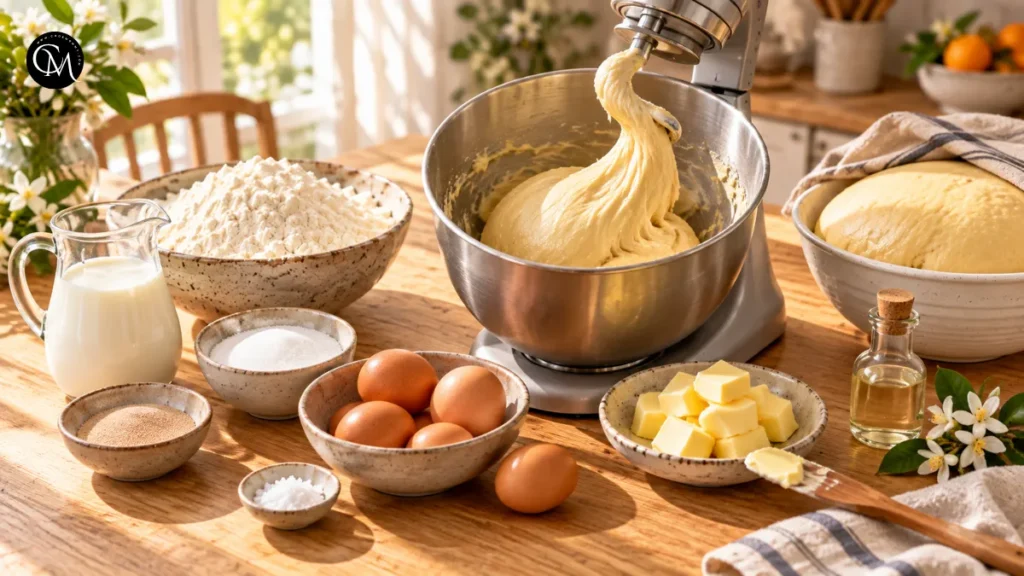
- Mix the yeast, lukewarm milk, sugar, and eggs. Add the flour and salt, then knead until a rough dough forms.
- Begin working in the soft butter one tablespoon at a time. The dough may initially look slippery or separated. Keep kneading rather than adding extra flour.
- After about 8–10 minutes in a stand mixer, the dough should become glossy, elastic, and slightly tacky.
- Gradual butter addition matters because fat can slow gluten development. Strong gluten gives Tarte Tropézienne enough structure to rise while still producing a tender crumb.
- Mix in the orange blossom water near the end. Cover the bowl and allow the dough to rise until roughly doubled in size, usually 60–90 minutes depending on the temperature of your kitchen.
- A warm room speeds fermentation, while a cooler kitchen may require additional time. Watch the dough rather than relying entirely on the clock.
Step 3 – Cook the Main Ingredient
- Gently flatten the risen dough into a 9-inch round on a parchment-lined baking sheet. Let it rise again for 35–45 minutes.
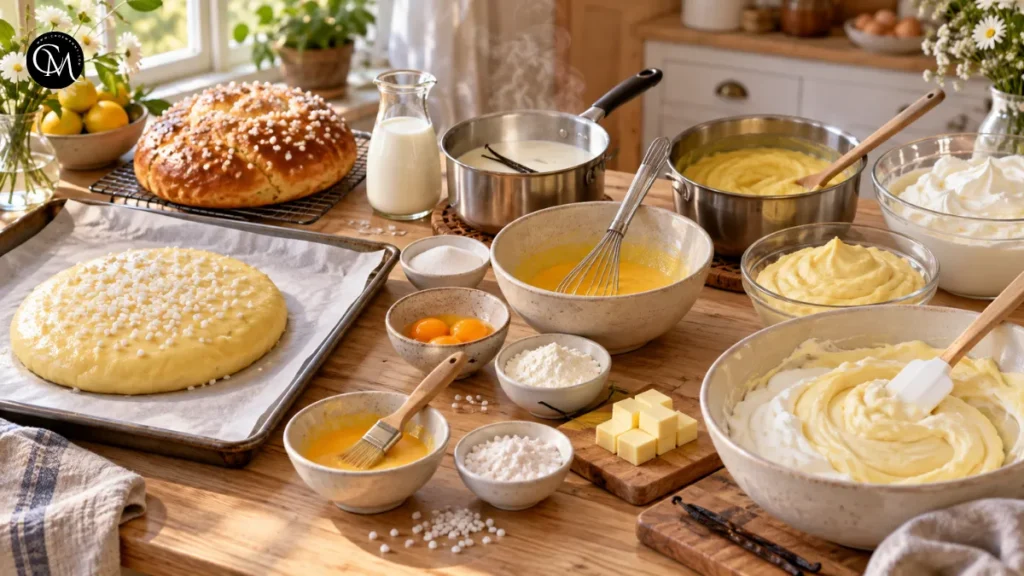
- Brush the top with egg wash, scatter over the pearl sugar, and bake at 175°C/350°F for 22–25 minutes. The brioche should be deeply golden rather than pale.
- While it bakes, prepare the cream.
- Heat the milk and vanilla until steaming. In a separate bowl, blend the egg yolks with the sugar and cornstarch until the mixture is silky and free of lumps.
- Gradually pour a small amount of the warm milk into the yolk mixture while whisking continuously. This gradual tempering prevents the eggs from scrambling.
- Return everything to the saucepan and cook over medium heat until the mixture becomes thick and begins bubbling. Continue cooking for about one minute, stirring constantly.
- Mix in the butter until fully incorporated, then set the pastry cream aside until it has cooled all the way through.
- Whip the cold heavy cream to soft peaks and gently fold it into the chilled pastry cream. This gives Tarte Tropézienne its lighter, airy filling rather than a dense custard center.
Step 4 – Combine Everything
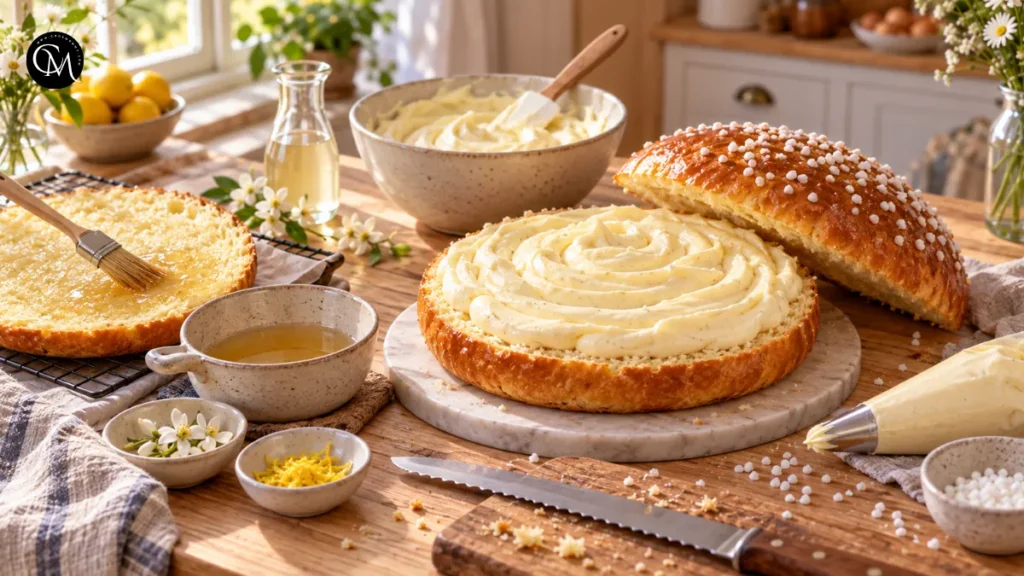
- Allow the brioche to cool completely before cutting it horizontally with a long serrated knife.
- Warm brioche can compress when sliced and can also soften the cream, making the filling more likely to slide out.
- Prepare a quick syrup by simmering the water and sugar for one minute. Let it cool slightly, then stir in orange blossom water or lemon zest.
- Brush a thin layer over the exposed brioche crumb. You want gentle moisture, not a soaked texture.
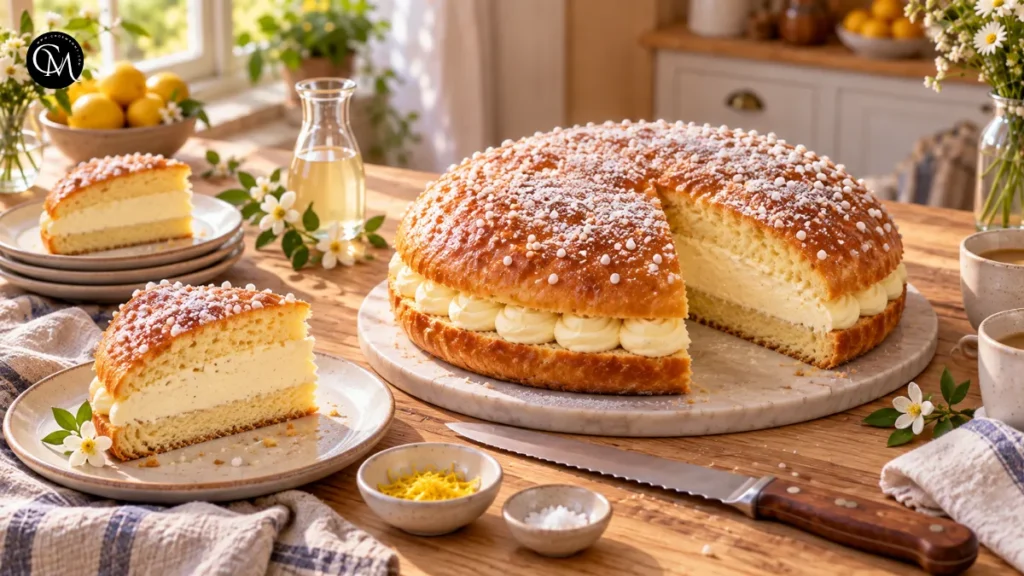
- Spread or pipe the cream evenly over the bottom half, leaving a small border around the edge. Replace the top of the brioche without pressing down heavily.
- The best Tarte Tropézienne balances buttery bread, fragrant syrup, and cool cream without letting one element overpower the others.
Step 5 – Finish and Adjust
- Once assembled, chill the tart in the refrigerator for a minimum of 45 minutes so the filling can firm up. Chilling helps the cream firm slightly and makes the dessert easier to slice cleanly.
- Right before serving, finish the tart with a delicate sprinkling of powdered sugar over the top.
- Taste the cream before assembling the tart. If it seems too sweet, a tiny pinch of salt or a little fresh lemon zest can brighten the flavor.
- If the orange blossom already tastes pronounced, skip adding more to the syrup. Tarte Tropézienne benefits from restraint rather than an overly perfumed flavor.
- For clean portions, use a serrated knife and wipe the blade between slices.
Nutritional Information
Approximate values per slice, based on 10 servings:
| Nutrient | Approximate Amount |
|---|---|
| Calories | 420 kcal |
| Carbohydrates | 47 g |
| Protein | 7 g |
| Fat | 23 g |
| Saturated fat | 14 g |
| Sugar | 21 g |
| Sodium | 170 mg |
Tarte Tropézienne is an enriched dessert, so butter, eggs, cream, and sugar account for much of its energy content. These numbers are estimates and will vary according to ingredient brands, portion size, and the amount of cream used.
Healthier Alternatives
- For a lower-sugar Tarte Tropézienne, reduce the sugar in the pastry cream by about 20% and finish the tart with a lighter dusting of powdered sugar. Vanilla and citrus aromas can help the dessert remain satisfying without excessive sweetness.
- For more whole-grain character, replace up to one-quarter of the white flour with white whole-wheat flour. Replacing much more can interfere with the light texture expected from brioche.
- For a dairy-free version, use a baking-style plant butter, unsweetened soy milk, and plant-based whipping cream specifically formulated to hold peaks.
- A gluten-free version requires more care because brioche relies heavily on gluten for structure. Use a tested gluten-free brioche flour blend rather than simply replacing wheat flour one-for-one.
- For children, keep the orange blossom flavor mild and emphasize vanilla. For seniors or guests with smaller appetites, serve thinner slices with fresh berries.
- For calorie-conscious guests, cut the tart into 12 portions instead of changing the recipe so dramatically that its texture suffers.
Serving Suggestions
- Serve Tarte Tropézienne slightly chilled rather than straight from a very cold refrigerator.
- Allowing it to sit at room temperature for about 10 minutes softens the brioche and helps the vanilla, butter, and citrus aromas become more noticeable.
- Fresh strawberries, raspberries, or sliced peaches work especially well because their acidity balances the rich cream without covering its flavor.
- For brunch, serve smaller wedges alongside strong coffee, espresso, or unsweetened tea.
- For a dinner-party dessert, add a few berries and a spoonful of lightly sweetened berry or peach compote beside each slice.
- Explore a brioche guide or pastry cream tutorial next.
Common Mistakes to Avoid
- Adding too much flour: Soft, slightly tacky dough produces a more tender crumb. Resist adding flour simply because enriched dough feels sticky at first.
- Using milk that is too hot: Aim for roughly 27–32°C or 80–90°F. Excessive heat can interfere with yeast activity.
- Under-kneading the dough: Weak dough struggles to hold butter and gases created during fermentation, producing a flatter, denser brioche.
- Filling warm brioche: Heat softens the pastry cream and can make the two halves slide apart.
- Skipping the custard boil: Pastry cream needs a brief bubble to allow the cornstarch to thicken properly and remove its raw starch flavor.
- Overusing orange blossom water: A small amount goes a long way. Too much can make Tarte Tropézienne taste perfumed instead of delicately aromatic.
Storing Tips for the Recipe
- Store Tarte Tropézienne in an airtight container in the refrigerator for up to 2 days.
- For the best eating texture, bring individual slices out of the refrigerator about 10–15 minutes before serving. This allows the brioche to soften slightly while keeping the cream safely chilled.
- The pastry cream can be prepared one day ahead. Refrigerate it with plastic wrap pressed directly against the surface to prevent a skin from forming.
- The brioche can also be baked one day ahead. Let it cool completely before wrapping it well, then fill it the following day.
- Freezing the assembled dessert is less successful because cream fillings can become watery or grainy after thawing. Instead, freeze the unfilled brioche for up to one month.
- This is the kind of dessert that can become a regular celebration recipe because it feeds a group, looks special, and is easy to prepare in stages.
Conclusion
Tarte Tropézienne may look elaborate, but patience matters more than advanced pastry technique. Once you break it into five stages preparing, kneading, baking, filling, and chilling the process becomes approachable for a confident home baker. The reward is a soft Saint-Tropez brioche filled with fragrant vanilla cream and finished with a delicate sugar crunch.
Try the recipe once as written, then adjust the orange blossom, sweetness, or fruit garnish to suit your table. If you make it, leave a comment or review sharing the changes that worked for you. Subscribe for more practical French baking recipes, troubleshooting tips, and technique-focused guides.
FAQs
Can I make Tarte Tropézienne the day before?
Yes. Bake the brioche and prepare the cream one day ahead, then assemble several hours before serving. This keeps the bread fresher and the filling stable.
What does Tarte Tropézienne taste like?
It tastes like buttery brioche crossed with a cream-filled pastry, with vanilla, a delicate citrus-floral note, and a light crunch from the sugar topping.
Do I need orange blossom water?
No. Vanilla alone works well. Lemon or orange zest provides a fresher citrus flavor if you prefer to avoid the floral character.
Why is my brioche dense?
Dense brioche usually results from too much flour, weak kneading, or insufficient rising. Keep the dough soft, develop elasticity, and let it expand visibly before baking.
Can I use store-bought pastry cream?
Yes, although homemade pastry cream gives better control over sweetness and texture. Fold whipped cream into a firm store-bought custard to make the filling lighter.
How long can the tart stay at room temperature?
Because the filling contains dairy and eggs, keep it refrigerated and bring out only what you plan to serve. Return leftovers to the refrigerator promptly.
Can I freeze Tarte Tropézienne?
Freeze the unfilled brioche rather than the finished tart. Cream fillings may become watery after thawing, while brioche freezes and refreshes much more successfully.
Tried it before ?
There are no reviews yet. Be the first one to write one.