
Fruit Kabobs: 7 Best Ideas for Colorful Party Snacks
Did you know that people are more likely to eat fruit when it is already washed, cut, and served in an easy grab-and-go way? That is exactly why Fruit Kabobs are such a smart party snack. They turn simple fresh fruit into something bright, playful, and easy to serve without needing forks, plates, or heavy desserts.
Fruit Kabobs are worth making because they solve three common party problems at once: they look beautiful, they are quick to prepare, and they feel light next to richer foods like chips, cakes, and dips. Whether you are planning a birthday party, summer BBQ, brunch table, picnic, school snack tray, or family gathering, these colorful fruit skewers bring instant freshness.
As a home cook, I love recipes that feel low-effort but still get compliments. This is one of them. With the right fruit choices, simple prep, and a few styling tricks, Fruit Kabobs can look like something from a party platter while staying affordable and easy.
Table of Contents
Ingredients List
For about 12 colorful skewers, you will need:
- 1 cup strawberries, hulled and halved if large
- 1 cup pineapple chunks, fresh or canned and well drained
- 1 cup green grapes, washed and dried
- 1 cup red grapes, washed and dried
- 2 kiwis, peeled and cut into thick half-moons
- 1 cup cantaloupe or honeydew melon, cut into cubes
- 1 cup blueberries
- 1 banana, sliced thick, optional
- 12 wooden or bamboo skewers
- 1 tablespoon lemon juice, optional for bananas or apples
- Fresh mint leaves, optional for garnish
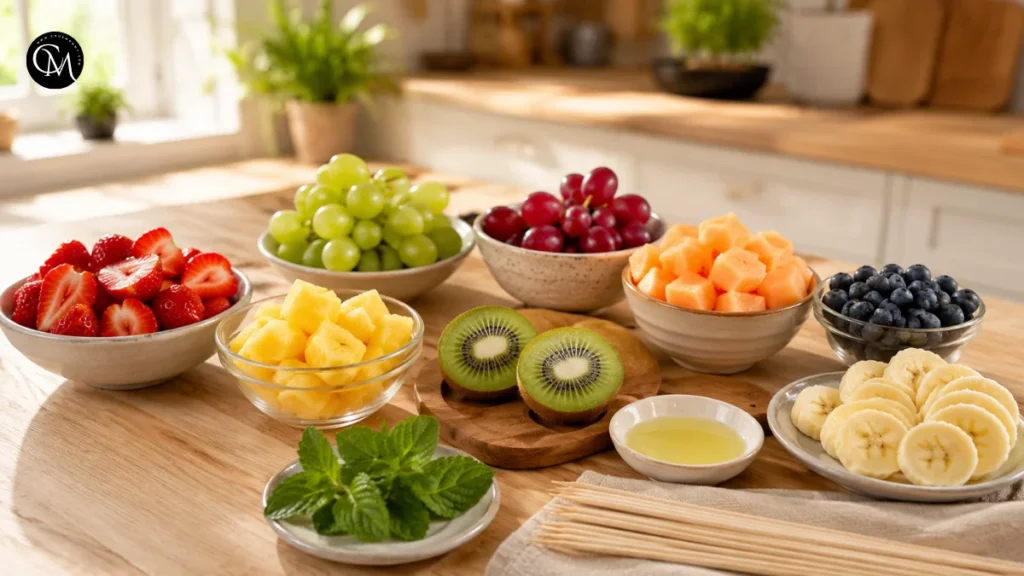
Substitution ideas: Use watermelon instead of melon, mango instead of pineapple, blackberries instead of blueberries, or orange segments for a citrusy touch. For children, choose softer fruits like bananas, strawberries, grapes cut in half, and melon. For a more elegant tray, use berries, kiwi, pineapple, and fresh mint.
The best Fruit Kabobs use firm, juicy fruits that hold their shape. Avoid overly soft fruit because it can slide, leak juice, or break when threaded onto skewers.
Timing
- Preparation time: 20 minutes
- Cooking time: 0 minutes
- Total time: 20 minutes
- Chill time, optional: 15–30 minutes
Most party snacks take 30–60 minutes when baking or cooking is involved. Fruit Kabobs are faster because there is no oven, no stove, and no complicated mixing. The only real work is washing, cutting, and arranging the fruit in a way that looks balanced and colorful.
Step-by-Step Instructions
Step 1 – Prepare Ingredients
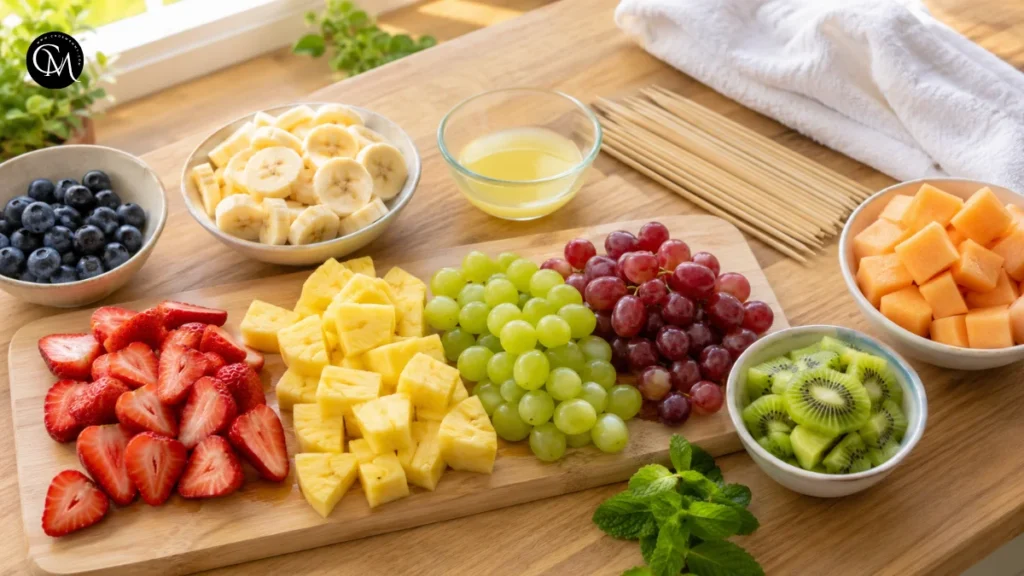
Start by washing all fruit under cool running water. Pat everything dry with a clean towel or paper towels. This step matters more than many people think because wet fruit can make the skewers slippery and the serving platter watery.
Cut larger fruit into bite-sized pieces. Strawberries can be halved, pineapple should be cut into sturdy chunks, and melon should be cubed evenly. If using bananas or apples, toss them lightly with lemon juice to slow browning.
Good preparation makes Fruit Kabobs easier to assemble and more pleasant to eat. Try to keep the fruit pieces similar in size so each skewer looks neat and balanced.
Step 2 – Build Flavor Base
There is no cooking here, but flavor still matters. The “base” of this recipe comes from choosing fruit with contrast: sweet, tart, juicy, crisp, and fragrant.
For example, strawberries bring sweetness and color, pineapple adds tangy brightness, grapes give juicy crunch, and kiwi adds a fresh tropical note. This balance keeps Fruit Kabobs from tasting flat. If every fruit is very sweet, the snack can feel one-dimensional. Adding citrusy or slightly tart fruit makes each bite more refreshing.
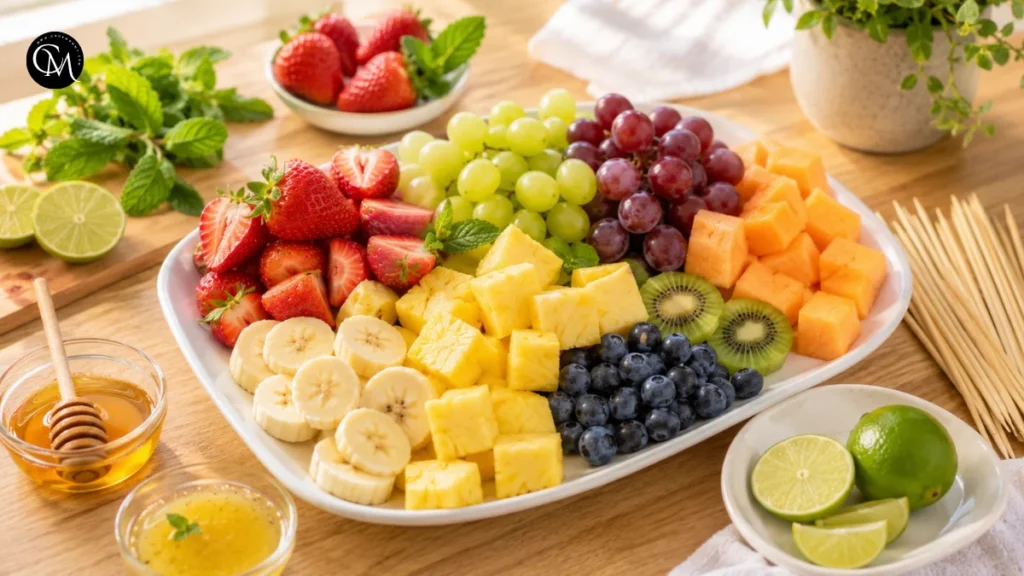
For extra flavor, you can add a light drizzle of honey-lime dressing on the side. Mix 1 tablespoon honey with 1 teaspoon lime juice and serve it as a dip or drizzle, not a heavy coating.
Step 3 – Cook the Main Ingredient
Since Fruit Kabobs are a no-cook recipe, this step is all about handling the main ingredient: fresh fruit. The texture should be firm enough to stay on the skewer but ripe enough to taste sweet and juicy.
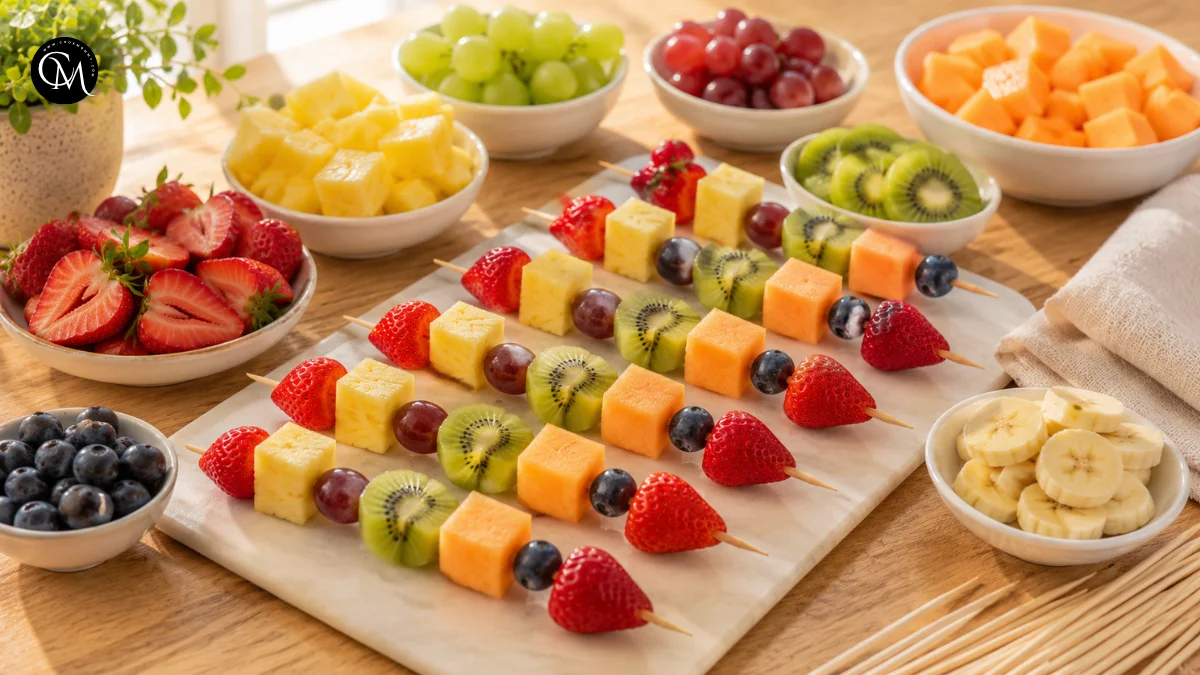
Thread fruit onto each skewer in a repeating pattern. A simple order could be strawberry, pineapple, grape, kiwi, melon, blueberry, then repeat. Do not push the fruit too tightly together. Leaving a little space helps the colors stand out and makes each piece easier to bite.
Texture tip: Place firmer fruits like pineapple, melon, or grapes near the ends. Softer fruits like banana or ripe kiwi are better in the middle, where they are less likely to fall off.
Step 4 – Combine Everything
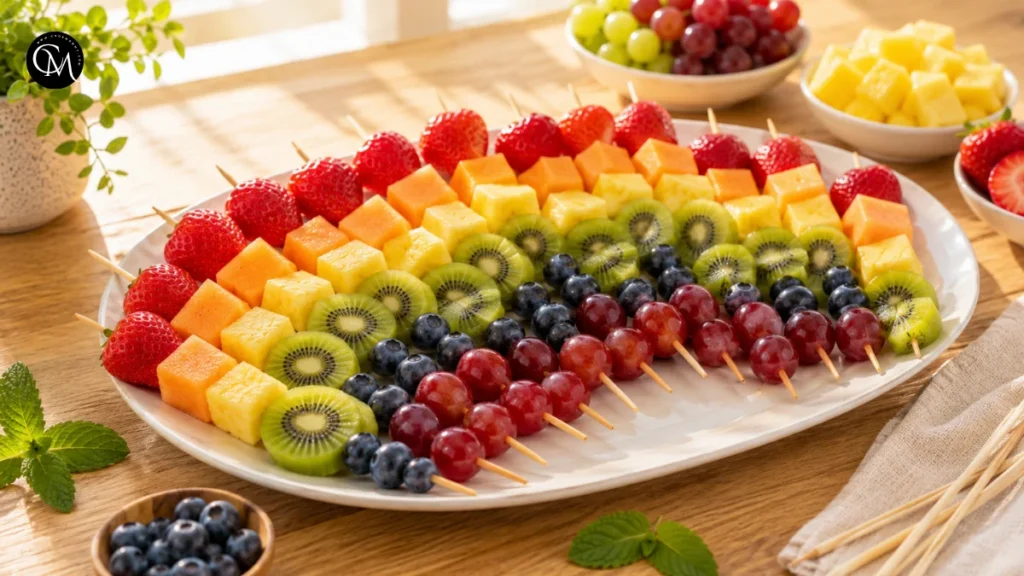
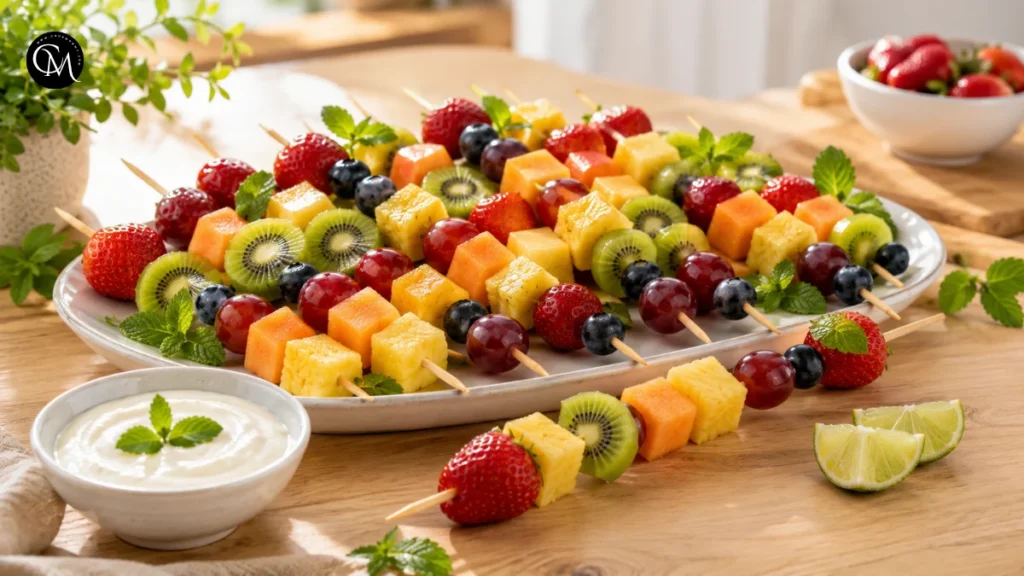
Once the fruit is threaded, arrange the skewers on a large platter. You can line them in rows, stack them slightly, or fan them out in a circle for a party-style look.
This is where Fruit Kabobs become more than sliced fruit. The combination of colors, shapes, and textures makes the tray feel exciting. For a rainbow effect, arrange fruit by color: red strawberries, orange melon, yellow pineapple, green kiwi, blue blueberries, and purple grapes.
Balance is important. Too much soft fruit can make the kabobs messy, while too much firm fruit can make them feel plain. A good mix keeps them juicy, pretty, and easy to serve.
Step 5 – Finish & Adjust Seasoning
Before serving, look over the tray and adjust the final details. Add fresh mint leaves for color, place a small bowl of yogurt dip nearby, or add lime wedges for a fresh squeeze.
Chef-style advice: Chill the finished Fruit Kabobs for 15–30 minutes before serving if the room is warm. Cold fruit tastes sweeter and more refreshing, especially at summer parties. However, avoid making them too far ahead if using bananas, apples, or very ripe berries.
Taste one skewer before serving. If the fruit tastes a little dull, a tiny squeeze of lime can brighten everything without adding much sugar.
Nutritional Information
Approximate values per 1 fruit skewer:
| Nutrient | Amount |
|---|---|
| Calories | 55–75 kcal |
| Carbohydrates | 14–18 g |
| Natural sugars | 10–14 g |
| Fiber | 2–3 g |
| Protein | 0.5–1 g |
| Fat | 0–0.5 g |
| Sodium | 0–5 mg |
These values depend on the exact fruit used and the size of each skewer. Fruit Kabobs are naturally light and refreshing, but they still contain natural fruit sugars. For a balanced snack table, serve them with yogurt dip, cheese cubes, nuts for adults, or whole-grain crackers.
Healthier Alternatives
- For a lower-sugar version, use more berries, kiwi, melon, and citrus, and use fewer bananas, grapes, and mangoes. Berries are especially useful because they bring strong color and fresh flavor without making the skewers too sweet.
- For whole-grain options, serve Fruit Kabobs with mini whole-grain waffles, whole-grain crackers, or a small bowl of granola on the side. This turns the fruit into a more filling snack board.
- For dairy-free guests, skip yogurt dip and serve the skewers with coconut yogurt, melted dark chocolate made without dairy, or a simple lime-mint drizzle. For gluten-free needs, the fruit itself is naturally gluten-free, but always check dips, toppings, or packaged add-ons.
- For children, use shorter skewers or blunt party picks and cut grapes in half for safety. For seniors, choose softer fruits and avoid very hard or slippery pieces. For anyone watching calories, serve Fruit Kabobs with a light dip instead of caramel or heavy chocolate sauces.
Serving Suggestions
- Serve Fruit Kabobs on a white platter to make the colors pop. For birthdays, arrange them around a bowl of vanilla yogurt dip with sprinkles on the side. For BBQs, pair them with grilled chicken, pasta salad, corn, and lemonade for a fresh contrast.
- For brunch, place the skewers next to pancakes, muffins, or a yogurt bar. They also work beautifully on a picnic board with cheese, crackers, and small sandwiches.
- For a dessert-style version, drizzle the skewers lightly with melted dark chocolate and chill until set. For a tropical party, use pineapple, mango, kiwi, strawberries, and coconut flakes.
- One of my favorite ways to serve Fruit Kabobs is in small cups with a little yogurt at the bottom. Guests can grab one cup and one skewer without needing extra plates, which makes cleanup easier.
Common Mistakes to Avoid
- Using overripe fruit Very soft fruit breaks easily and makes the skewers messy. Choose ripe but firm fruit.
- Making them too early Some fruits release juice or brown over time. For the freshest look, assemble Fruit Kabobs a few hours before serving.
- Skipping the drying step Wet fruit slides on skewers and waters down the platter. Drying helps everything stay neat.
- Cutting uneven pieces If some pieces are huge and others are tiny, the kabobs look messy and become harder to eat.
- Using only sweet fruits A mix of sweet and tangy fruit creates better flavor. Pineapple, kiwi, berries, and citrus help balance the taste.
- Forgetting guest needs For kids, use shorter sticks and safer fruit sizes. For mixed groups, offer a dip-free section and a dairy-free option.
Storing Tips for the Recipe
- Store leftover Fruit Kabobs in an airtight container in the refrigerator for up to 24 hours. Place a paper towel at the bottom of the container to absorb extra moisture. If the skewers include bananas or apples, they are best eaten the same day.
- For make-ahead prep, wash and cut firm fruits like pineapple, melon, and grapes one day ahead. Store each fruit separately, then assemble the skewers closer to serving time. Berries are best washed and dried shortly before use because they can soften quickly.
- This recipe became one of my regular meals because it makes healthy snacking feel easy instead of boring. When fruit is already cut and arranged beautifully, my family reaches for it faster than when it sits whole in the fridge.
- For parties, keep Fruit Kabobs chilled until serving. If they will sit out for more than 1–2 hours, place the platter over a tray of ice or bring out smaller batches at a time.
Conclusion
Fruit Kabobs are one of the easiest ways to turn fresh fruit into a party snack that feels colorful, fun, and thoughtful. They require no cooking, very little cleanup, and only simple ingredients, yet they always make the table look brighter. With the right mix of berries, melon, grapes, pineapple, and kiwi, you can create a fresh snack that works for birthdays, BBQs, brunch, lunchboxes, and family gatherings.
Try this recipe the next time you need a quick party idea that looks beautiful without much effort. Leave a comment or review with your favorite fruit combination, and subscribe for more easy recipes, snack boards, and family-friendly kitchen tips.
FAQs
Can I make Fruit Kabobs the night before?
Yes, but choose firm fruits like grapes, melon, pineapple, and strawberries. Avoid bananas until serving time because they brown and soften quickly.
What fruits work best for Fruit Kabobs?
Strawberries, grapes, pineapple, melon, kiwi, blueberries, mango, and orange slices work well because they hold their shape and add bright color.
How do I stop fruit from turning brown?
Brush bananas, apples, or pears lightly with lemon or lime juice. Keep the skewers covered and chilled until serving.
Are Fruit Kabobs good for kids’ parties?
Yes, they are colorful, fun, and easy to grab. For younger children, use short blunt picks and cut grapes into smaller pieces.
What dip goes well with Fruit Kabobs?
Vanilla yogurt, honey-lime yogurt, coconut yogurt, chocolate hummus, or a light cream cheese fruit dip all pair well.
Can I make Fruit Kabobs without wooden skewers?
Yes. Use reusable skewers, short party picks, or serve the fruit in small cups for an easy no-skewer version.
How long can Fruit Kabobs sit out?
They are best kept out for no more than 1–2 hours. In warm weather, keep them chilled or serve small batches.
Tried it before ?
There are no reviews yet. Be the first one to write one.